Merchants' Square
Europe,
Italy,
citta,
Centro Storico
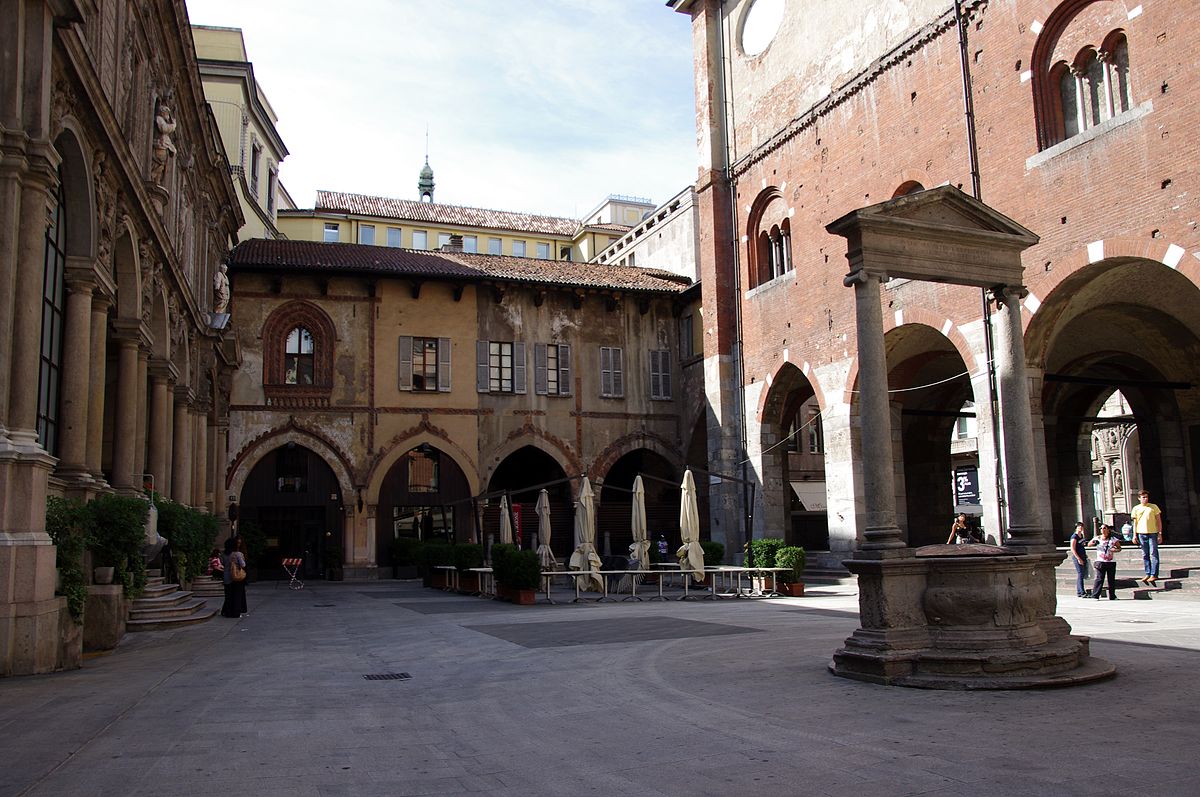
Piazza Mercanti, located in the historic heart of Milan, represents one of the most fascinating and rich in history places in the city. This square, dating back to the Middle Ages, was the center of economic and social life in Milan for centuries, and still retains a unique atmosphere today, where every stone tells a part of the city’s history.
Originally, Piazza Mercanti was much larger and had a central function in medieval Milan. It was created in 1228 as part of a project to expand and reorganize the city by the podestà Oldrado da Tresseno. The square was the hub of commercial and administrative activities, hosting markets, fairs, and the main city institutions.
One of the most significant buildings in the square is the Palazzo della Ragione, also known as Broletto Nuovo, built in 1233. This monumental building was the seat of the city government and the place where justice was administered. Its austere and imposing architecture, with a portico on the ground floor and a large hall on the first floor, reflected the importance and authority of the institutions based there.
Facing the Palazzo della Ragione is the Loggia degli Osii, built in 1316 at the behest of Matteo Visconti. This elegant building, with its open loggia and Gothic-style decorations, was where judges announced sentences and authorities addressed the citizens. The Loggia degli Osii is also famous for the presence of the “Devil’s Column,” a marble column with two holes, which legend has it were left by the devil’s horns during a struggle with Saint Ambrose.
Another notable building is the Casa dei Panigarola, built in the 15th century and home to the notaries’ offices. This Gothic palace, with its mullioned windows and terracotta decorations, is a remarkable example of Milanese civil architecture of the time.
The square is also enriched by other historical structures such as the Scuole Palatine, founded in the 17th century as a high school for the education of young Milanese, and the Casa dei Giureconsulti, built in 1561 and home to the College of Noble Doctors, tasked with training the city’s future jurists. This Renaissance building, with its elegant facade and clock tower, is a symbol of Milan’s legal and academic tradition.
A characteristic element of Piazza Mercanti is the Pietra dei Falliti, a marble slab located in front of the Loggia degli Osii. This stone served as a podium for insolvent debtors, who had to climb on it and publicly declare their bankruptcy. This humiliating ritual was part of the medieval legal system and reflected the strictness of the mercantile laws of the time.
Over the centuries, the square has undergone several transformations. In the 19th century, with the expansion and modernization of the city, Piazza Mercanti lost its central role and many of its functions were transferred elsewhere. However, thanks to numerous restoration interventions, the square has preserved its beauty and historical charm intact.
Read More