Church of San Giovanni in Monterrone
Europe,
Italy,
citta, Matera,
Sasso Caveoso
The Church of San Giovanni in Monterrone, located in the picturesque district of Sasso Caveoso in Matera, is one of the most fascinating examples of the city’s rock architecture. Carved into the limestone rock, this church is an extraordinary example of how spirituality and human ingenuity can harmoniously blend with nature. Dating back to the 9th-10th century, the church is part of a larger monastic complex that also includes the Church of Santa Maria de Idris, located on the same hill of Monterrone.
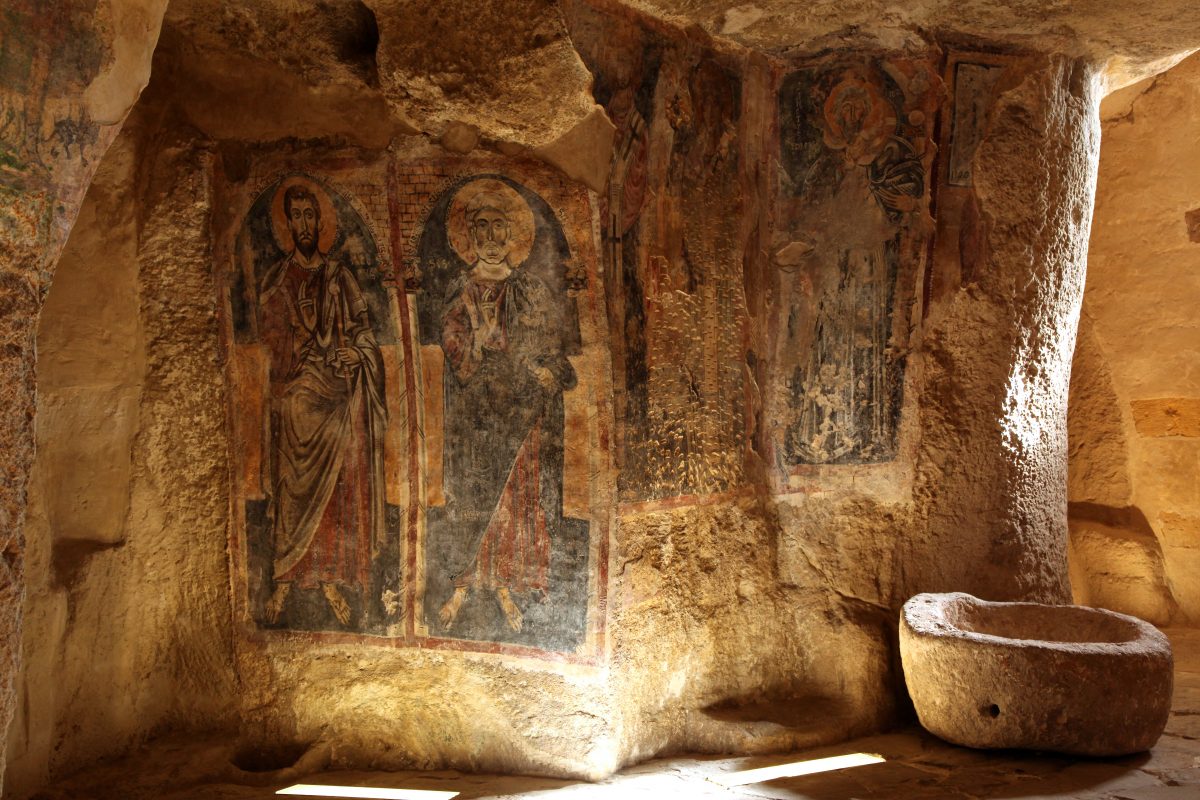
The entrance of the Church of San Giovanni in Monterrone is characterized by a simple and austere portal, typical of rock churches. Upon entering, visitors are welcomed by a suggestive environment, with a single nave plan and a series of niches and altars carved directly into the rock. The walls are decorated with medieval frescoes, many of which unfortunately damaged by time and humidity, but still able to convey the deep devotion that characterized the life of this sacred place.
The frescoes, dating from the 13th to 14th century, depict scenes from the life of Christ, the Virgin Mary, and various saints, including St. John the Baptist, the saint to whom the church is dedicated. These frescoes are the work of local artists and represent an important example of medieval painting in Basilicata, with evident Byzantine influences in the elongated figures and vibrant colors. Despite the deterioration, some of the images still retain a surprising vividness, offering visitors an idea of the original beauty of the pictorial cycle.
Of particular interest is the main altar, carved into the rock and decorated with a large fresco depicting Christ Pantocrator, surrounded by the symbols of the four evangelists. This fresco, of extraordinary expressive power, is a masterpiece of rock art and represents the focal point of the liturgical space. An interesting episode related to the church concerns its rediscovery in the 20th century, when a series of restoration and excavation works brought to light numerous frescoes and architectural structures that had been buried and forgotten for centuries. This event allowed the recovery of an important part of Matera’s artistic and historical heritage, offering new insights into the religious and cultural life of the city in the Middle Ages.
Read More