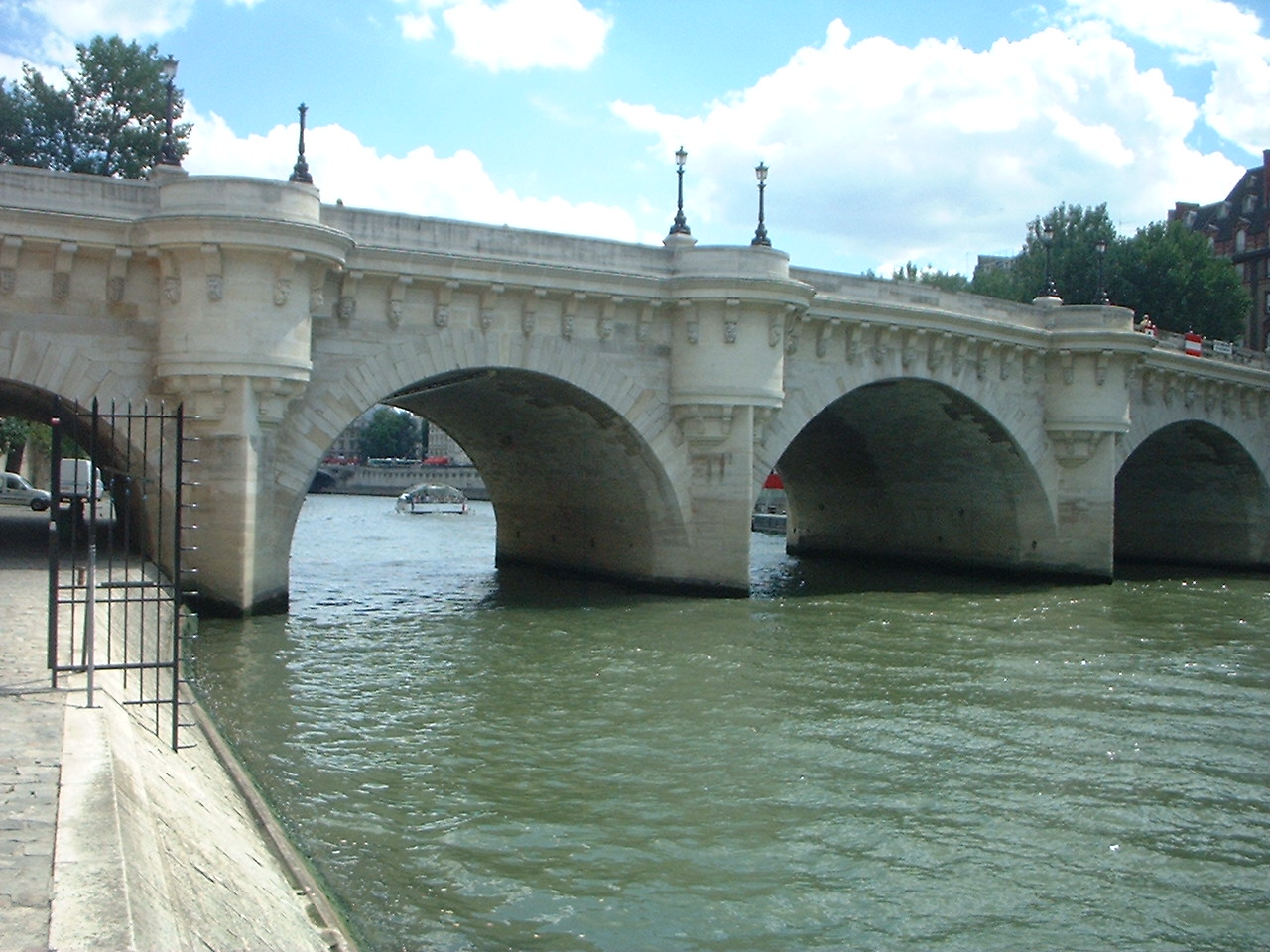
New Bridge (Pont Neuf)
Europe,
France,
citta,
I arrondissement
The Pont Neuf in Paris, despite its name meaning “New Bridge”, is actually the oldest existing bridge crossing the Seine. Built between 1578 and 1607, this bridge represents not only an architectural icon but also a symbol of royal power and urban innovation during the reign of Henry IV of France.
The project of the Pont Neuf was initiated under the reign of Henry III, but it was Henry IV who completed it. The construction of the bridge was a response to the need to improve circulation and commerce in the rapidly growing capital. Unlike previous medieval bridges, which were often crowded with buildings and shops, the Pont Neuf was designed as a bridge free from constructions, offering an open view of the Seine and the surrounding urban landscape.
The Pont Neuf is 232 meters long and 22 meters wide, composed of two sections: one connecting the left bank to the western tip of the Île de la Cité and the other connecting the island to the right bank. This innovative structure allowed for a direct connection between different parts of the city, facilitating traffic and promoting urban integration.
One of the most remarkable aspects of the Pont Neuf is its architecture. The bridge is adorned with 381 mascarons, sculpted heads of deities, satyrs, and mythological figures, adding a unique and fascinating decorative element. These mascarons, designed by Germain Pilon and other sculptors of the time, represent one of the most interesting examples of French Renaissance art applied to civil architecture.
Another distinctive element of the Pont Neuf is the presence of the equestrian statue of Henry IV, located in the center of the bridge on the tip of the Île de la Cité. Originally erected in 1614, the statue was destroyed during the French Revolution and later rebuilt in 1818. This statue not only celebrates the king who completed the bridge, but also serves as a historical and tourist landmark.
One of the most interesting anecdotes concerns the “Pont Neuf Gallant”, a group of young men from high society who frequented the bridge to court women and showcase their social and seduction skills. This social phenomenon became so well-known that the term “Pont Neuf” became synonymous with elegance and gallantry.
Over the centuries, the Pont Neuf has undergone various restorations and renovations to preserve its structure and beauty. During the 19th century, for example, stone parapets were added to replace the wooden ones, improving the safety and aesthetic appearance of the bridge. Despite these interventions, the Pont Neuf has retained much of its original appearance, continuing to represent an important piece of Parisian architectural and urban history.
Read More