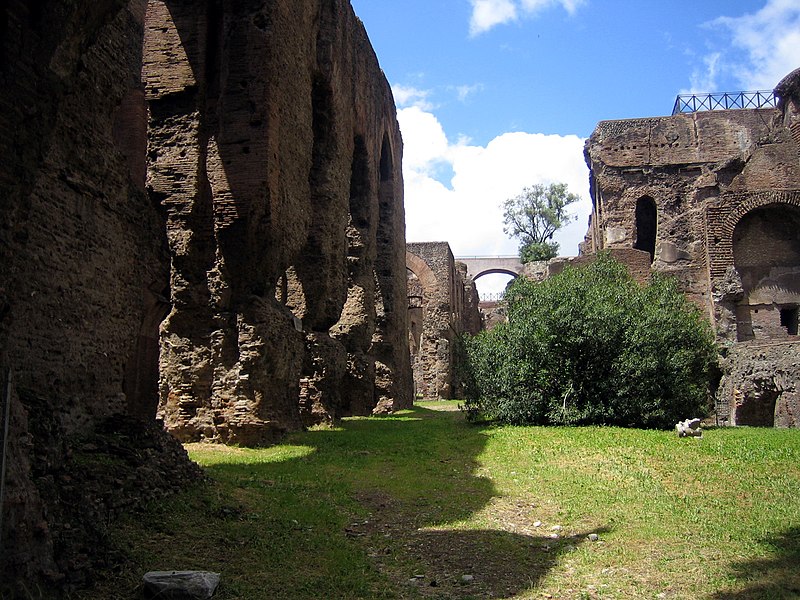
Baths of Septimius Severus
Europe,
Italy,
citta,
Palatino
The Baths of Septimius Severus, also known as Thermae Severianae, represent one of the most significant examples of thermal architecture from the imperial era in Rome. Built by the emperor Septimius Severus between 193 and 211 AD, these baths were located on the Palatine Hill, an area already densely populated with imperial buildings and a symbol of Roman power.
Septimius Severus, originally from the Roman province of Leptis Magna (in present-day Libya), became emperor during a period of great turmoil and transformation for the Roman Empire. During his reign, he undertook numerous military campaigns and construction projects, including the Severian Baths. These baths were intended to serve as a place of relaxation and well-being for the emperor and his court, as well as a symbol of his generosity and commitment to the city of Rome.
The Baths of Septimius Severus were built according to the classic layout of large Roman baths, with different rooms dedicated to hot, warm, and cold baths, namely the caldarium, tepidarium, and frigidarium. The complex also included gymnasiums, gardens, and rooms for social and cultural activities, creating a multifunctional environment that reflected the importance of baths in the daily life of Romans. The structure was adorned with precious marbles, colorful mosaics, and sculptures, testifying to its luxury and sophistication.
From an architectural point of view, the baths were a masterpiece of engineering. The water needed for the operation of the various rooms was supplied through a complex system of aqueducts and cisterns, ensuring a constant and abundant water supply. The construction techniques used included brickwork for the walls and concrete work for the foundations and vaults, demonstrating the advanced Roman technology in the field of construction.
With the fall of the Western Roman Empire, the Severian Baths, like many other ancient structures, fell into disuse and were gradually abandoned. Much of the building materials were reused for other constructions during the Middle Ages, and the baths were largely forgotten. However, some traces of their grandeur are still visible, especially thanks to the archaeological excavations conducted in the 19th and 20th centuries, which brought to light parts of the original structures.
Archaeological excavations have revealed a series of interesting finds, including fragments of mosaics and sculptural decorations, offering a valuable glimpse into the richness and sophistication of the baths. These artifacts are now displayed in various museums in Rome, allowing visitors to appreciate the magnificence of the Severian Baths and to better understand the culture and society of the imperial era.
An interesting anecdote related to the Baths of Septimius Severus concerns their location and their impact on the topography of the Palatine Hill. The imposing thermal complex was indeed located in an area already rich in public and private buildings, including the Domus Severiana, the imperial residence built by Septimius Severus, and other palaces of the Roman nobility. This concentration of prestigious structures made the Palatine Hill a true center of power and social life in Rome.
Read More