Bar
Europe,
Italy,
citta,
Lingotto
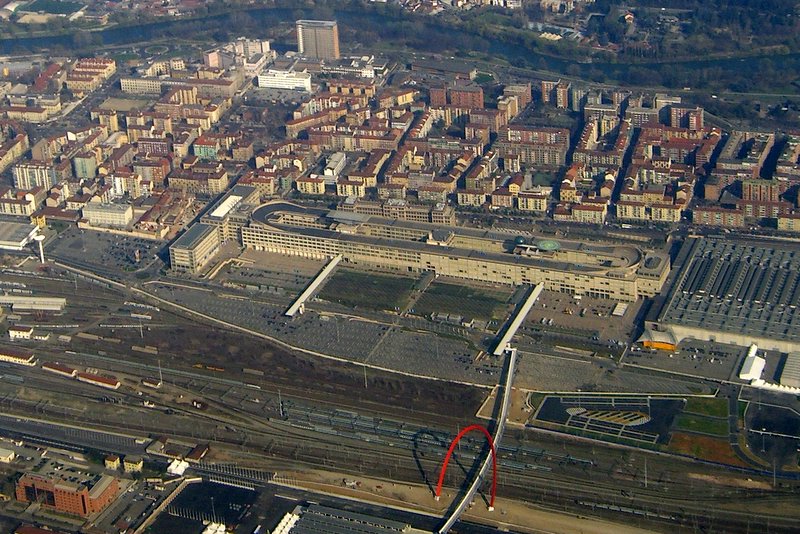
The Lingotto in Turin is one of the most iconic symbols of the Italian automotive industry and an example of how architecture can transform an urban neighborhood. Originally designed by architect Giacomo Mattè-Trucco and inaugurated in 1923 in the presence of King Vittorio Emanuele III, the Lingotto was commissioned by Giovanni Agnelli as a modern car factory, inspired by Ford’s assembly lines in the United States. With its 500 meters in length and a volume of one million cubic meters, the Lingotto represented a symbol of progress and modernity.
During its time as a factory, the Lingotto became famous for its test track on the roof, a distinctive feature that allowed cars to be tested directly after production. This track, one of the few in the world, was also immortalized in the famous 1969 film “The Italian Job”. The factory remained operational until 1982, when production was moved to Mirafiori, marking the end of an industrial era.
In the 1980s, the Lingotto risked becoming an abandoned monument of the industrial past, but thanks to the intervention of architect Renzo Piano, who won a competition in 1982 to transform the structure into a modern multifunctional center. Piano’s project kept the exterior of the building practically intact, preserving its historic grandeur, while the interior was completely redesigned to accommodate an exhibition center, a conference center, two hotels, offices, and commercial spaces.
One of the most fascinating aspects of Renzo Piano’s project was the ability to combine historical elements with new urban needs. Today, the Lingotto also includes the Pinacoteca Agnelli, an art gallery that houses a collection of artworks belonging to the Agnelli family, including masterpieces by Canaletto, Matisse, and Picasso. The presence of the art gallery adds an important cultural dimension to the complex, transforming it into a center of attraction not only commercially but also artistically.
Renzo Piano’s intervention did not stop at the building itself, but redesigned the entire surrounding area. The project included the creation of new green spaces and the integration of the Lingotto into the urban fabric through new road and pedestrian connections, making it a “social condenser” that connects different parts of the city and promotes community interaction.
Read More