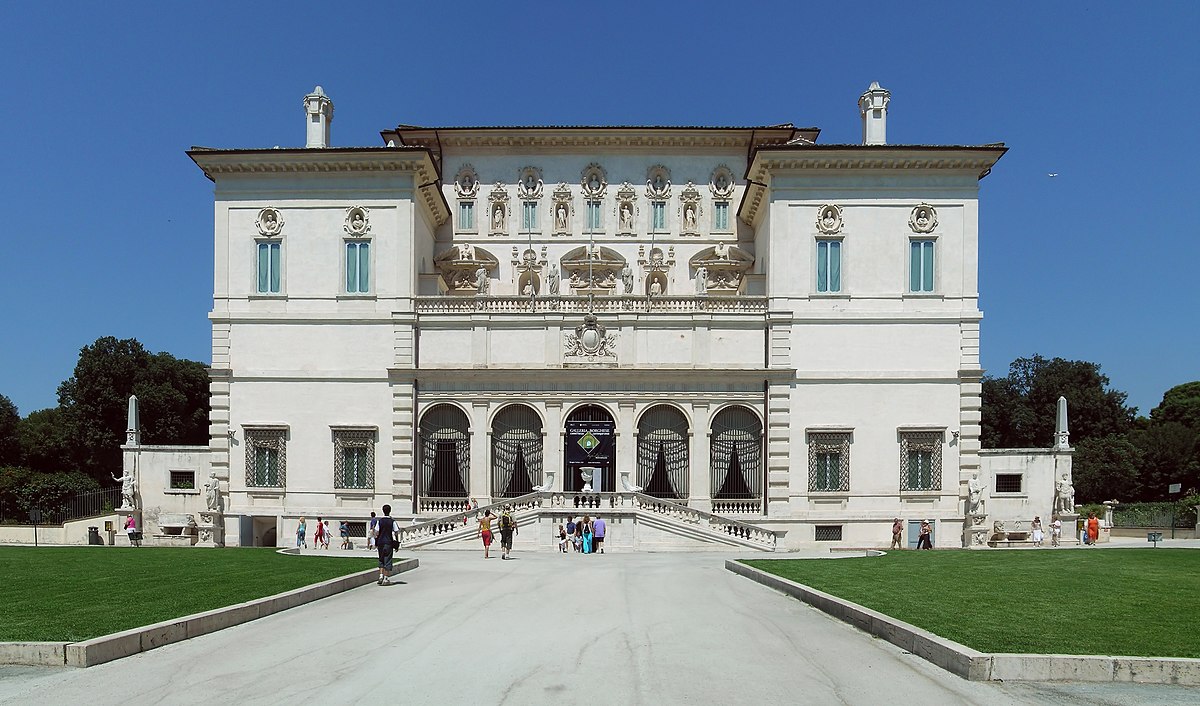
Borghese Gallery
Europe,
Italy,
citta,
Rione XVI - Ludovisi
The Borghese Gallery, located in the beautiful Villa Borghese Pinciana in Rome, is one of the most prestigious art galleries in the world, hosting an exceptional collection of Renaissance and Baroque artworks. Built in the early 17th century at the behest of Cardinal Scipione Borghese, the villa and gallery are a tribute to the cardinal’s passion for art and culture.
Cardinal Scipione Borghese, nephew of Pope Paul V, was a passionate and influential art collector. Under his guidance, Villa Borghese became the center of one of the most important art collections of the time, containing works by artists such as Bernini, Caravaggio, Raphael, and Titian. The construction of the villa, designed by architect Flaminio Ponzio and later completed by Giovanni Vasanzio, began in 1607 and was completed in 1633. The villa was conceived not only as a summer residence, but also as an ideal place to host and display the cardinal’s vast art collection.
The architecture of the Borghese Gallery is an extraordinary example of Mannerist style, with a facade adorned with reliefs and sculptures, and interiors richly decorated with frescoes and stuccoes. The interior of the villa is a triumph of elegance and splendor, with frescoed rooms housing sculptures and paintings of inestimable value. Each room is a masterpiece in itself, with decorations that seamlessly integrate with the displayed artworks.
One of the highlights of the Borghese Gallery’s collection is represented by the sculptures of Gian Lorenzo Bernini. Among the most famous works are “Apollo and Daphne,” a sculpture that captures the moment of Daphne’s transformation into a tree to escape Apollo, and “The Rape of Proserpina,” which shows the god Pluto as he kidnaps Proserpina. These sculptures are celebrated for their realism and Bernini’s ability to make marble almost come alive, with incredible details such as Pluto’s fingers sinking into Proserpina’s flesh.
The gallery also houses a series of masterpieces by Caravaggio, the master of chiaroscuro. Among these are “The Sick Bacchus,” “Boy with a Basket of Fruit,” and “David with the Head of Goliath.” Caravaggio’s works are known for their emotional intensity and dramatic use of light and shadow, characteristics that revolutionized painting of the time.
Other significant works include Titian’s “Sacred and Profane Love,” which represents a complex and ambiguous allegory of love, and Antonio Canova’s “Pauline Borghese as Venus Victorious,” a neoclassical sculpture depicting Pauline Borghese, Napoleon’s sister, as the goddess Venus.
The garden surrounding the villa, known as Villa Borghese, is one of the largest parks in Rome and offers an oasis of tranquility in the heart of the city. The gardens, originally designed as an integral part of the villa, include fountains, ponds, and a variety of exotic plants, creating an idyllic environment that complements the experience of visiting the gallery.
Over the centuries, the Borghese Gallery has undergone various modifications and restorations. In the 18th century, part of the collection was sold to Napoleon Bonaparte and transferred to the Louvre, but the gallery continues to host one of the richest and most diverse collections in the world. The most recent restoration, completed in 1997, has brought the gallery back to its former glory, making it accessible to the modern public.
Today, the Borghese Gallery is one of the most sought-after destinations for art lovers visiting Rome. Visits to the gallery are regulated by a reservation system that limits the number of visitors to ensure a more intimate and less crowded experience. This system allows visitors to admire the artworks in a peaceful and reflective environment, away from the chaos and frenzy of the city.
Read More