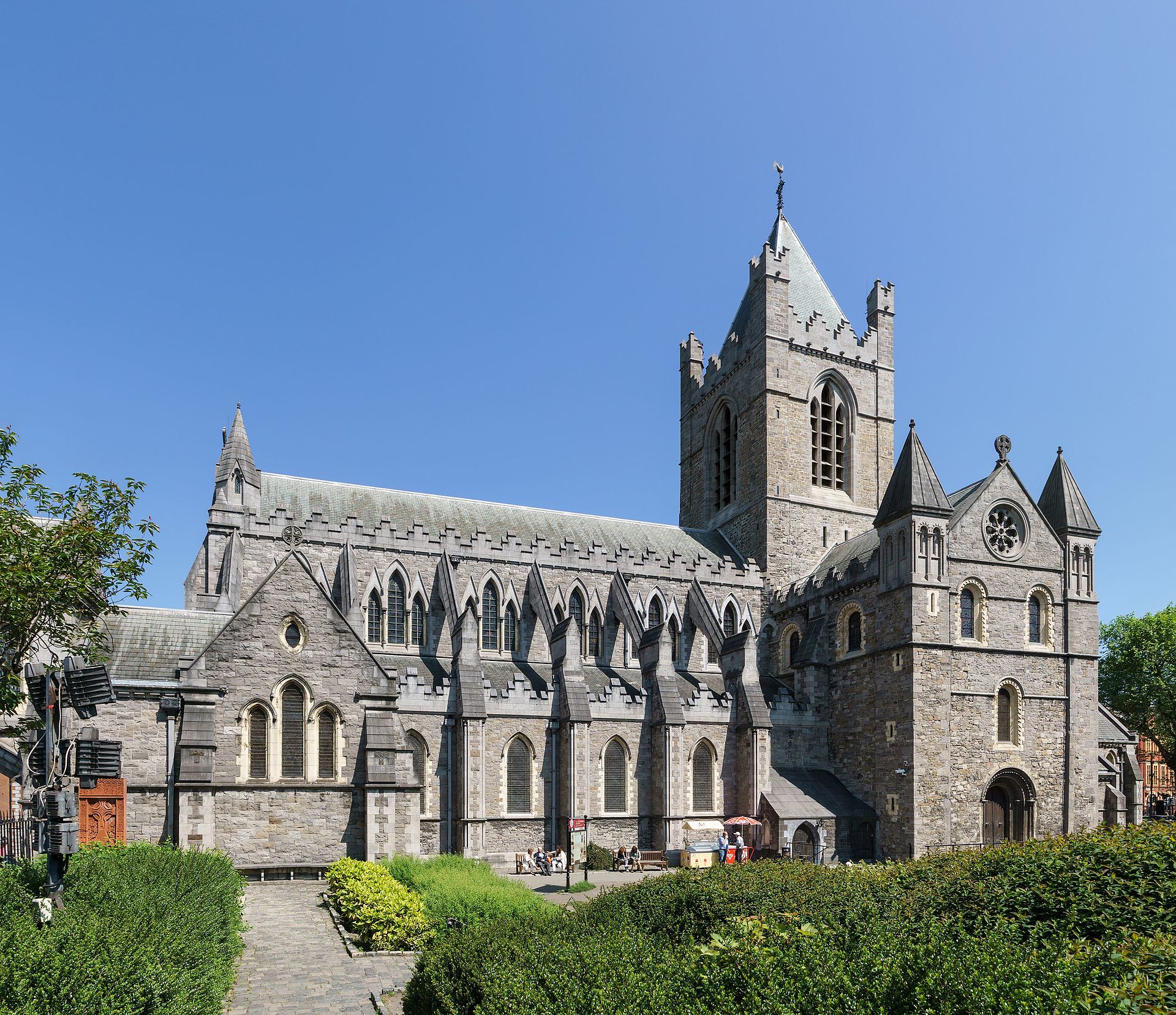
Christ Church Cathedral
Europe,
Ireland,
citta,
The Liberties
The Christ Church Cathedral in Dublin, officially known as the Cathedral of the Holy Trinity, is a majestic monument that dominates the heart of the city with its imposing Gothic architecture and millennial history. Founded in 1030 by the Viking king Sitric Silkbeard and the first bishop of Dublin, Dúnán, the cathedral represents a fascinating fusion of Norman, Viking, and Anglo-Norman influences.
The strategic location of Christ Church Cathedral is not accidental. Situated on a slight elevation, the original building was constructed on a site used for worship since pre-Christian times. This elevated position symbolized not only proximity to the divine but also a point of control and security for the city of Dublin, which was then a Viking settlement.Over the centuries, the cathedral has undergone numerous transformations and expansions. One of the most significant interventions was carried out by the Normans in the 12th century when Richard de Clare, known as Strongbow, rebuilt much of the structure in Romanesque style. His involvement was not only architectural but also political and social, as the cathedral became a symbol of Norman domination over Dublin.Christ Church Cathedral has always played a central role in the religious and civil life of the city. During the Protestant Reformation in the 16th century, the cathedral transitioned from the Catholic Church to the Church of Ireland, an event that profoundly marked its history and architecture. This period also saw the destruction of numerous Catholic ornaments and the introduction of more austere elements typical of Protestantism.One of the most fascinating elements of the cathedral is its crypt, one of the largest in the British Isles. Built in 1172, the crypt houses a series of historical treasures and artifacts, including a rare copy of the Irish Magna Carta and a collection of ecclesiastical silverware. The crypt is also known for housing a curious relic: the mummified remains of a cat and a mouse, discovered trapped inside the organ pipes in the 19th century, affectionately nicknamed “Tom & Jerry” by locals.The connection between the cathedral and the city of Dublin is further highlighted by the presence of the covered bridge, known as the “Synod Hall Bridge,” which connects the cathedral to the Synod Hall, another historic building that once housed the Synod of the Church of Ireland. This bridge is an iconic architectural feature of the city and symbolizes the importance of the cathedral as a focal point of religious life.From an artistic point of view, Christ Church Cathedral is renowned for its magnificent interior furnishings, including splendid stained glass windows, the carved wooden choir, and the mosaic floor. The stained glass windows, in particular, tell biblical stories and crucial historical events, illuminating the nave with plays of colored light that create an atmosphere of reverence and majesty.The cathedral is also famous for its role in popular culture and literature. James Joyce, one of the greatest Irish writers, mentions Christ Church Cathedral in his work “Dubliners,” highlighting its importance as a symbol of the city. Additionally, the cathedral has been used as a location for films and television series, helping to spread its image internationally.
Read More