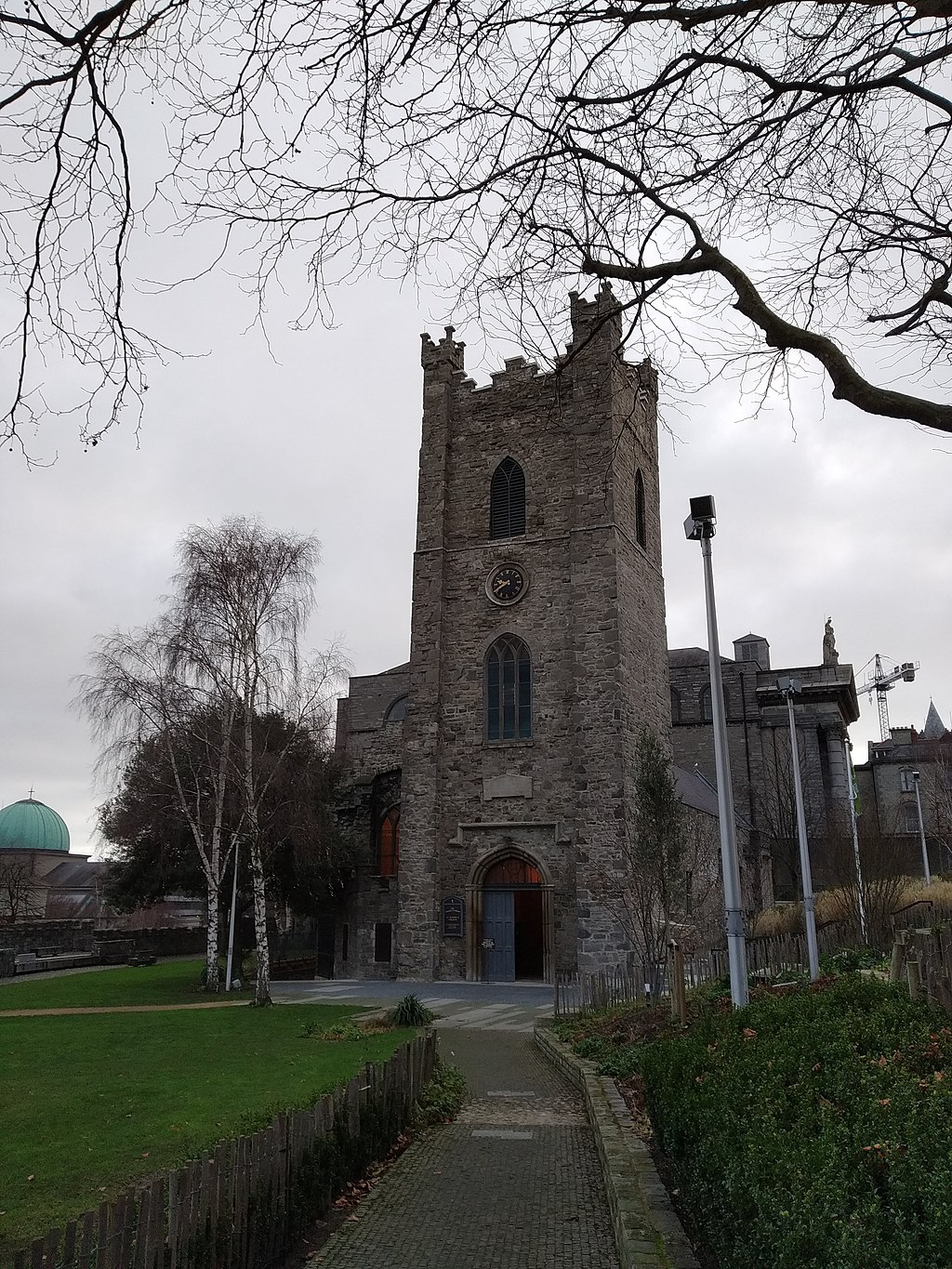
Church of St. Audoen
Europe,
Ireland,
citta,
The Liberties
In the heart of The Liberties district in Dublin stands St. Audoen’s Church, an architectural gem that carries with it centuries of history and spirituality. Dedicated to Saint Audoen of Rouen, a French bishop from the 7th century, this church is not only a place of worship but also a historical monument that bears witness to the city’s rich medieval heritage.
Built between 1190 and 1250, St. Audoen’s is one of the few remaining medieval churches in Dublin and represents a significant example of Irish Gothic architecture. The church has retained much of its original structure, despite numerous renovations and additions over the centuries. The building, constructed of gray limestone, is distinguished by its robustness and simplicity, typical characteristics of medieval ecclesiastical architecture.One of the most fascinating elements of St. Audoen’s Church is its bell tower, added in the 15th century. The tower, with its battlements and narrow slit windows, served not only as a belfry but also as a lookout and defense point during periods of conflict. Inside the tower is one of the oldest bells in Ireland, dating back to 1423, which still rings today to call the faithful to prayer.The church houses numerous tombs and monuments that tell stories of important Dublin families and notable historical figures. Among these, the tomb of the Harshavardhan family stands out, with a detailed engraving depicting a scene of the Resurrection. This monument is an extraordinary example of medieval funerary art and attracts attention for its beauty and the complexity of its details.In the 16th century, with the Protestant Reformation, St. Audoen’s Church became an Anglican place of worship. This change marked the beginning of a period of decline for many Catholic churches in Ireland, but St. Audoen’s managed to maintain its relevance thanks to its central location and historical importance. During the 17th and 18th centuries, the church underwent several restoration interventions, which partially altered its original appearance but helped to preserve it.From an artistic point of view, St. Audoen’s Church is also notable for its stained glass windows. Although many of the original windows have been lost, some modern windows were installed in the 19th and 20th centuries, depicting biblical scenes and figures of saints. These windows not only add beauty to the church’s interior but also create a play of light and color that enriches the spiritual experience of visitors.A distinctive feature of the church is the Connolly Chapel, a side chapel dedicated to John Connolly, an important benefactor of the church in the 19th century. The chapel, with its richly decorated altar and intricate wood carvings, is an example of the religious art of the time and testifies to the devotion and generosity of the parishioners. An interesting anecdote concerns the legend of the “Lucky Stone,” a stone embedded in the church’s outer wall, considered by many to be a good luck charm. It is said that touching this stone brings good fortune and protection, and it remains a pilgrimage destination for those seeking blessings and luck.
Read More