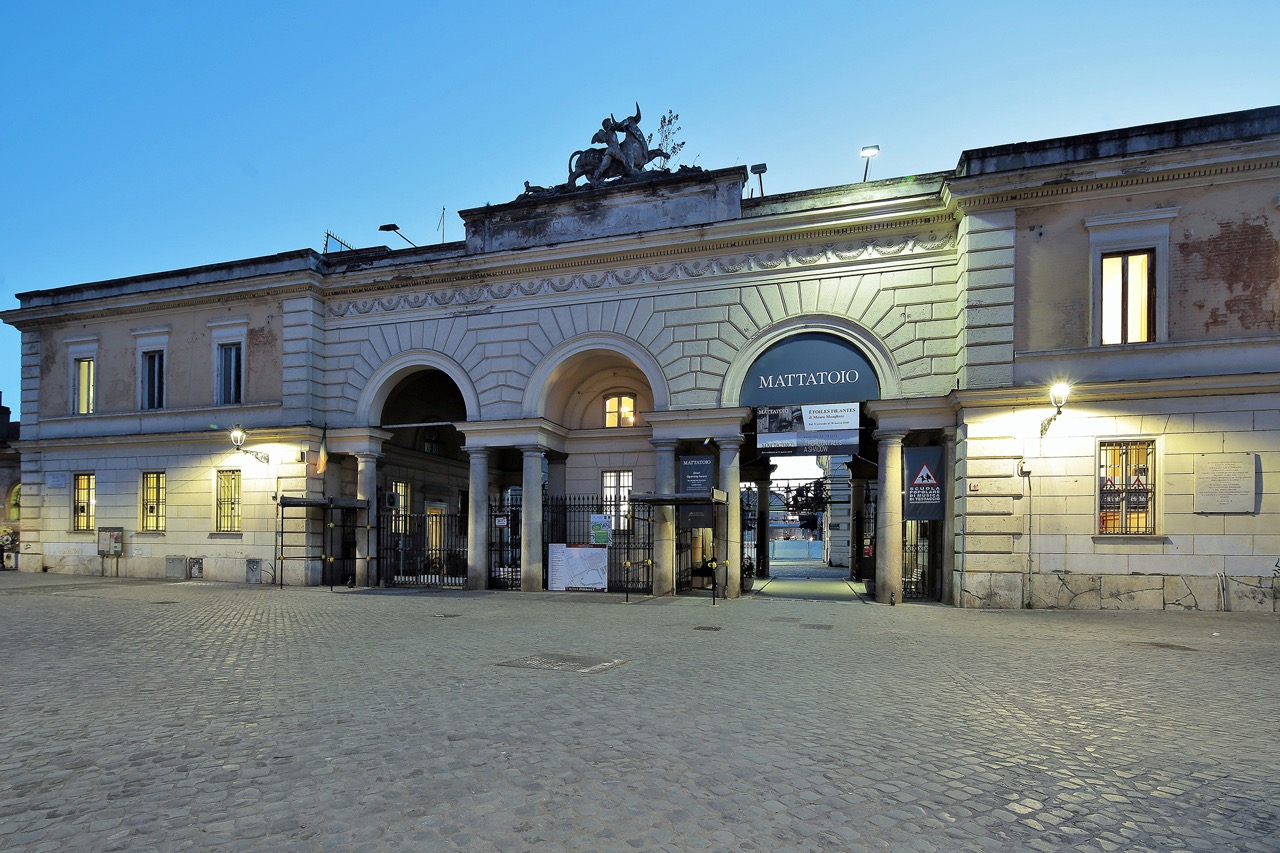
Former slaughterhouse
Europe,
Italy,
citta,
Rione XX - Testaccio
The former Testaccio Slaughterhouse is a fascinating example of how 19th-century industrial architecture can be transformed to meet contemporary cultural and social needs. Inaugurated in 1891 and designed by architect Gioacchino Ersoch, the Slaughterhouse complex was one of the largest and most modern slaughterhouses in Europe. The area covered approximately 105,000 square meters, with pavilions dedicated to various types of butchering, including pigs, cattle, and sheep, all connected by a system of hooks for transporting carcasses, ensuring hygiene and efficiency.
The choice of location in the Testaccio district was not random. The proximity to the Tiber River facilitated the transportation of animals and finished products, utilizing a logistics system that mirrored ancient Roman trade routes. However, the lack of housing nearby led to the construction of residential buildings to accommodate slaughterhouse workers, giving rise to the current Testaccio neighborhood. Workers often received part of their salary in kind, in the form of the so-called “fifth quarter,” the less valuable parts of the animals, which became the basis of traditional Roman cuisine, famous for dishes like “coda alla vaccinara.”The Slaughterhouse continued to operate until 1975 when it was finally closed. Subsequently, the area remained abandoned for several years until a redevelopment process began in the 1990s. This restoration project, culminating in 2002 with the opening of the Slaughterhouse as a branch of the Museum of Contemporary Art in Rome (MACRO), transformed the former slaughterhouse into a vibrant cultural center.One of the most fascinating aspects of visiting the Slaughterhouse is the opportunity to explore the old pavilions and corridors that were once traversed by animals. The structure still retains metal hooks and traces of its industrial past, offering a striking contrast with modern art installations. This dialogue between past and present makes the Slaughterhouse a unique place where historical memory intertwines with contemporary creativity.The Testaccio neighborhood, with its characteristic Monte Testaccio (Testaccio Hill), an artificial hill formed by fragments of Roman amphorae, is the ideal setting for this cultural revival. The lively gastronomic scene and traditional markets in the neighborhood reflect the lasting influence of the Slaughterhouse on daily life and the local economy. Testaccio has become a symbol of how an urban area can reinvent itself while keeping its history and identity alive.The restoration of the Slaughterhouse has been a successful example of industrial archaeology and urban redevelopment. Conservation efforts have preserved the originality and modernity of the structures, while adapting the spaces has created new opportunities for artistic and cultural expression. The reopening of the Slaughterhouse as a cultural space has not only safeguarded an important piece of Rome’s industrial history but has also breathed new life into an entire neighborhood.
Today, the Slaughterhouse hosts a variety of cultural and artistic spaces, including pavilions for contemporary art exhibitions, theatrical performances, and concerts. A significant example is La Pelanda, a space dedicated to exhibitions and artistic workshops. The complex also houses an organic market and a bicycle shop, and regularly hosts events such as vinyl record markets and gastronomic festivals, making the Slaughterhouse a focal point for alternative culture and social innovation in Rome.
Read More