Fountain of Amphorae
Europe,
Italy,
citta,
Rione XX - Testaccio
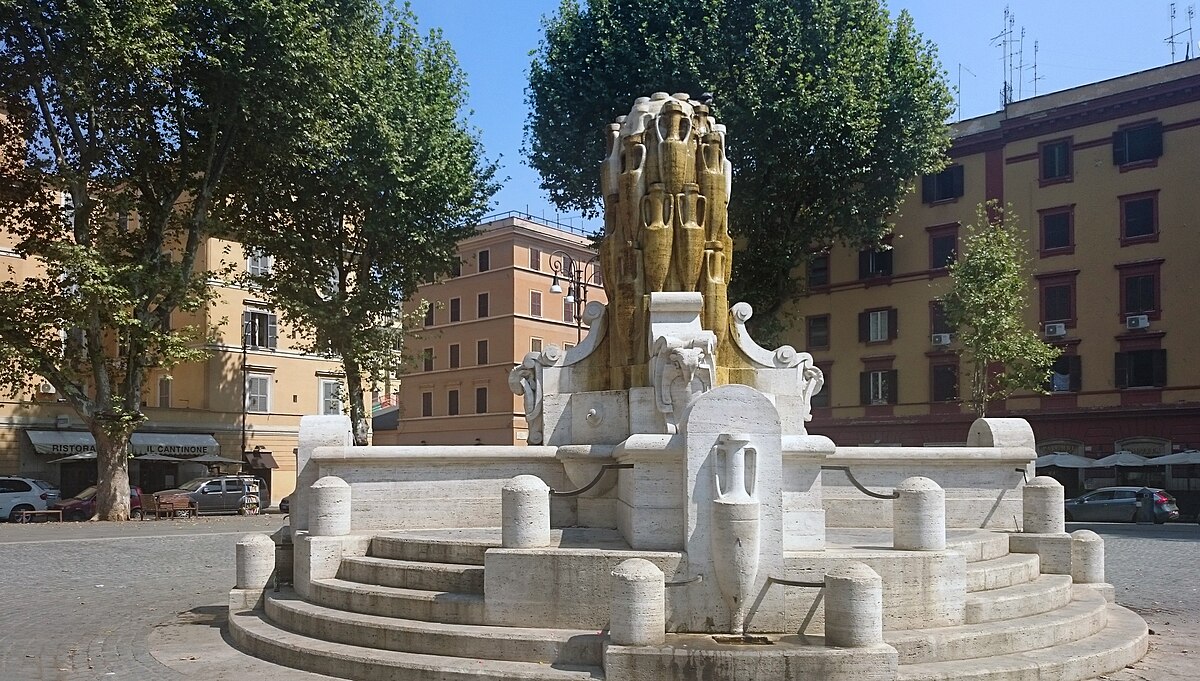
The Fountain of the Amphorae, located in the heart of Piazza Testaccio in Rome, is a work of art that perfectly embodies the history and identity of the Testaccio district. Designed by architect Pietro Lombardi in 1927, the fountain is a direct tribute to Monte Testaccio, the artificial hill composed almost entirely of fragments of ancient Roman amphorae, used for the transport of oil and wine during the imperial era.
Pietro Lombardi won a competition organized by the Municipality of Rome in 1924 to design a series of fountains celebrating the different districts of the city. Each fountain was to reflect the historical and cultural peculiarities of the neighborhood in which it would be placed. For Testaccio, Lombardi chose the motif of the amphorae, a symbol of the trade and daily life of ancient Rome, thus representing the deep connection between the district and its historical roots.
The fountain consists of a central conical structure, formed by a cluster of amphorae arranged to appear stacked. Water flows from the top of the structure and pours into four rectangular basins arranged in a cross shape around the central core. On the sides of the basins are amphorae in bas-relief from which water flows through spouts, an innovative solution that combines the aesthetics of an ornamental fountain with the functionality of a public watering trough.
The use of travertine, a typical stone of Roman architecture, gives the fountain a solid and monumental appearance, while the details of the amphorae recall the ancient use of the territory as a storage place for goods arriving in Rome through the nearby river port. Monte Testaccio, also known as “Monte dei Cocci,” is composed of approximately 53 million fragments of amphorae, an image faithfully reproduced by the fountain, creating a strong visual and symbolic connection with the surrounding landscape.
In 1935, the fountain was moved from Piazza Testaccio to Piazza dell’Emporio to make room for the local market, but it was returned to its original position in 2015 as part of a square renovation project. This return to its origins was welcomed with great enthusiasm by the local community, which saw the fountain as an identity symbol of the neighborhood. The reintroduction of the fountain has helped revitalize the square, transforming it into a vibrant and inclusive public space.
Testaccio, with its rich history and distinctive character, is now known for its lively gastronomic scene, traditional markets, and strong sense of community. The fountain is not just a decorative element, but also a symbol of the resilience and renewal capacity of the neighborhood. The daily activities that take place around the fountain, from markets to cultural events, reflect a historical continuity that unites past and present.
An interesting anecdote concerns the meaning of the amphorae themselves. During the Roman era, these were used for the transport of olive oil and wine, valuable goods that arrived from all over the Mediterranean. Monte Testaccio, in fact, is a visible testimony of this trade, being almost entirely made up of fragments of these broken amphorae. Lombardi’s choice to use this symbol in the fountain is not random, but deeply rooted in the economic and cultural history of the neighborhood.
Read More