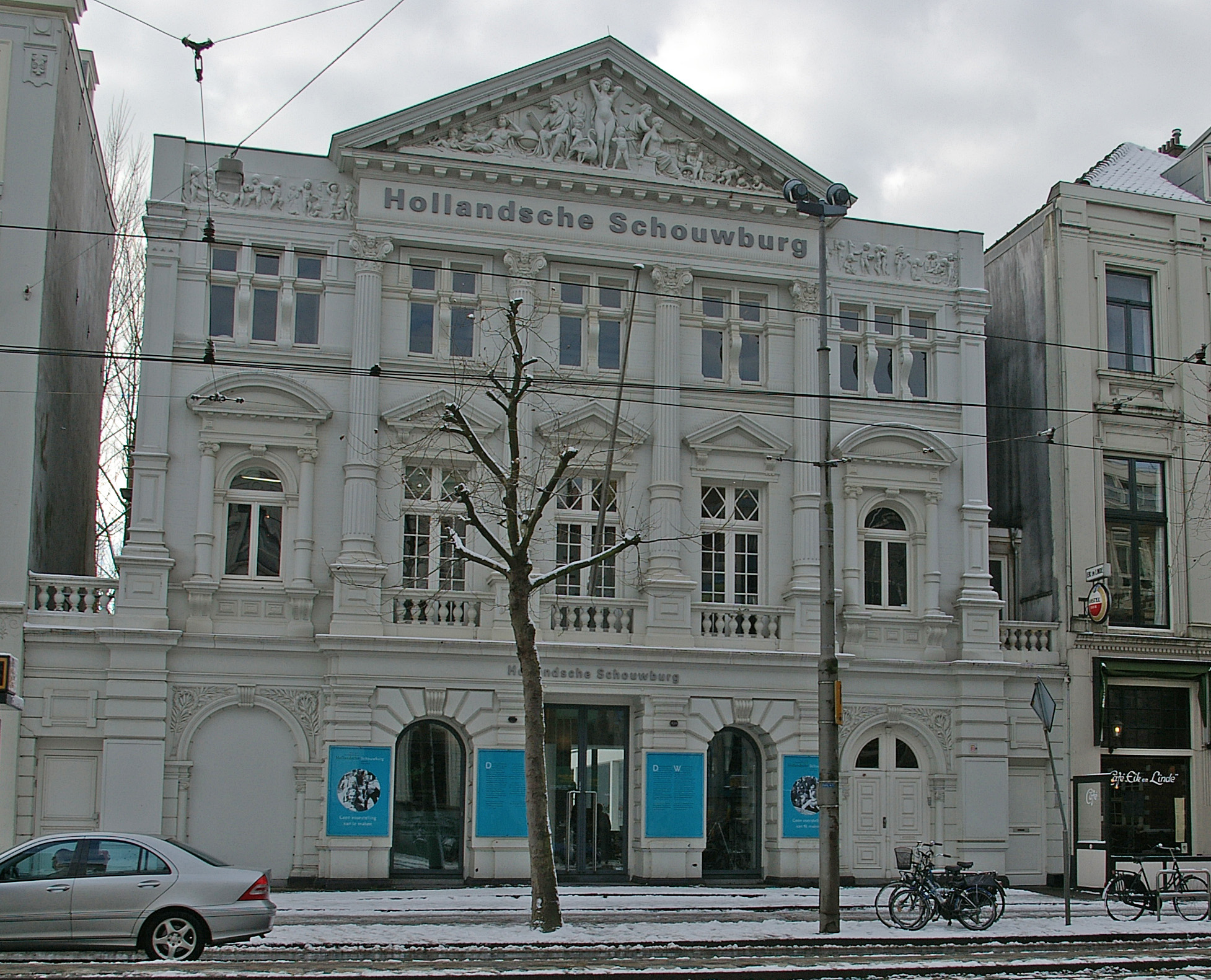
Hollandsche Schouwburg Theatre
Europe,
Netherlands,
Amsterdam, citta,
Plantage
The Hollandsche Schouwburg, located in the heart of Amsterdam, is a place steeped in a history as rich as it is painful. Originally built in 1892 as a theater, this building is now a memorial and museum dedicated to the victims of the Jewish Holocaust in the Netherlands. Its transformation from a place of entertainment to a symbol of collective memory reflects the profound changes that marked European history in the 20th century.
The building was designed by architect Herman Gerard Jansen in a Neo-Renaissance style, characterized by a majestic facade with elaborate decorations and a spacious interior suitable for hosting major theatrical performances. In the early decades of the 20th century, the Hollandsche Schouwburg was one of Amsterdam’s most important theaters, where prominent theater companies performed and works by famous authors were staged.However, with the Nazi occupation of the Netherlands during World War II, the theater underwent a dramatic transformation. In 1941, Nazi authorities requisitioned the building and converted it into a gathering place for Dutch Jews destined for deportation to concentration camps. From a theater of culture, the Hollandsche Schouwburg thus became a theater of horror, a starting point for thousands of people towards a fate of suffering and death.During its time as a gathering center, about 46,000 Jews were detained in the Hollandsche Schouwburg before being deported. The building represented the last point of contact with their previous lives, a place where families and friends were separated, often never to see each other again. Conditions inside were terrible, with overcrowding, lack of food and hygiene, and the constant fear of deportation.After the war, the Jewish community of Amsterdam and local authorities decided to transform the Hollandsche Schouwburg into a memorial to honor the memory of the victims. In 1962, the first commemorative monument was inaugurated, a plaque with the names of the victims and an eternal flame burning in their memory. This marked the beginning of the transformation of the place into a space for reflection and remembrance.In the 1990s, further renovations and expansions were carried out to create a museum that could tell the story of the Holocaust in the Netherlands and the role of the Hollandsche Schouwburg in those tragic events. Today, the museum hosts permanent and temporary exhibitions that illustrate Jewish life and culture before the war, Nazi persecutions, and the personal stories of victims and survivors.One of the most touching exhibitions is dedicated to Jewish children. During the war, children were separated from their parents and, in some cases, saved thanks to the Dutch resistance network that hid them in non-Jewish families. The exhibition tells these stories of hope and despair through photographs, personal objects, and direct testimonies from survivors.The museum’s inner courtyard has been transformed into a memorial garden, where visitors can reflect in silence and pay tribute to the victims. Here is also the Wall of Remembrance, on which the names of over 6,700 Holocaust victims are inscribed. This wall is a powerful symbol of collective memory and the importance of remembering to prevent such atrocities from happening again.
Read More