Hungarian National Museum
Europe,
Hungary,
Budapest, citta,
Józsefváros
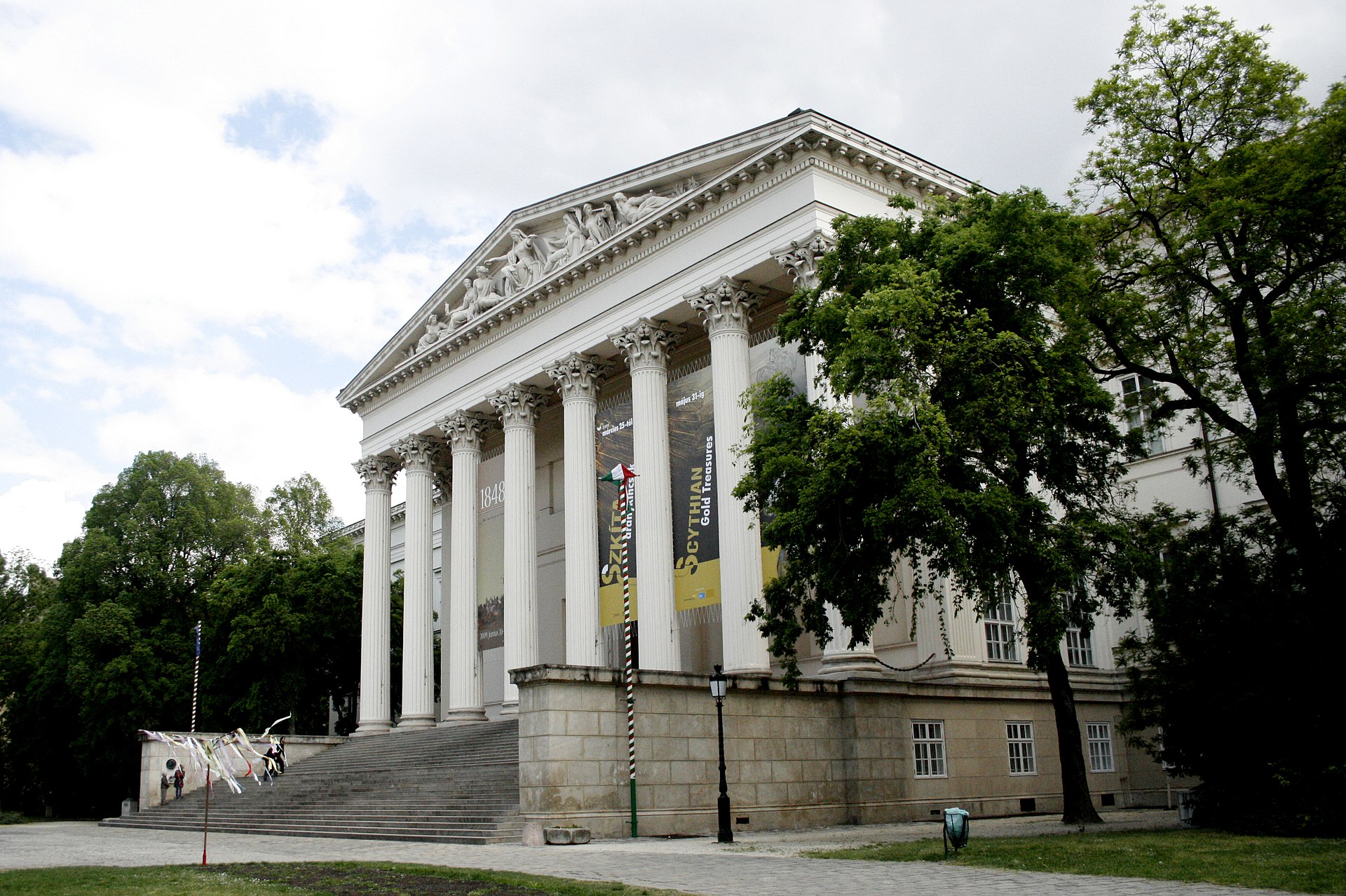
The Hungarian National Museum, located in the Józsefváros district of Budapest, is one of the main custodians of Hungarian history and culture. Founded in 1802 thanks to the donation of Count Ferenc Széchényi, the museum is housed in an imposing neoclassical building designed by architect Mihály Pollack and completed in 1847. This magnificent building is not just a container of historical artifacts, but a symbol of national identity and a center for education and research.
The foundation of the museum represents a milestone in Hungary’s cultural history. Count Széchényi, an enlightened patron, donated his private collection of books, manuscripts, and art objects to create a national library and museum that could serve as a resource for the study and preservation of Hungarian culture. This gesture of generosity gave impetus to the creation of an institution that would play a crucial role in shaping national identity.The museum building, with its elegant neoclassical facade and majestic columned portico, is an architectural masterpiece that reflects the aesthetic canons of the time. Inside, the museum houses a wide range of collections ranging from archaeology to history, from ethnography to art. Each section of the museum is carefully curated to offer visitors an immersive and educational experience.One of the most fascinating collections of the Hungarian National Museum is the archaeological one, which includes artifacts ranging from the Paleolithic to the Roman era. Among the most significant pieces are stone tools, ceramics, jewelry, and various artifacts that testify to the daily life and religious beliefs of the ancient populations that inhabited the Carpathian Basin region. The Roman collection is particularly rich, with mosaics, sculptures, and tombstones that offer an in-depth look at the Roman presence in Hungary.The museum is also famous for its collection of medieval and Renaissance objects, including precious manuscripts, weapons, armor, and sacred art. These artifacts tell the tumultuous history of Hungarian medieval times, characterized by wars, invasions, and the emergence of a strong and rooted Christian culture. The section dedicated to the Renaissance, on the other hand, highlights the period of cultural and economic revival that Hungary experienced under the reign of Matthias Corvinus.An important part of the museum’s collection concerns the 1848 Revolution, a key event in the struggle for Hungarian independence from the Habsburg Empire. Among the exhibited pieces are flags, documents, and personal belongings of the revolutionary leaders, offering a poignant testimony to the sacrifice and courage of Hungarian patriots. It is famous that the poet Sándor Petőfi recited his “National Song” on the museum steps, an event that helped trigger the revolution. The museum’s recently renovated garden is another point of interest. This green space surrounding the building has been the scene of numerous historical events and continues to be a meeting place for the citizens of Budapest. The garden also hosts the Museum Festival, an annual cultural event that attracts both locals and tourists, offering a rich program of activities and performances.
Read More