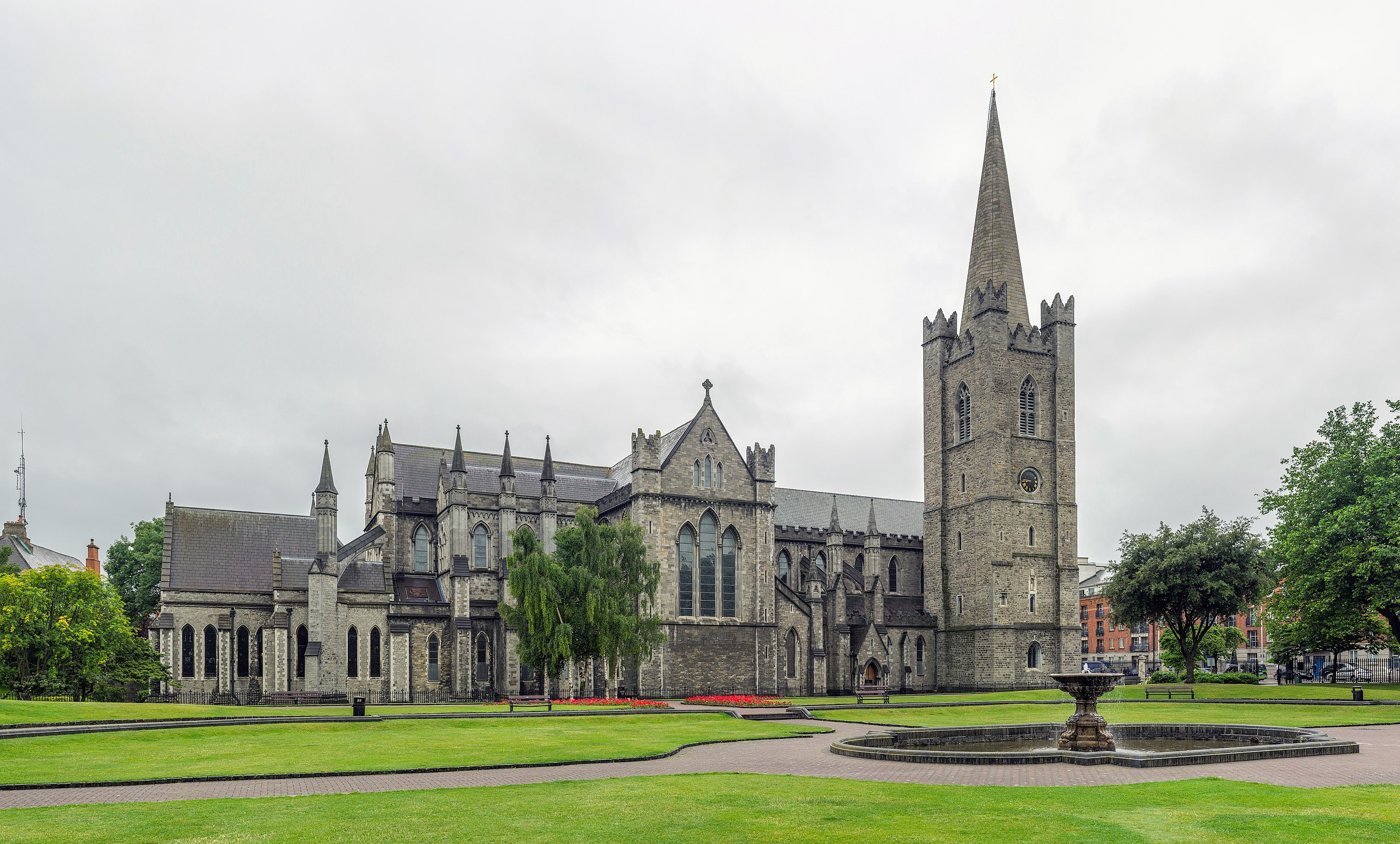
St. Patrick's Cathedral
Europe,
Ireland,
citta,
The Liberties
St. Patrick’s Cathedral, located in the heart of Dublin, is a masterpiece of Gothic architecture and a powerful symbol of Irish religious and cultural history. Founded in 1191, the cathedral is dedicated to Saint Patrick, the patron saint of Ireland, and represents one of the most important places of worship of the Church of Ireland. With a history spanning over eight centuries, St. Patrick’s has witnessed moments of great historical and social significance, evolving from a simple place of prayer to a national monument.
The cathedral stands majestically with its imposing spires and the grand bell tower, making it one of the tallest structures in Dublin. The Gothic architecture is characterized by pointed arches, stained glass windows, and meticulous attention to decorative details. Its original structure has been expanded and modified over the centuries, with significant restoration work carried out in the 19th century thanks to the generosity of Sir Benjamin Lee Guinness, a descendant of the famous brewing family.One of the most fascinating aspects of St. Patrick’s Cathedral is its connection with the famous writer Jonathan Swift, author of “Gulliver’s Travels.” Swift served as the dean of the cathedral from 1713 to 1745, and his tomb, along with that of his beloved Stella, is located within the cathedral itself. Swift’s presence has left an indelible mark on the history of the place, with numerous relics and monuments commemorating his life and works.Inside the cathedral, visitors can admire a series of monuments and plaques that tell stories of illustrious figures and significant historical moments. The choir, with its carved stalls and decorated pulpit, is a masterpiece of craftsmanship. The cathedral also houses St. Patrick’s Chapel, an area dedicated to the memory of Irish soldiers who fell in service, with flags and insignias that testify to their courage and sacrifice.The cathedral’s stained glass windows are particularly notable, with vivid colors and intricately depicted biblical scenes that filter natural light spectacularly. These works of art, created by renowned glass artists such as Harry Clarke, add a spiritual and aesthetic dimension to the sacred environment.St. Patrick’s Cathedral has also played a significant role in Ireland’s social and political life. During the Easter Rising of 1916, the cathedral was a place of refuge and assistance for many, and its history is intrinsically linked to the tumultuous events that have shaped the nation. Additionally, the cathedral has been the site of important national ceremonies and celebrations, cementing its status as a symbol of Irish identity. The cathedral garden, known as St. Patrick’s Park, is a green oasis in the heart of the city, offering a tranquil place for walking and reflection. The park is adorned with statues and fountains, including a statue of Saint Patrick that commemorates the place where he is said to have baptized converts to Christianity. This green space adds an additional level of beauty and serenity to the cathedral, making it an ideal place for a break from the hectic pace of urban life.
Read More