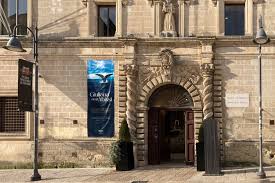
National Archaeological Museum Domenico Ridola
Europe,
Italy,
citta, Matera,
Centro
The National Archaeological Museum Domenico Ridola, located in the heart of Matera, is one of the oldest and most important archaeological museums in Italy. Founded in 1911, the museum is named after Domenico Ridola, a doctor and senator with a deep passion for archaeology. Ridola, through his research, significantly contributed to the discovery and preservation of numerous artifacts from the prehistory and protohistory of Basilicata.
The museum is housed in a historic building and hosts a vast collection of artifacts that tell the human history in the Matera region, from the earliest times to the Iron Age. Ridola’s collection includes stone tools, ceramics, and other artifacts that testify to the evolution of human communities from prehistory to the Hellenistic period.
One of the most significant artifacts is the so-called “Serra d’Alto Style”, a type of Neolithic pottery decorated with geometric and linear motifs, reflecting the technological and artistic advancement of Neolithic populations. This style is named after the archaeological site of Serra d’Alto, where numerous fragments of decorated pottery were discovered.
The prehistory section offers a rich display of stone tools, bones, and ceramics, narrating the technological and cultural evolution of prehistoric communities. Of particular interest are the artifacts from the Grotta dei Pipistrelli, a site that has yielded numerous lithic tools and faunal remains dating back to the Paleolithic.
The museum also houses a collection of red-figure vases from Magna Graecia, with exceptionally beautiful specimens attributed to renowned ceramists such as the “Painter of Darius”. These vases, characterized by detailed and complex decorations, depict mythological and everyday scenes, offering a glimpse into the life and beliefs of the ancient Greek populations of the region.
A particularly fascinating section of the museum is dedicated to the funerary goods from the tumuli of Timmari, an archaeological site located near Matera. These goods, dating back to the 4th century BC, include bronze armor, weapons, and monumental vases, testifying to the social and ritual importance of aristocratic burials.
Over the years, the Ridola Museum has expanded its collections through archaeological excavations and donations, including artifacts from later periods such as the Roman and medieval periods. This continuous enrichment has allowed the museum to offer a comprehensive overview of the region’s history, from the earliest traces of human settlement to modern times.
In addition to its exhibition function, the Ridola Museum is also an important center for research and education. It collaborates with universities and research institutions to conduct archaeological studies and promote knowledge of the cultural heritage of Basilicata. It regularly organizes temporary exhibitions, conferences, and educational activities for the public, helping to spread the passion for archaeology and history.
A recent project of great relevance was the restoration of the fossil of the “Giuliana Whale”, discovered in 2006 on the shores of Lake San Giuliano, a few kilometers from Matera. This fossil, dated to about one million years ago, is one of the most important paleontological discoveries in the region and adds another element of interest to the museum visit.
Read More