Immersive Museum of La Bruna
Europe,
Italy,
citta, Matera,
Centro
The Immersive Museum of La Bruna in Matera represents an extraordinary fusion of history, tradition, and modern technology, offering visitors a unique experience that celebrates the Feast of La Bruna, one of the most heartfelt and participated religious events in the city. Located in the heart of Matera, the museum uses advanced augmented and virtual reality technologies to recreate the atmosphere and highlights of this ancient celebration.
The Feast of La Bruna, which takes place every year on July 2nd, has deep roots in the history and culture of Matera. Dedicated to the Madonna of La Bruna, the city’s patron saint, the festival mixes elements of religious devotion with popular and folk traditions. The day is characterized by a series of events culminating in the procession of the triumphal chariot, followed by the spectacular destruction of the chariot itself, a symbol of renewal and purification.
The Immersive Museum of La Bruna was conceived to preserve and transmit the emotions and meaning of this centuries-old festival. Through an innovative exhibition path, visitors can fully immerse themselves in the various aspects of the celebration. Multimedia and interactive installations allow exploration of the history of the festival, its origins, transformations over the centuries, and the symbolic meaning of each ritual.
At the entrance of the museum, visitors are welcomed by a virtual reconstruction of the city of Matera, with particular attention to the streets and squares that become protagonists during the festival. Using virtual reality headsets, it is possible to experience firsthand the procession, following the triumphal chariot on its route through the city, accompanied by the crowd of faithful and the sounds of the music band.
One of the most fascinating elements of the museum is the detailed reproduction of the triumphal chariot. Every year, the chariot is built from scratch by skilled artisans, using traditional techniques passed down from generation to generation. The museum offers an in-depth look at the chariot construction process, from the initial design stages to the final realization. Through videos and documentaries, visitors can get a close look at the artisans’ work, understand the technical challenges, and appreciate the beauty of the decorative details.
The section dedicated to the destruction of the chariot is particularly evocative. This rite, which may appear violent to an outsider, is actually a moment of great collective and symbolic participation. The destruction of the chariot represents the struggle between good and evil, with the victory of the former symbolized by the resurrection of the Madonna of La Bruna. The museum offers an engaging narrative of this rite, allowing visitors to grasp the deep meaning and community value of this act. The museum not only tells the story of the Feast of La Bruna through history and tradition but also explores its contemporary social and cultural impact. Interviews with participants, testimonies from citizens, and sociological studies presented in various installations offer a comprehensive overview of how the festival influences the life of the Matera community, strengthening social ties and collective identity.
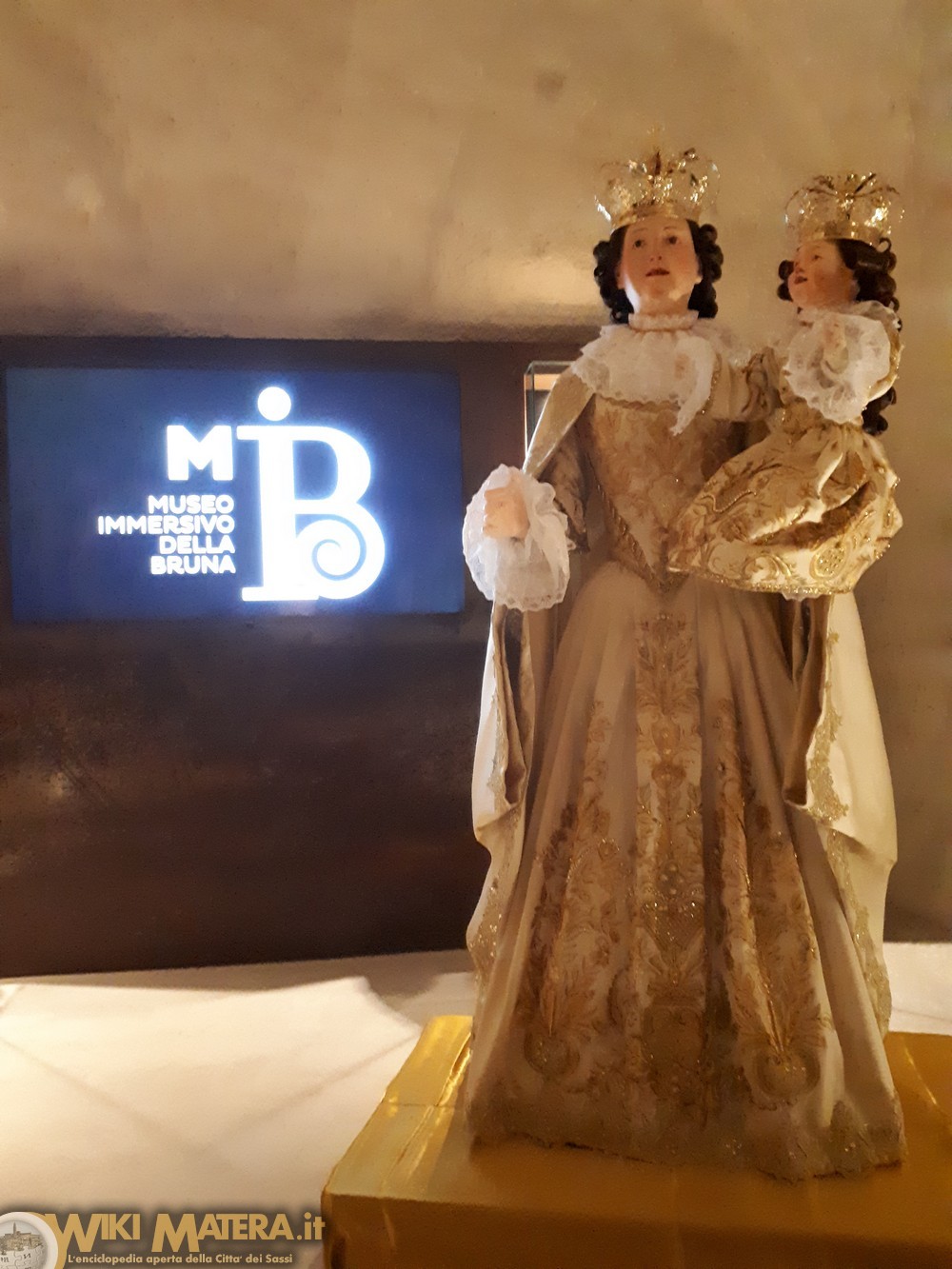
Furthermore, the Immersive Museum of La Bruna dedicates ample space to the religious aspect of the festival. Through multimedia installations, the highlights of the liturgical celebrations are presented, from solemn masses to religious processions, highlighting the devotion of the faithful and the central role of the Church in the community’s life. The figure of the Madonna of La Bruna, with her iconography and attributed miracles, is explored in detail, offering a deeper understanding of Marian worship in Matera.
Another section of the museum is dedicated to the music and sounds of the festival. The music band, with its triumphal marches and traditional melodies, is a fundamental element of the celebration. The museum allows visitors to listen to and learn about the musical pieces that accompany the festival, explaining their origin and significance. Through interactive installations, visitors can even try their hand at conducting a virtual band, experiencing firsthand the thrill of leading the festival’s soundtrack.
Finally, the museum houses a collection of art and craftsmanship related to the Feast of La Bruna. Among these are the models of the triumphal chariots made in past years, sculptures and decorations used to adorn the chariot, and reproductions of the liturgical vestments worn during the celebrations. These objects offer a unique glimpse into the artistic and stylistic evolution of the festival, showing how cultural and artistic influences have integrated over the centuries.
Read More