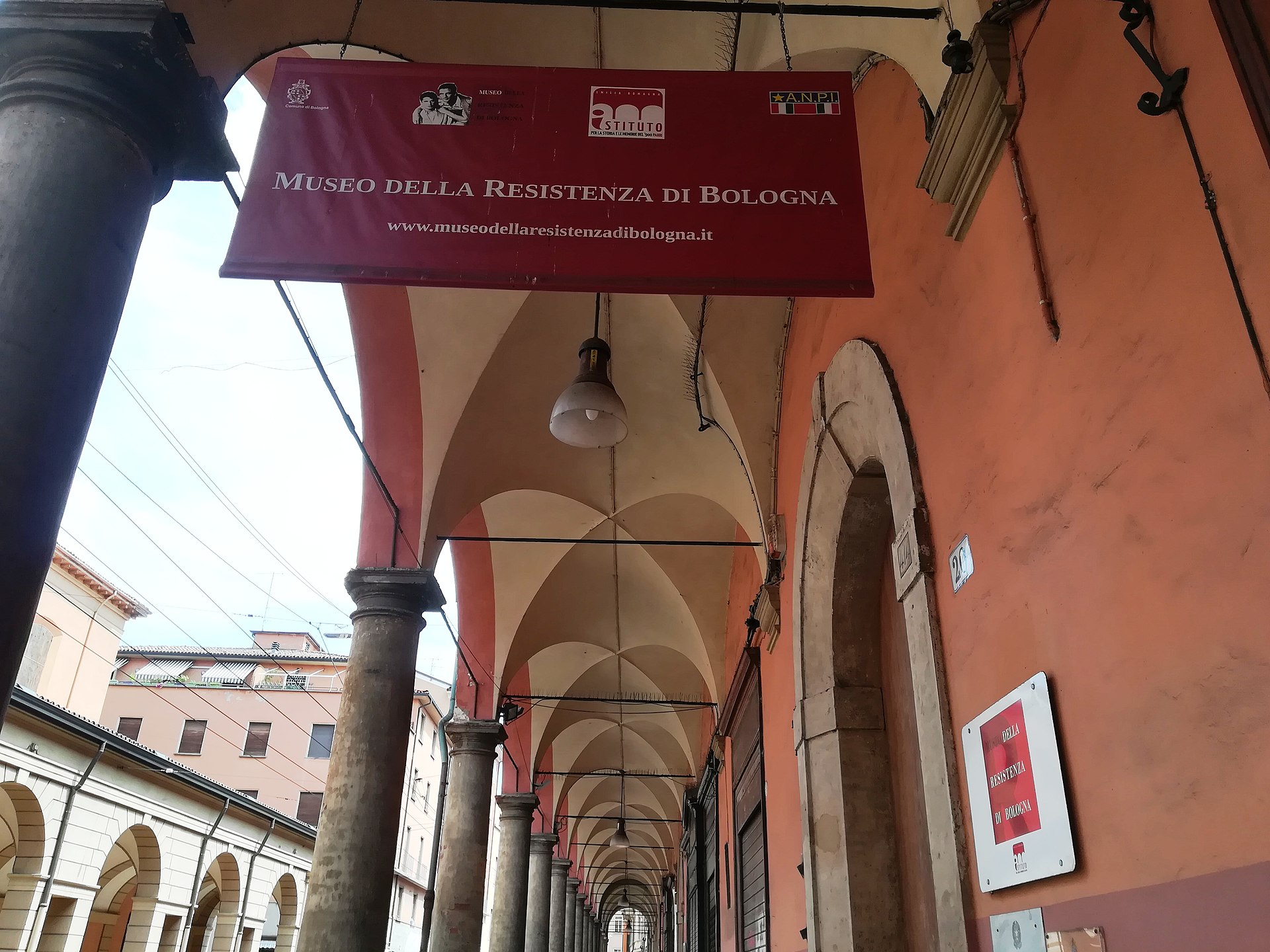
Museum of the Resistance of Bologna
Europe,
Italy,
Bologna, citta,
Santo Stefano
The Museum of Resistance in Bologna is a place of memory and reflection dedicated to the partisan struggle and the Italian Resistance during the Second World War. Located in Via Sant’Isaia, the museum is housed in the former Collegio di Spagna, a historic building dating back to the fourteenth century which alone represents a testimony of Bologna’s rich past.
The museum was inaugurated in 1955 thanks to the initiative of the National Association of Italian Partisans (ANPI) and other local entities, with the aim of preserving and passing on the memory of the Resistance. Its collections include documents, photographs, oral testimonies, posters, and memorabilia that tell the story of the partisans, resistance groups, and the civilian population who opposed the fascist regime and Nazi occupation.
A visit to the Museum of Resistance offers an emotional and moving journey through the darkest years of the twentieth century. At the entrance, visitors are greeted by a large panel illustrating the timeline of the main events of the Second World War and the Resistance in Italy. This historical context is essential for understanding the significance and importance of the exhibited testimonies.
One of the most touching sections of the museum is dedicated to the letters of those sentenced to death in the Resistance. These documents, written by young men and women just moments before being shot, offer a raw and authentic glimpse of the courage and determination of those who fought for freedom. Their words, full of hope and love for their country, still resonate today as a powerful reminder of the value of freedom and democracy.
The exhibition continues with a series of period photographs and films documenting daily life during the Nazi occupation. The images of bombings, destruction, and repression show the brutality of the conflict, but also the extraordinary resilience of the people of Bologna. Among the exhibited materials, stand out the photographs of the partisans in the Apennine mountains, their sabotage actions, and moments of community life in improvised shelters.
The museum also dedicates ample space to the partisan groups that operated in the Bolognese territory. The Garibaldi, Matteotti, and Giustizia e Libertà brigades are recounted through informative panels, uniforms, weapons, and personal items of the fighters. These artifacts offer a complete picture of the strategies and tactics used in the fight against the Nazi fascists, highlighting the fundamental contribution of women in the Resistance, both as fighters and as couriers and logistical support.
Another section of great interest is dedicated to the symbolic places of Resistance in Bologna. Among these, the Jewish ghetto, the scene of deportations and persecutions, and the Ardeatine Caves, where mass killings were carried out. The museum reconstructs these events with historical precision, offering a detailed perspective on how the war severely affected the local community.
A distinctive element of the museum is its focus on direct testimony. There are numerous interviews and accounts of surviving partisans, collected over years of work by the historians and curators of the museum. These voices, speaking of hope, fear, courage, and solidarity, enrich the visitor’s experience and offer an emotional and personal connection to history.
The museum also houses a specialized library, rich in volumes, essays, and magazines on the Resistance and contemporary history. This space is available to scholars, researchers, and students who wish to deepen their knowledge and conduct academic research. The library represents an important documentation center, contributing to the dissemination of historical knowledge and the promotion of scientific research.
Read More