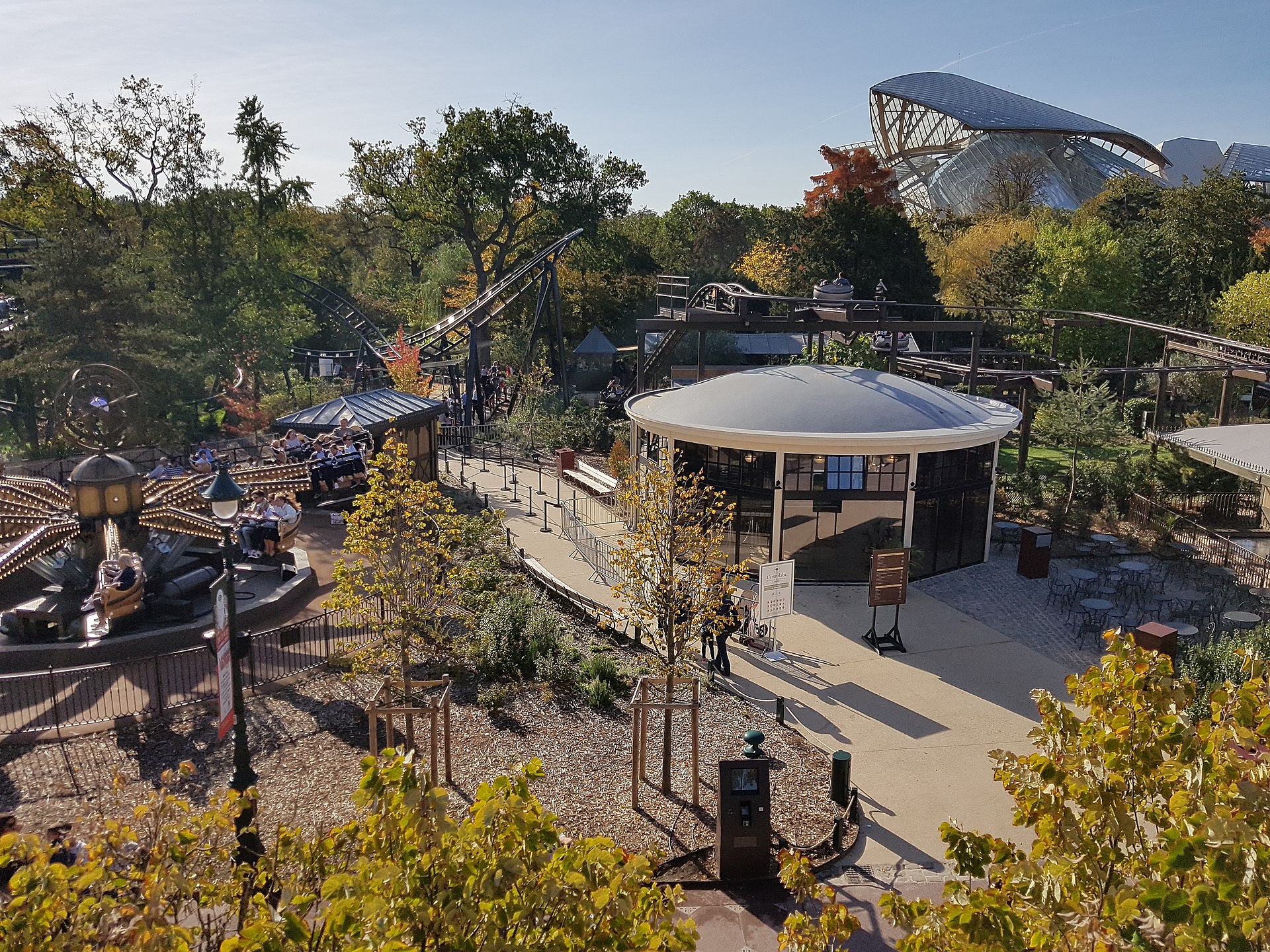
Louis Vuitton Foundation
Europe,
France,
citta,
XVI arrondissement
The Louis Vuitton Foundation, located in the Bois de Boulogne in Paris, represents a sublime expression of contemporary art and modern architecture. Inaugurated in 2014, this cultural institution quickly became one of the city’s symbols, thanks to its extraordinary design by architect Frank Gehry and its mission to promote art and culture.
The idea of creating the Louis Vuitton Foundation came from the vision of Bernard Arnault, chairman and CEO of the LVMH group (Moët Hennessy Louis Vuitton). Arnault, a great art enthusiast, wanted to create a space that was not just a gallery, but a true temple dedicated to contemporary creativity. To realize this vision, Arnault turned to Gehry, one of the most innovative and influential architects of our time.
Frank Gehry, famous for his bold and organic architectural forms, conceived the Foundation as a “glass ship” floating among the trees of the Bois de Boulogne. The building, covering an area of 11,000 square meters, consists of twelve glass sails that envelop the main structure in a play of transparencies and reflections. This design required cutting-edge engineering techniques and the use of innovative materials, making the Foundation an extraordinary example of contemporary architecture.
The construction process of the Foundation was not without challenges. The project required careful integration with the surrounding natural environment and compliance with Paris’s strict urban planning regulations. However, the final result is a building that harmoniously blends with the landscape of the Bois de Boulogne, creating a dialogue between art, architecture, and nature.
Inside, the Louis Vuitton Foundation houses a wide range of exhibition spaces spread over four levels. These spaces are designed to be flexible and adaptable, in order to host temporary exhibitions of various kinds, from visual arts to music, to performance. The Foundation’s permanent collection includes works by some of the most important contemporary artists, including Gerhard Richter, Ellsworth Kelly, Jean-Michel Basquiat, and Olafur Eliasson.
One of the most interesting aspects of the Foundation is its program of temporary exhibitions, which often explore innovative and interdisciplinary themes. For example, the inaugural exhibition “The Keys to a Passion” presented fundamental works of modern art history, creating a dialogue between the past and the present. Other exhibitions have explored the connections between art and science, architecture and sustainability, and new digital technologies.
The Louis Vuitton Foundation is not just an exhibition space, but also a center for cultural production. In addition to exhibitions, the Foundation organizes concerts, performances, conferences, and educational workshops. These events aim to engage a wide and diverse audience, offering accessible and stimulating cultural experiences. The Foundation also collaborates with other cultural and artistic institutions, both in France and internationally, to promote the exchange of ideas and practices.
A significant aspect of the Foundation’s mission is its commitment to arts education. The Foundation offers educational programs for schools, families, and groups of young people, with the aim of introducing new generations to contemporary art. These programs include guided tours, creative workshops, and meetings with artists, allowing participants to explore art interactively and engagingly.
From a political and social perspective, the Louis Vuitton Foundation represents an example of how the private sector can significantly contribute to the promotion of culture and art. The project was entirely funded by the LVMH group, demonstrating the growing role of private companies in sponsoring cultural initiatives. This model of cultural patronage reflects a forward-thinking vision that recognizes the importance of art as a fundamental element for the growth and development of society.
The architecture of the Foundation has sparked admiration and debate since its inauguration. Many critics have praised Gehry’s ability to create a building that, while being highly innovative, respects and enhances the natural context in which it is located. The combination of fluid forms and transparent materials creates a sense of lightness and movement, transforming a visit to the Foundation into a unique sensory experience.
Read More