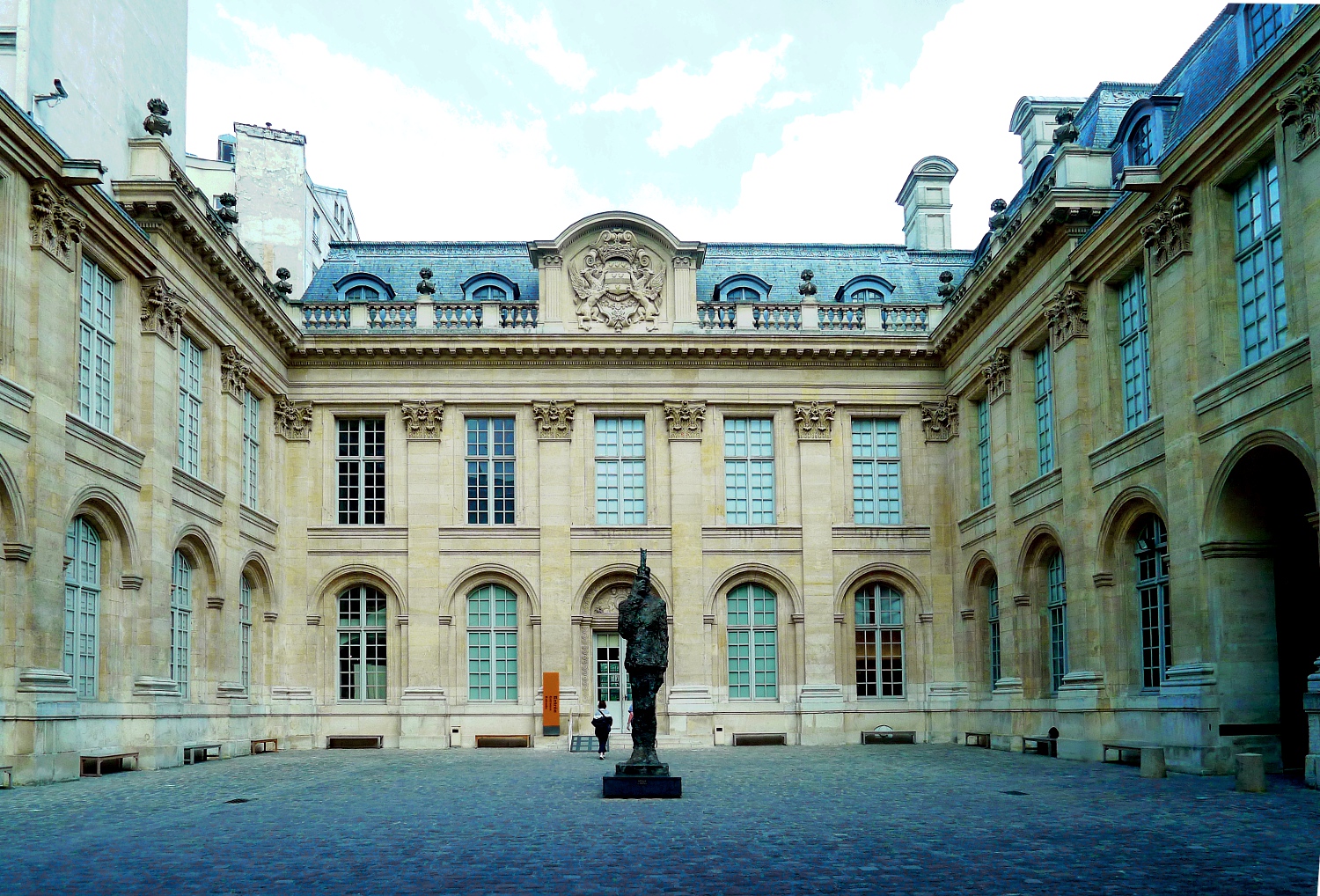
Museum of Jewish Art and History
Europe,
France,
citta,
III arrondissement
The Museum of Art and History of Judaism (MAHJ) is located in the elegant Hôtel de Saint-Aignan, in the Marais district of Paris, and represents one of the most significant cultural institutions dedicated to the history and art of Judaism in Europe. Inaugurated in 1998, the museum collects and tells the rich history of European and North African Jewish communities from the Middle Ages to the 20th century, through a vast collection of religious objects, archives, manuscripts, and works of art. The creation of the museum is the result of a project started in 1985, supported by the city of Paris and the Ministry of Culture, with the aim of offering a place dedicated to the preservation and promotion of Jewish cultural heritage.
The Hôtel de Saint-Aignan, a noble residence from the 17th century, is itself a work of art. Built between 1644 and 1650 for Claude de Mesmes, Count of Avaux, the building has a fascinating history that reflects the social and political transformations of Paris. During the Nazi occupation, the building was the scene of sad events related to the persecutions against Jews, with several residents arrested and deported. This tragic chapter in the history of the Hôtel de Saint-Aignan gives the museum a special meaning, turning it into a place of memory and reflection.
The exhibition path of the MAHJ is organized chronologically and thematically, offering visitors a journey through the history of Jewish communities. The permanent collection is divided into different sections that explore various aspects of Jewish life, from religious practices to decorative arts, from daily life to major historical issues. One of the most significant sections is dedicated to the life of Jews in France during the Middle Ages, displaying precious manuscripts, ritual objects, and tombstones from ancient Jewish cemeteries.
The collection also includes a rich selection of objects related to Jewish holidays, such as Hanukkiyot, the eight-branched lamps used during the Hanukkah holiday, which come from different eras and regions of the world. These objects not only celebrate the cultural diversity within Judaism but also testify to the ability of Jewish communities to adapt and thrive in different cultural contexts.
One of the museum’s most iconic works is Marc Chagall’s painting “Le Portes du Cimetière,” which reflects the symbolic use of themes of death and resurrection in Jewish culture. This painting, inspired by the discovery of the artist’s grandfather’s tomb, is a powerful example of how art can be used to explore and reaffirm cultural and religious identity.
The museum also dedicates ample space to presenting Jewish life during the Italian Renaissance and modern era. One of the most extraordinary works is the Holy Ark from a synagogue in Modena, a 15th-century masterpiece created by Italian artists Lorenzo and Cristoforo Canozzi. This unique piece represents the importance of Jewish art and architecture in the context of the Italian Renaissance.
The area dedicated to contemporary history explores the challenges and changes faced by Jewish communities during the 19th and 20th centuries, with particular attention to Jewish emancipation and the various forms of cultural and political expression. The section dedicated to the Dreyfus Affair, one of the biggest scandals of the French Third Republic, offers an in-depth analysis of the social and political dynamics that characterized Jewish life in France.
Read More