Hyde Park
Europe,
United Kingdom,
citta,
Hyde Park/Kensington
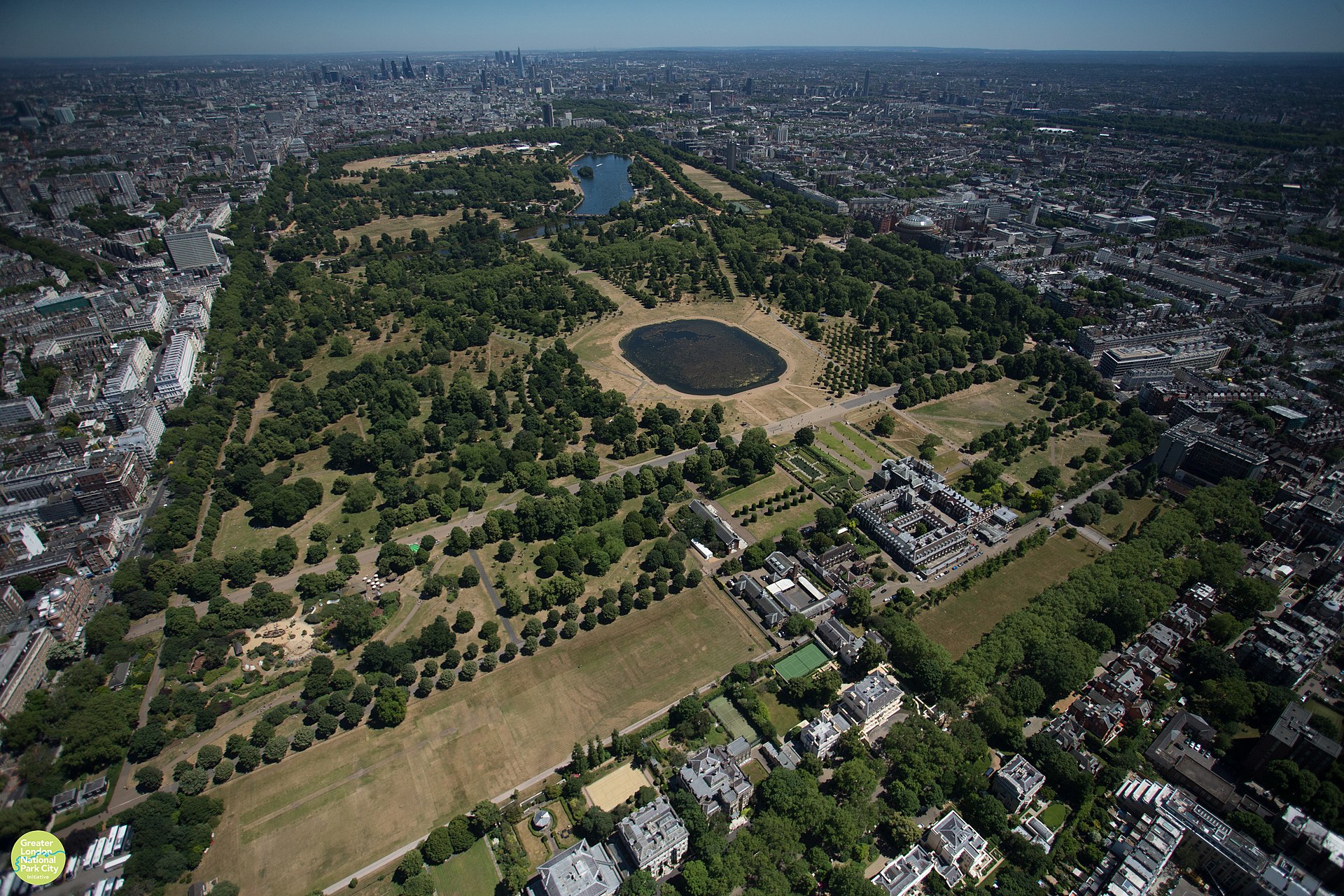
Hyde Park, one of the royal parks of London, is a vast green oasis in the heart of the city, spanning 142 hectares between Hyde Park Corner and Kensington Gardens. With its rich and diverse history, Hyde Park is not only a place of natural beauty but also a stage for historical, cultural, and social events that have marked the British capital.
Originally owned by the monks of Westminster Abbey, the land on which Hyde Park stands was confiscated by Henry VIII in 1536 during the dissolution of the monasteries. The king used the park as a royal hunting reserve. It was only in 1637, under the reign of Charles I, that Hyde Park was opened to the public, quickly becoming a popular spot for walks, horse rides, and other recreational activities.
One of Hyde Park’s most iconic features is the Serpentine, an artificial lake created in 1730 by order of Queen Caroline, wife of George II. The Serpentine divides the park from west to east and offers visitors the opportunity to engage in water sports such as rowing and swimming, especially during the summer months. The Serpentine Bridge, which connects the two shores of the lake, offers picturesque panoramic views that capture the beauty of the park in every season.
Hyde Park is also famous for its Speakers’ Corner, located in the northeastern corner of the park near Marble Arch. Since the 19th century, this corner has been a symbol of free speech, where speakers from all walks of life have had the opportunity to express their opinions on various topics, from politics to religion. Notable speakers who have spoken here include Karl Marx, George Orwell, and Winston Churchill. Today, Speakers’ Corner continues to be a vibrant hub of debate and discussion, embodying London’s democratic spirit.
Hyde Park has hosted numerous significant historical events. During the Great Exhibition of 1851, the Crystal Palace, a huge glass and iron structure designed by Joseph Paxton, was erected in the park to host the international exhibition organized by Prince Albert. This event marked a significant moment in the industrial and cultural history of the United Kingdom, attracting millions of visitors from around the world.
The park has also been the site of numerous demonstrations and protests. During the 19th century, Hyde Park was the starting point for the Chartist marches, which called for political and social reforms. In the 20th century, it hosted marches for civil rights, protests against war, and demonstrations in favor of the environment, reflecting the park’s role as a public space for civic expression. For sports enthusiasts, Hyde Park offers ample opportunities. The park features numerous jogging trails, cycling paths, tennis courts, and horse riding areas. Additionally, the park is a key point of the London Marathon, one of the city’s most important and well-attended sporting events.
Among the park’s natural beauties are also numerous well-maintained gardens, such as the Rose Garden, a charming area rich in roses of different varieties, and the Meadow, a flowered meadow that provides a valuable habitat for wildlife. These green spaces not only add to the beauty of the park but also play an important role in urban biodiversity conservation.
The park also hosts several statues and monuments of great historical and artistic interest. Among these, the statue of Achilles stands out, erected in 1822 in honor of the Duke of Wellington and his victories in the Napoleonic Wars. Another significant attraction is the statue of Peter Pan, located in nearby Kensington Gardens, which celebrates the famous character created by J.M. Barrie.
Read More