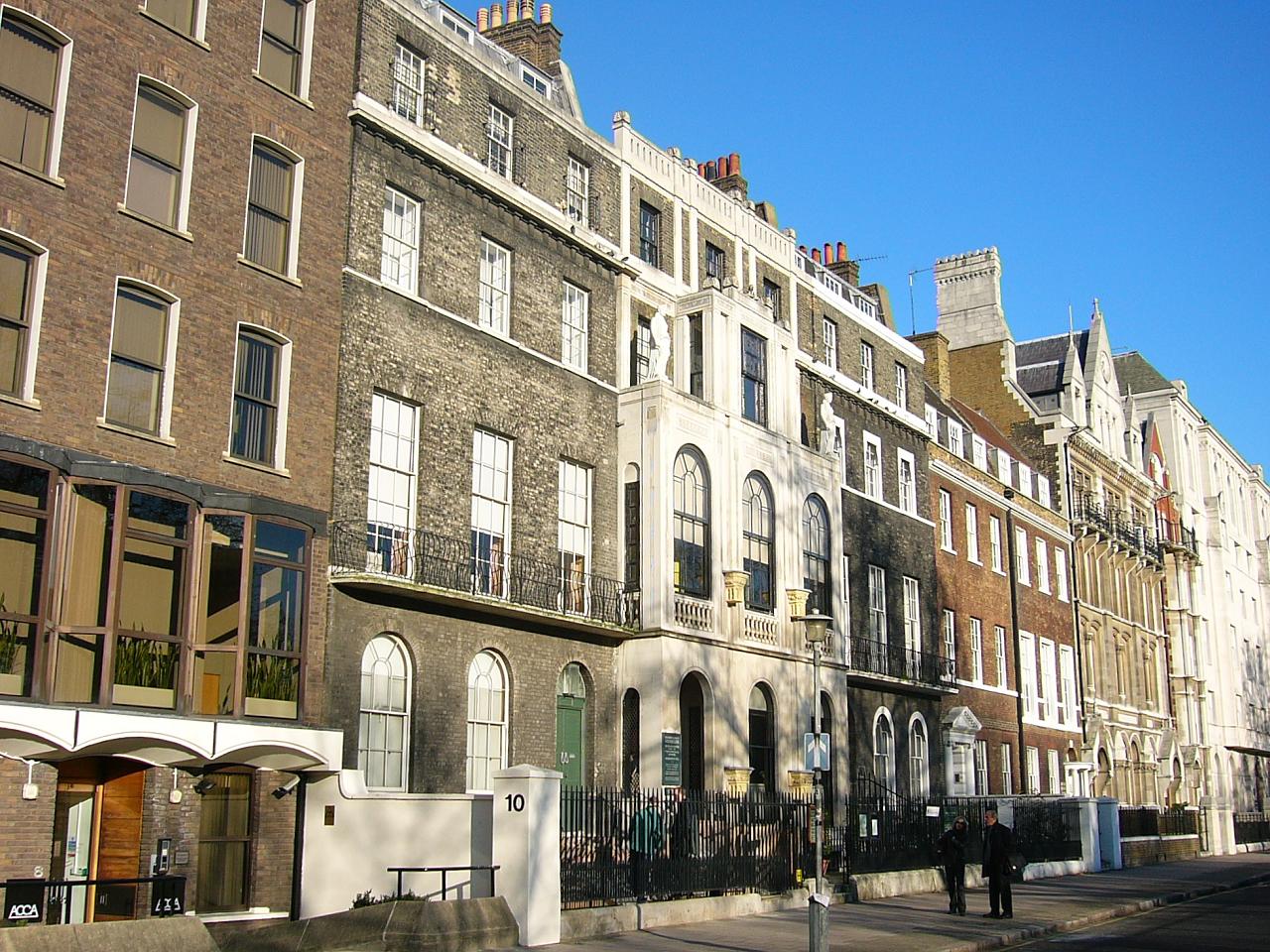
Sir John Soane Museum
Europe,
United Kingdom,
citta,
Holborn
The Sir John Soane’s Museum, located at number 13 Lincoln’s Inn Fields in London, is a unique place that offers an immersive experience in the world of architecture, art, and antiquities. This house-museum, once the residence and studio of the neoclassical architect Sir John Soane, represents a fascinating journey through the taste and creativity of one of the most influential architects of the 18th and 19th centuries.
John Soane was born in 1753 and was a highly talented architect, known for his innovative work and bold use of light and space. After studying at the Royal Academy, Soane embarked on a journey to Italy, where he was deeply influenced by classical architecture. Upon his return to London, he quickly established himself as one of the most respected architects of his time, working on prestigious projects such as the Bank of England.
In 1792, Soane purchased the house at number 12 Lincoln’s Inn Fields and subsequently the adjacent properties, transforming them over the years into an extraordinary museum. His goal was to create a place of study and inspiration for young architects and artists, a kind of laboratory where ideas could be explored and developed.
The museum is a masterpiece of design and spatial organization. Soane used movable walls, mirrors, and skylights to maximize natural light and create a sense of spaciousness in a relatively confined area. Each room is an example of how space can be manipulated to create stunning visual effects. One of the most notable examples is the Breakfast Room, where a vaulted ceiling and a colorful skylight create a bright and airy atmosphere.
The collection of the Sir John Soane’s Museum is incredibly eclectic and reflects Soane’s wide range of interests. It includes paintings, sculptures, furniture, architectural models, and archaeological artifacts. Among the most famous pieces are the paintings by William Hogarth, including the famous series “The Rake’s Progress,” and the sarcophagus of Seti I, an ancient Egyptian artifact that Soane acquired with great enthusiasm and proudly displayed in his museum.
One fascinating aspect of the museum is how Soane integrated his collection into the rooms of the house. Each object was carefully arranged to create a visual and conceptual dialogue between the works. For example, in the Picture Room, the walls are covered with movable panels that can be opened to reveal additional layers of paintings, creating a kind of infinite gallery. This innovative approach to curation reflects Soane’s creative and experimental mind.
The Sir John Soane’s Museum is not only a place of aesthetic beauty but also of historical significance. Soane wished for his house and collection to be preserved intact after his death. To this end, he obtained an Act of Parliament in 1833, which stipulated that the house would be maintained “as at the death of the same Sir John Soane.” This act has allowed the museum to remain substantially unchanged since then, offering visitors a fascinating window into the past.
In addition to its permanent collection, the museum regularly hosts temporary exhibitions that explore various aspects of architecture, art, and design. These exhibitions offer new perspectives on Soane’s collection and its lasting impact on the world of architecture.
An interesting anecdote concerns the inclusion of architectural models in the museum. Soane was a strong advocate for the use of models as learning tools for young architects. In the Crypt of the museum, visitors can see a series of detailed models of historical buildings and architectural projects, providing insight into the creative process and construction techniques of the time.
Read More