Hunterian Museum
Europe,
United Kingdom,
citta,
Holborn
The Hunterian Museum, located at the Royal College of Surgeons in London, is one of the most fascinating institutions in the city, dedicated to the history of surgery and the collection of anatomical specimens. Founded in 1799 and recently reopened in 2023 after a long period of renovation, the museum is named after John Hunter, an 18th-century surgery pioneer whose extensive collection of anatomical preparations forms the heart of the exhibition.
John Hunter, born in 1728, was a highly significant surgeon and anatomist. His collection, which began as a personal collection of specimens for medical study, grew to include around 14,000 pieces. These specimens include organs, tissues, skeletons, and models, offering a detailed overview of medical knowledge at the time. Hunter was known for his innovative approach and his contribution to the understanding of human and animal anatomy, often conducting pioneering experiments that laid the foundation for many modern surgical practices.
The museum is divided into different thematic galleries that trace the evolution of surgery and medicine. The introductory section is dedicated to the life and works of John Hunter, with biographies and exhibits illustrating the medical and scientific context of his time. Here, visitors can get up close to historical surgical instruments, models, and paintings depicting 18th-century surgical practice.
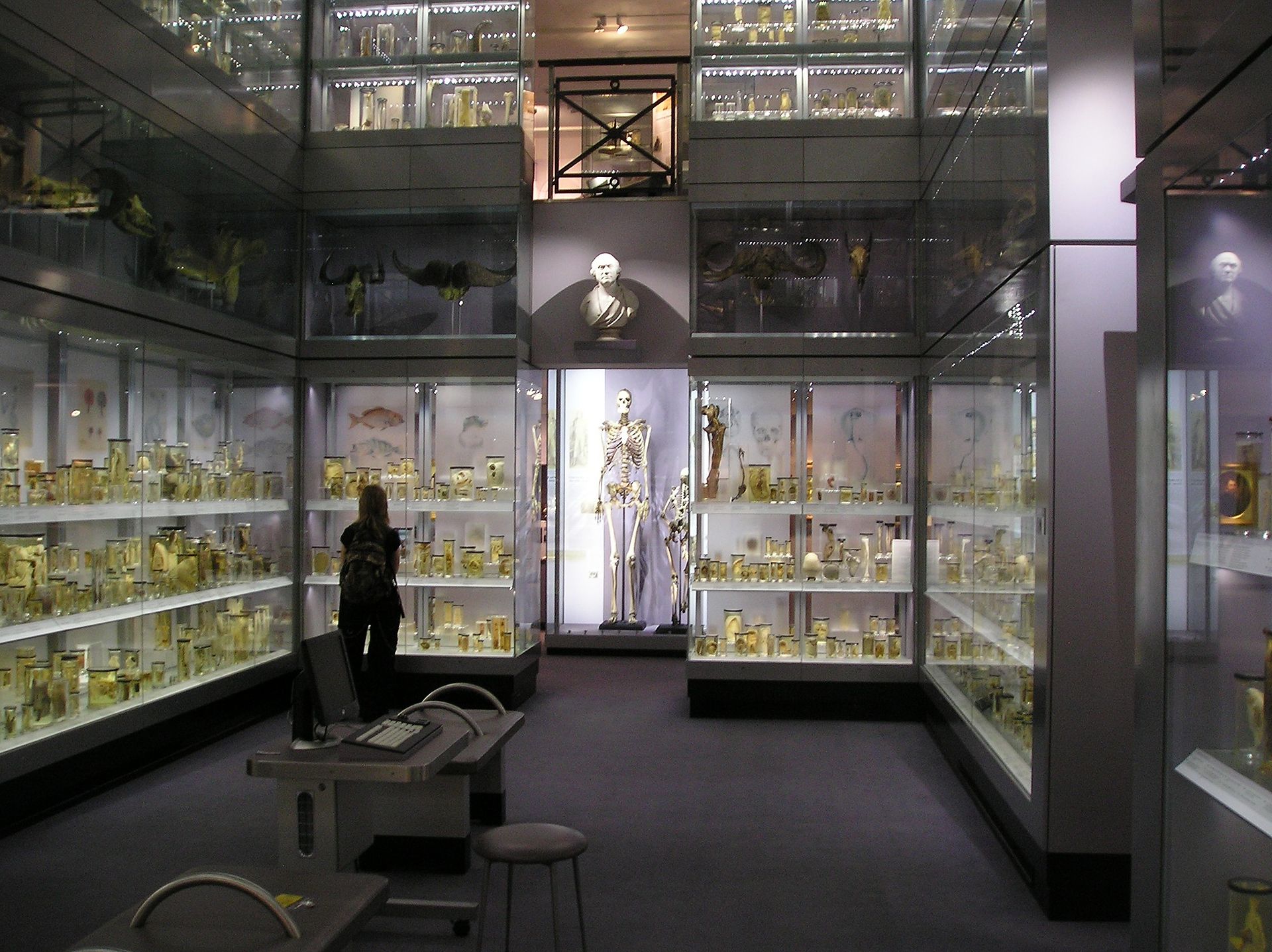
One of the main attractions of the museum is the “crystal chasm,” a spectacular room filled with vessels containing anatomical samples. This gallery represents the core of the museum experience, where the infinite variety of nature is displayed in an orderly and scientific manner. Each sample tells a unique story and offers a window into past medical practices, often surprising and fascinating visitors with its oddity and complexity.
Another distinctive element of the museum is the section dedicated to modern surgery. The last three galleries focus on the advances in medicine and surgery in the 20th and 21st centuries. Here, visitors can explore the advanced technologies used in contemporary operations, including interactive three-dimensional models of the human body that allow visualization of the vascular, skeletal, nervous, and digestive systems. This section culminates in a unique display: a human heart removed from a patient still alive, a living testament to the extraordinary advances of modern medicine.
The museum does not shy away from the complex ethical and historical issues related to its collection. A significant example is the debate surrounding the skeleton of Charles Byrne, known as the “Irish giant.” Byrne, over two meters tall, expressed a wish to be buried at sea to prevent his body from being dissected and displayed. However, his skeleton has been preserved and shown to the public for centuries, raising ethical questions about the use of human remains in museums. Recently, the museum decided to remove the skeleton from the exhibition, reflecting a growing sensitivity to issues of consent and dignity.
Another fascinating aspect of the museum is its ability to combine history, art, and science. The exhibitions include artworks illustrating medical themes, such as paintings of surgical operations and portraits of historical figures in the field of medicine. This fusion of disciplines offers a comprehensive and multidimensional view of the history of medicine, emphasizing the importance of the intersection between science and art in understanding the human body.
Read More