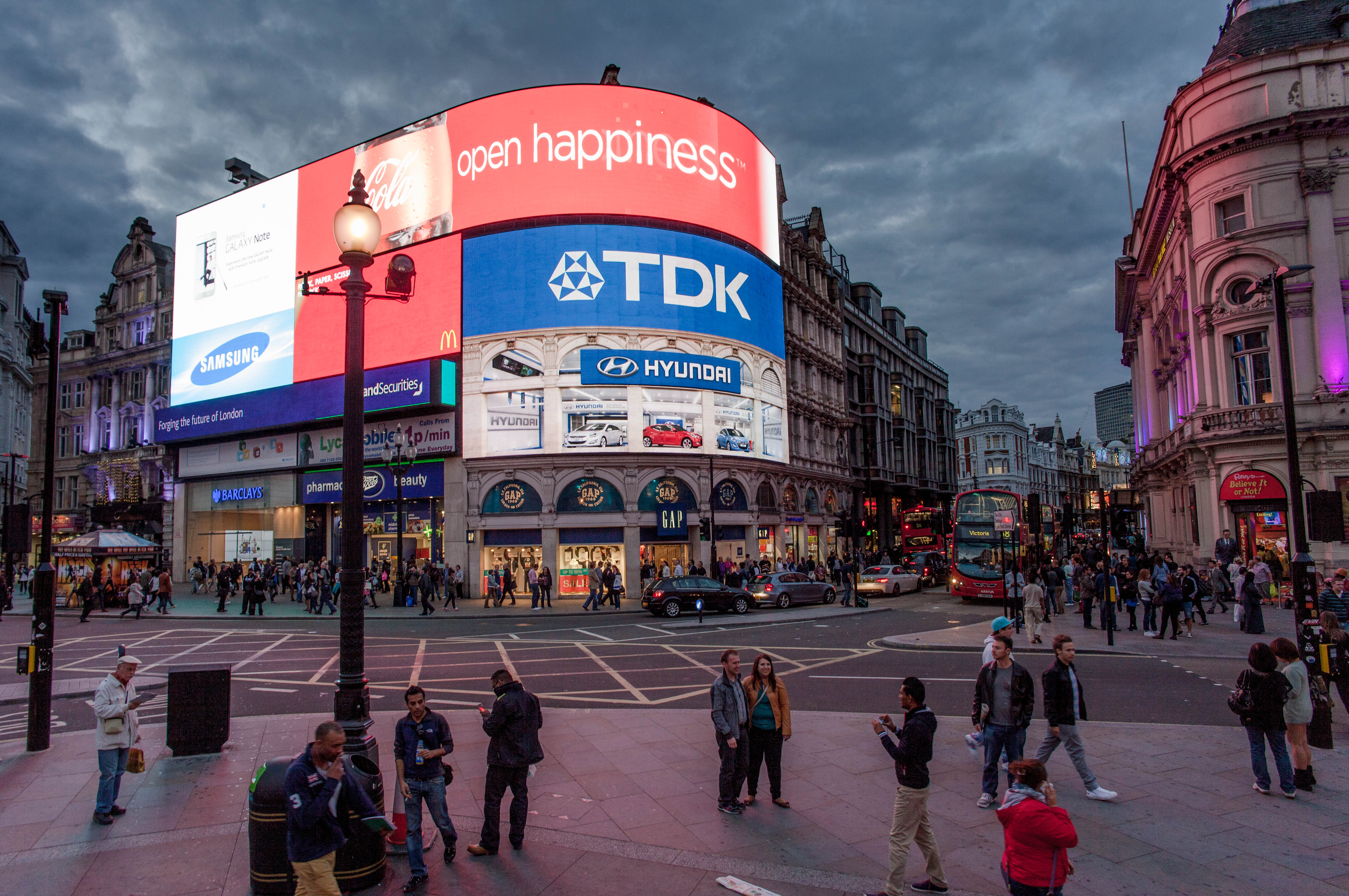
Piccadilly Circus
Europe,
United Kingdom,
citta,
Piccadilly
Piccadilly Circus, an iconic crossroads in the heart of London, is much more than just an intersection: it is a vibrant symbol of the vitality and energy of the British capital. Opened in 1819 to connect Regent Street with Piccadilly, the Circus quickly gained importance due to its central location and proximity to major entertainment and commercial venues.
The name “Piccadilly” derives from “piccadill”, a type of stiff collar fashionable in the 17th century, popularized by a London tailor, Robert Baker. He amassed a fortune selling these collars and built a large residence, Piccadilly Hall, which gave its name to the adjacent street.
Since the 19th century, Piccadilly Circus has been a crucial intersection for London traffic, but its worldwide fame largely stems from its transformation into one of the city’s most vibrant visual landmarks. In 1893, the first illuminated advertising sign, a gas-lit Perrier sign, was installed. Since then, neon signs and later LED screens have dominated the northwest corner, making Piccadilly Circus London’s answer to New York’s Times Square.
One of the most recognizable monuments in Piccadilly Circus is the Shaftesbury Memorial Fountain, erected in 1893 in honor of Lord Shaftesbury, a social reformer. At the center of the fountain stands the statue of the Angel of Christian Charity, commonly but mistakenly known as Eros. In fact, the statue represents Anteros, the twin brother of Eros, and symbolizes altruistic love. This detail is an interesting anecdote that often escapes tourists.
Piccadilly Circus is surrounded by historically significant buildings. Among these, the London Pavilion, a variety theater opened in 1859, which was later converted into a cinema and is now part of a commercial complex. Another notable building is the Criterion Theatre, opened in 1874, known for its underground hall that has hosted numerous successful theatrical productions.
The strategic location of Piccadilly Circus makes it an ideal starting point for exploring other attractions in London. It is a short walk from places of interest such as Leicester Square, famous for its theaters and cinemas, and Soho, known for its lively nightlife and eclectic culinary offerings.
Throughout the 20th century, Piccadilly Circus became a symbol of popular culture, appearing in numerous films, TV shows, and music videos. Its iconic image is recognized worldwide, representing the dynamic and cosmopolitan spirit of London. In the 1950s and 1960s, the square also became a meeting place for young people during the “Swinging London” era, a time of great cultural and social upheaval.
The area is also known for its shops and restaurants, attracting both locals and tourists. The presence of international brand stores, historic restaurants, and trendy new venues helps to keep Piccadilly Circus a bustling hub of the city. Souvenir shops, fashion boutiques, and outdoor cafes create a vibrant and ever-moving atmosphere.
In recent years, Piccadilly Circus has seen significant urban redevelopment efforts aimed at improving accessibility and the area’s aesthetics. These efforts include partial pedestrianization and the creation of more welcoming public spaces for pedestrians, making the square even more attractive and livable. Additionally, technology has continued to evolve, with advertising signs becoming increasingly advanced and interactive.
Read More