Wembley Stadium
Europe,
United Kingdom,
citta,
Wembley
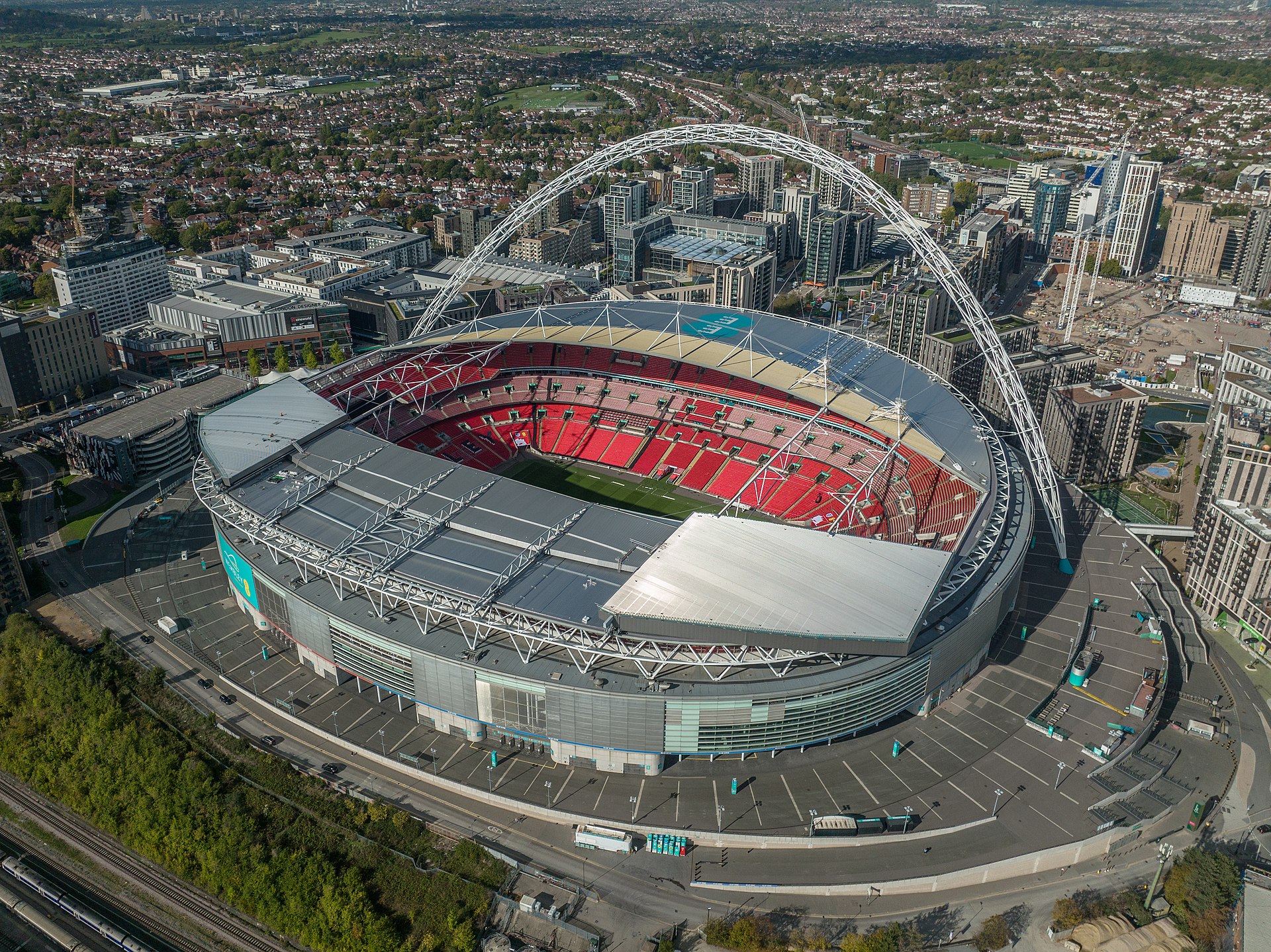
Wembley Stadium, located in London, is much more than just a sports facility; it is a national symbol and a global icon. Built on the site of the original Wembley Stadium, known as the “old Wembley,” this stadium represents the perfect fusion of history, innovation, and spectacle. Officially inaugurated on May 19, 2007, the new Wembley has a capacity of 90,000 seats, making it one of the largest and most modern stadiums in the world.
The history of Wembley begins with the old stadium, built in 1923 to host the British Empire Exhibition. The old Wembley, with its famous twin towers, was the venue for historic events such as the 1966 World Cup final, won by England, and the legendary Live Aid concert in 1985. However, over the years, the need for a more modern facility became evident, leading to the demolition of the old stadium in 2002 and the construction of the new Wembley.
The new Wembley Stadium is a masterpiece of engineering and design. Designed by architect Norman Foster and the Populous studio, the stadium is recognizable for its iconic 133-meter-high steel arch, stretching 315 meters above the structure. This arch not only serves as a distinctive element of the stadium but also has a structural function, supporting the weight of the roof and allowing unobstructed views for all spectators.
One of the most impressive aspects of Wembley is its versatility. The stadium hosts a wide range of events, from high-level football matches to rugby finals, from concerts by international artists to award ceremonies. Among the most prestigious sporting events held at Wembley are the FA Cup finals, matches of the English national football team, and the Football League playoff finals. During the 2012 London Olympics, Wembley was one of the main stadiums for the football tournament, hosting both men’s and women’s matches.
Wembley is also a landmark for live music. World-renowned artists such as Madonna, Beyoncé, Adele, and Coldplay have chosen this stadium for their concerts, attracted by its ability to accommodate a large audience and the quality of its acoustics. One of the most memorable concerts was Live Earth in 2007, a global event to raise awareness about climate change.
The construction of the new Wembley was not without controversy and challenges. The works, started in 2003, suffered delays and significant cost increases. However, the final result was widely appreciated and received numerous awards for engineering innovation and architectural design. The stadium was designed with a particular focus on sustainability, using advanced technologies for energy saving and resource management.
An interesting anecdote concerns the use of the old Wembley during World War II. The stadium was used as a weapons depot and as a base for troops, a often little-known aspect of its history. This reflects the strategic importance of Wembley not only as a sports facility but also as a national symbol.
Read More