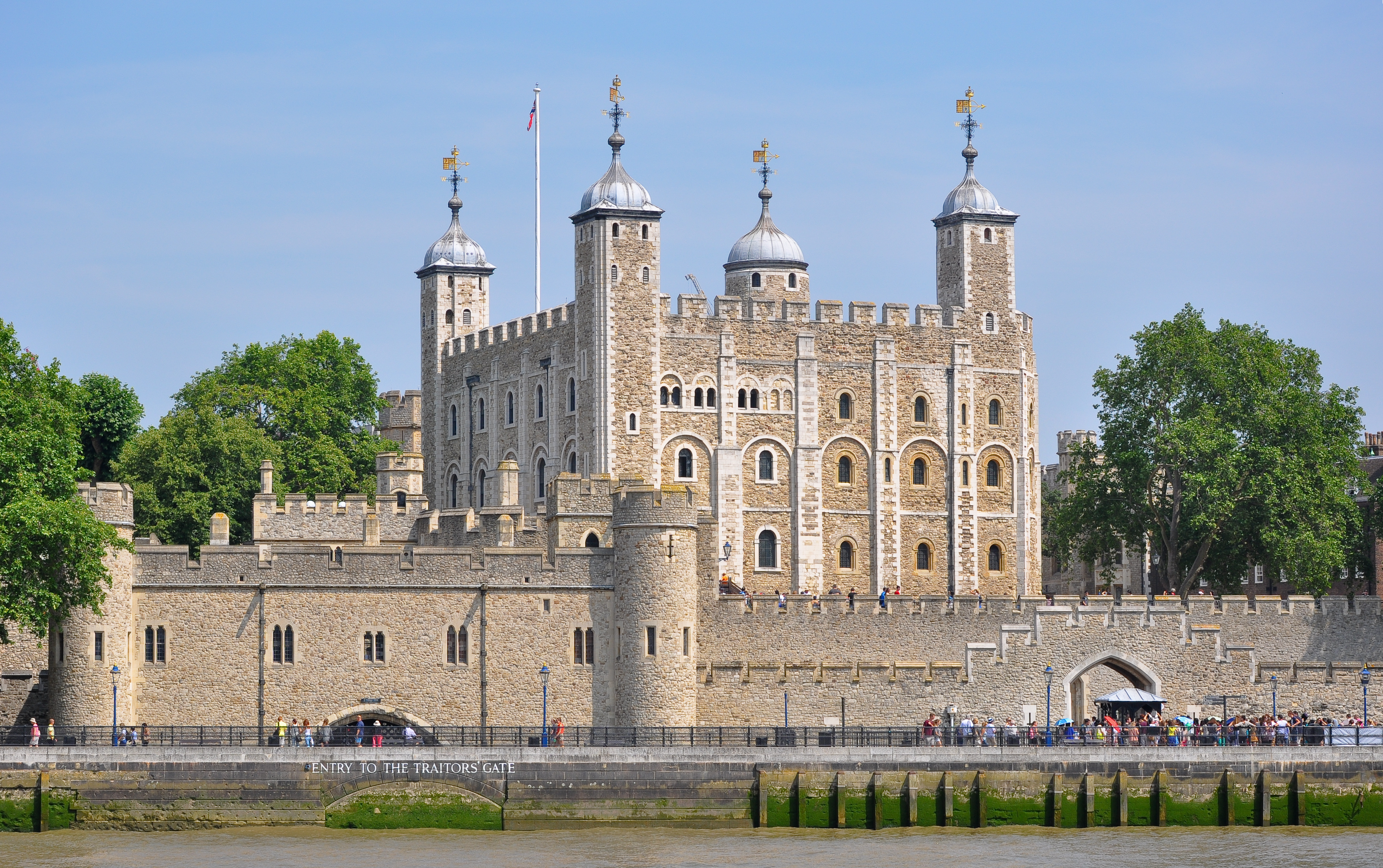
Tower of London
Europe,
United Kingdom,
citta,
Tower Hill
The Tower of London, officially known as Her Majesty’s Royal Palace and Fortress of the Tower of London, is a historic icon of London that dates back to the Norman period. Built by William the Conqueror in 1078, the Tower has witnessed almost a thousand years of British history, serving as a fortress, royal palace, prison, arsenal, mint, menagerie, and even a public office.
The Tower began as a massive stone fortification, the White Tower, built to dominate London and deter any rebellions against the new Norman rule. This impressive building made of Caen limestone from France was a symbol of power and authority. Over the centuries, the Tower was expanded by various monarchs, who added curtain walls and towers, making it one of the largest and most formidable concentric castles in England.
During the Middle Ages, the Tower of London was not only a military fortress but also a royal residence. Kings like Henry III and Edward I transformed the Tower into a luxurious palace, adding magnificent royal accommodations. However, it is perhaps most famous for its role as a prison. From the 12th century to the 20th century, the Tower housed many illustrious prisoners, including deposed monarchs, rebellious nobles, and religious figures. For example, Anne Boleyn, the second wife of Henry VIII, was imprisoned and executed in the Tower on charges of treason.
The Tower is also famous for its legends and traditions. One of the most well-known is that of the Tower ravens. It is said that if the ravens were ever to leave the Tower, the kingdom would fall. For this reason, the ravens are carefully cared for and even have their own guardians, the Beefeaters, officially known as Yeomen Warders.
In the 16th and 17th centuries, the Tower became synonymous with torture and executions. Instruments like the rack were used to extract confessions from political prisoners. Guy Fawkes, famous for the Gunpowder Plot of 1605, was one of many detainees subjected to torture in the Tower. Despite its dark reputation, not all imprisonments were terrible: wealthy prisoners like King John of Scotland could live in relative comfort.
The Tower of London also housed the Royal Mint, where the kingdom’s currency was coined, and the Royal Armouries, a vast collection of historical weapons and armor. Additionally, the Tower was home to the Royal Menagerie, one of the earliest zoos in England, which housed exotic animals donated by foreign monarchs.
During the First and Second World Wars, the Tower was used as a military prison and execution site for enemy spies. One of the last famous prisoners was Rudolf Hess, Adolf Hitler’s deputy, imprisoned here during the Second World War.
Read More