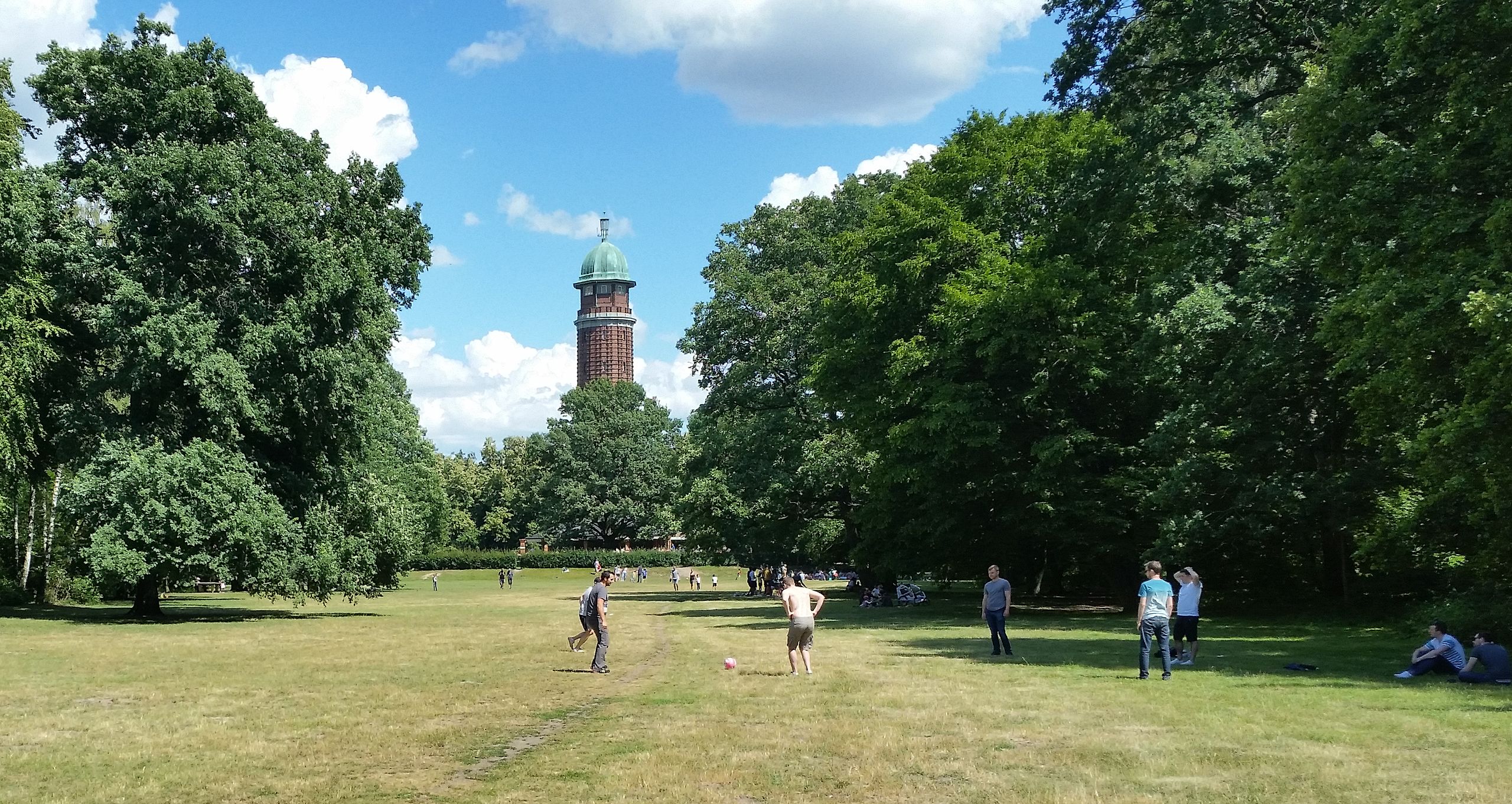
Jungfernheide Public Park
Europe,
Germany,
citta,
Charlottenburg-Nord
The Jungfernheide, located in the Charlottenburg-Nord district in Berlin, is a vast urban park that represents one of the main green spaces in the German capital. With a history dating back to the 18th century, the Jungfernheide has undergone significant transformations, evolving from a forest and royal hunting ground to one of the most beloved destinations for leisure and recreational activities.
The name “Jungfernheide” derives from “Jungfer,” which means “young noblewoman” or “maiden,” and “Heide,” which means “heath.” This name is linked to the Benedictine nuns of Spandau, who owned the area in the 13th century. Over the centuries, the area has been used as a royal hunting reserve and military area, with a significant change starting in 1824 when the area was designated for military exercises and shooting ranges.
The transformation of the Jungfernheide into a public park began in earnest in the 20th century. In 1904, the city of Charlottenburg purchased the land with the intention of creating a large city park. The project was entrusted to garden director Erwin Barth and was only implemented in 1920, thanks to an emergency program aimed at eliminating unemployment. The result was the Volkspark Jungfernheide, inaugurated in 1923, a 146-hectare park that offered citizens a recreational area immersed in greenery.
The Volkspark Jungfernheide is known for its natural beauty and recreational facilities. Among the main attractions is the Waldhochseilgarten, an adventure park with tree-top courses that offer exciting experiences for both children and adults. The courses, varying in height and difficulty, allow visitors to climb, swing, and balance among the trees, enjoying a unique view of the surrounding forest. This adventure park is particularly appreciated for its safe and well-organized activities, ideal for families and school groups.
Another popular attraction in the park is the Strandbad Jungfernheide, an artificial beach with white sand and sun loungers, offering Berliners a summer relaxation spot in the heart of the city. The beach is equipped with a volleyball court and a slide for children, making it an ideal destination for families. The water in the artificial lake is up to four meters deep, allowing for swimming and cooling off during hot summer days.
The park also offers ample areas for jogging, cycling, and walking, with well-maintained trails that traverse woods and meadows. It is an ideal place for nature lovers, who can enjoy the tranquility of the park and observe a variety of flora and fauna. Additionally, the Volkspark Jungfernheide hosts sports and cultural events, making it a lively and dynamic center of community activities.
A historically significant element within the park is the memorial to Karl Ludwig Friedrich von Hinckeldey, a former chief of police in Berlin known for his reforms and contributions to the city’s urban development. This memorial, located in a prominent position in the park, commemorates Hinckeldey’s influence on Berlin’s history and his commitment to improving city life.
Over time, the Jungfernheide has adapted to urban changes and community needs. The closure of the nearby Tegel Airport in 2020 has opened up new development possibilities for the surrounding area, and plans are underway to further integrate the park with new public spaces and infrastructure.
Read More