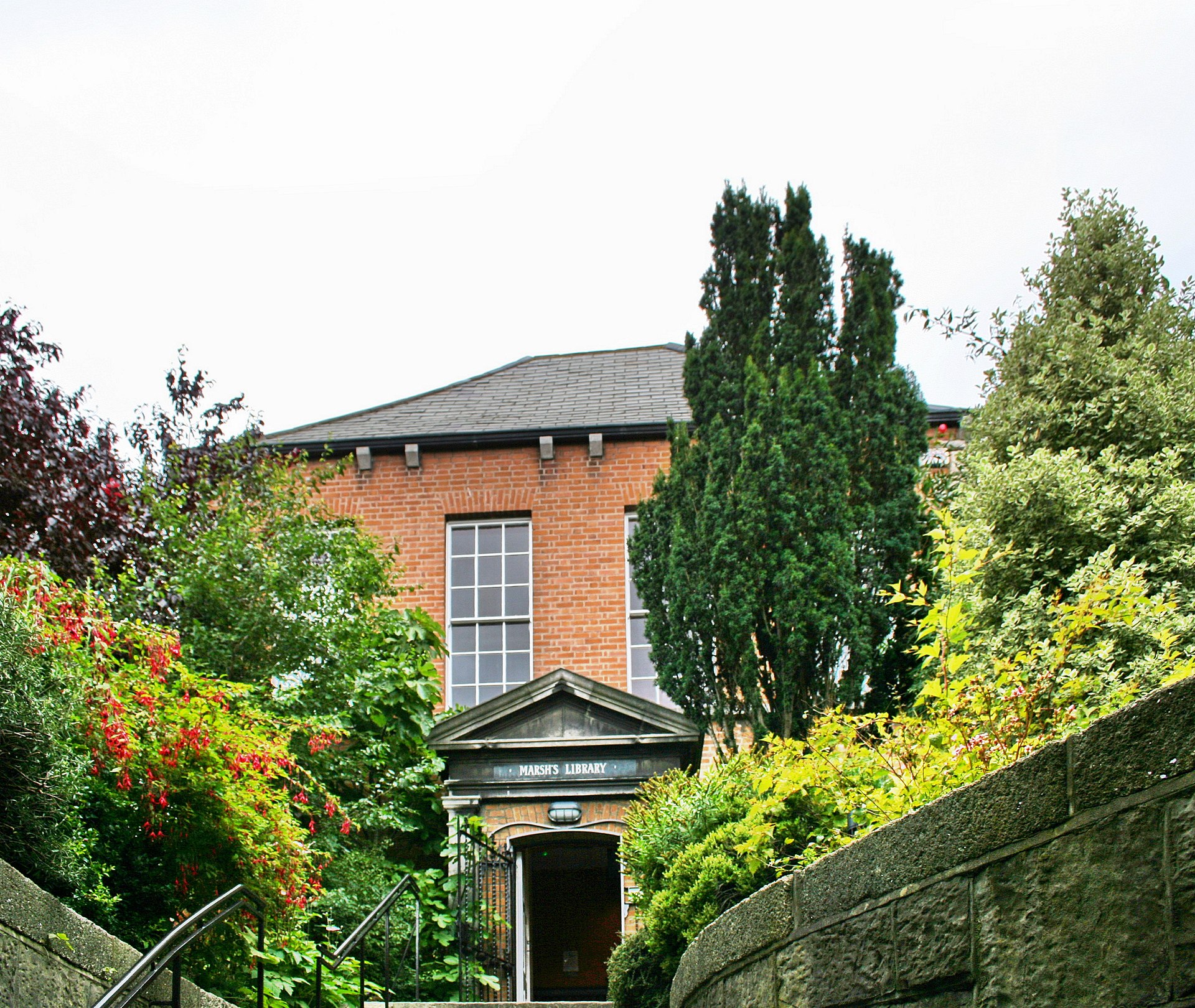
Marsh Library
Europe,
Ireland,
citta,
St. Patrick's Cathedral
Marsh’s Library, located in the heart of Dublin, is one of the oldest and best-preserved libraries in Ireland. Founded in 1707 by Archbishop Narcissus Marsh, this extraordinary institution offers a fascinating glimpse into Irish literary and cultural history. The library is an architectural gem, as well as a repository of knowledge and history, and represents an exceptional example of a late Renaissance period library.
Archbishop Narcissus Marsh, a scholar of great renown, founded the library with the intention of providing a lasting resource for scholars and citizens. Marsh had served as Archbishop of Dublin, Cashel, and Emly, and had accumulated a vast collection of books during his lifetime. He decided to share this wealth of knowledge with the public, creating a library accessible to all. His vision was to promote education and the dissemination of knowledge at a time when access to books was limited to a narrow elite.
The library building is a superb example of Georgian architecture. Designed by Sir William Robinson, the architect of the Dublin Arsenal, the building retains its original charm with few significant changes over the centuries. The structure is characterized by an elegant and sober aesthetic, with dark wood shelves, stone floors, and large windows that flood the reading rooms with natural light.
Inside Marsh’s Library are over 25,000 volumes, including rare manuscripts, incunabula, and books printed in the early years of printing. The collection covers a wide range of subjects, including theology, history, literature, medicine, law, and natural sciences. Among the library’s treasures are the works of some of the greatest authors in history, such as Jonathan Swift, Isaac Newton, and John Locke. A particularly interesting element is the collection of maps and atlases, which provide valuable geographical and cartographic information from the past.
A distinctive feature of Marsh’s Library are the reading cages, small wooden enclosures equipped with locks where readers could consult precious books. These cages, unique in their kind, were designed to prevent the theft of books, a common problem in libraries of the time. The reading cages are still present and offer a fascinating window into 18th-century library practices.
The library is also famous for its ties to some of the most illustrious figures in Irish literary history. Jonathan Swift, the author of “Gulliver’s Travels,” was a regular visitor to the library. Swift, who was Dean of St. Patrick’s Cathedral, frequently used the library’s resources for his research. Another notable frequenter was Bram Stoker, the author of “Dracula,” who visited the library during his studies in Dublin.
Marsh’s Library has a long tradition of accessibility and community service. Since its founding, the library has been open to the public, allowing scholars, students, and ordinary citizens to access its rich collection. This commitment to accessibility has continued over the centuries, and today the library offers guided tours, educational programs, and cultural events that attract visitors from all over the world.
An interesting anecdote concerns Archbishop Marsh himself. It is said that Marsh’s ghost still roams the library in search of a lost letter written by his niece. Legend has it that Marsh was deeply saddened by the loss of the letter and that his restless spirit continues to search for it among the library’s shelves. This story adds a touch of mystery and charm to the already evocative environment of the library.
Over the years, Marsh’s Library has faced significant challenges, including the deterioration of materials and the need for conservation. In recent decades, significant efforts have been made to restore and preserve the books and the building itself. Thanks to the work of expert conservators, the library continues to be a place of study and research for future generations.
Read More