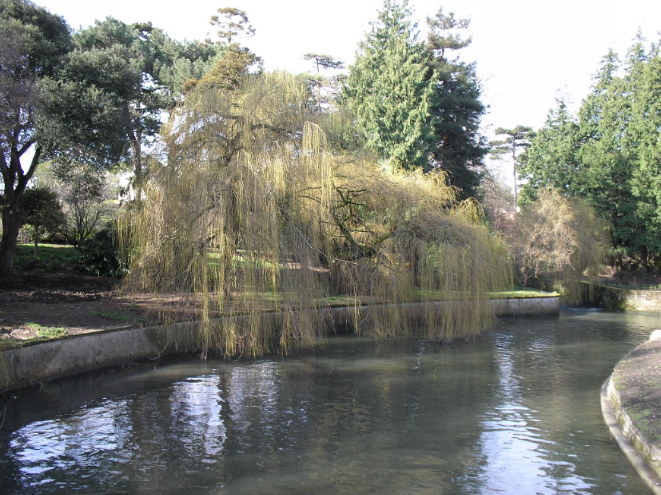
National Botanical Gardens
Europe,
Ireland,
citta,
Glasnevin
The National Botanic Gardens of Ireland, located in Glasnevin, Dublin, are one of the country’s main natural attractions, combining scenic beauty, scientific importance, and historical relevance. Founded in 1795 by the Royal Dublin Society (RDS) thanks to funding from the Irish Parliament, the gardens were initially created to promote the study and knowledge of plants useful for agriculture and medicine. Since its inception, this green space has played a crucial role in the conservation of plant species and botanical research.
The design of the gardens was entrusted to James Fraser, a Scottish landscape expert. The early years of activity saw the construction of greenhouses and the importation of exotic plants from around the world. Among the first and most significant structures erected in the gardens are the Victorian greenhouses, including the Palm House and the Curvilinear Range, masterpieces of glass and iron engineering that house tropical and subtropical plants. These greenhouses have been recently restored to preserve their historical and architectural integrity, continuing to amaze visitors with their beauty and the richness of the botanical collections.
The National Botanic Gardens host an extraordinary variety of plants, with over 15,000 species from every corner of the world. The collections include rare and endangered plants, centuries-old trees, and a wide range of seasonal flowers that transform the gardens into a kaleidoscope of colors throughout the year. Among the most important collections are those of ferns, orchids, carnivorous plants, and conifers, which attract scholars and botany enthusiasts from all over the globe.
The role of the gardens in the conservation of plant species is of fundamental importance. They collaborate with international organizations such as the Botanic Gardens Conservation International (BGCI) to protect and conserve threatened species. The gardens actively participate in native species reintroduction programs and ex-situ conservation, hosting specimens of plants that are at risk of extinction in their natural habitats.
An interesting anecdote concerns the introduction of the giant sequoia in Ireland. In 1853, a gardener from the Glasnevin Botanic Gardens brought with him giant sequoia seeds from the United States. These seeds were planted and grew into majestic trees, some of which are still visible in the gardens today, offering a living link to the horticultural history of the 19th century. Another fascinating aspect of the gardens is their role in the history of horticulture. In the 19th century, the gardens were involved in the Great Irish Famine (1845-1852), when they were used to test alternative crops and find solutions to mitigate the effects of the famine. This period marked a crucial moment in Irish agricultural history, highlighting the importance of scientific research in resolving food crises.
In addition to the botanical collections, the gardens also boast an important collection of artworks and sculptures. Among these stands out the bust of Carl Linnaeus, the famous Swedish botanist known for developing the plant classification system. This artistic collection further enriches the visitor experience, offering a perfect blend of nature and art.
The management and care of the gardens are entrusted to the Office of Public Works (OPW), which is responsible for maintaining and improving the structures and collections. Recently, the gardens have seen significant renovation work, including the restoration of historic greenhouses and the upgrading of infrastructure to ensure an increasingly comfortable and accessible visitor experience.
The location of the National Botanic Gardens, a short distance from the center of Dublin, makes them easily accessible and an ideal destination for a day trip. The tranquil landscape and the richness of the collections offer a green refuge in the heart of the city, where visitors can relax, explore, and learn.
Read More