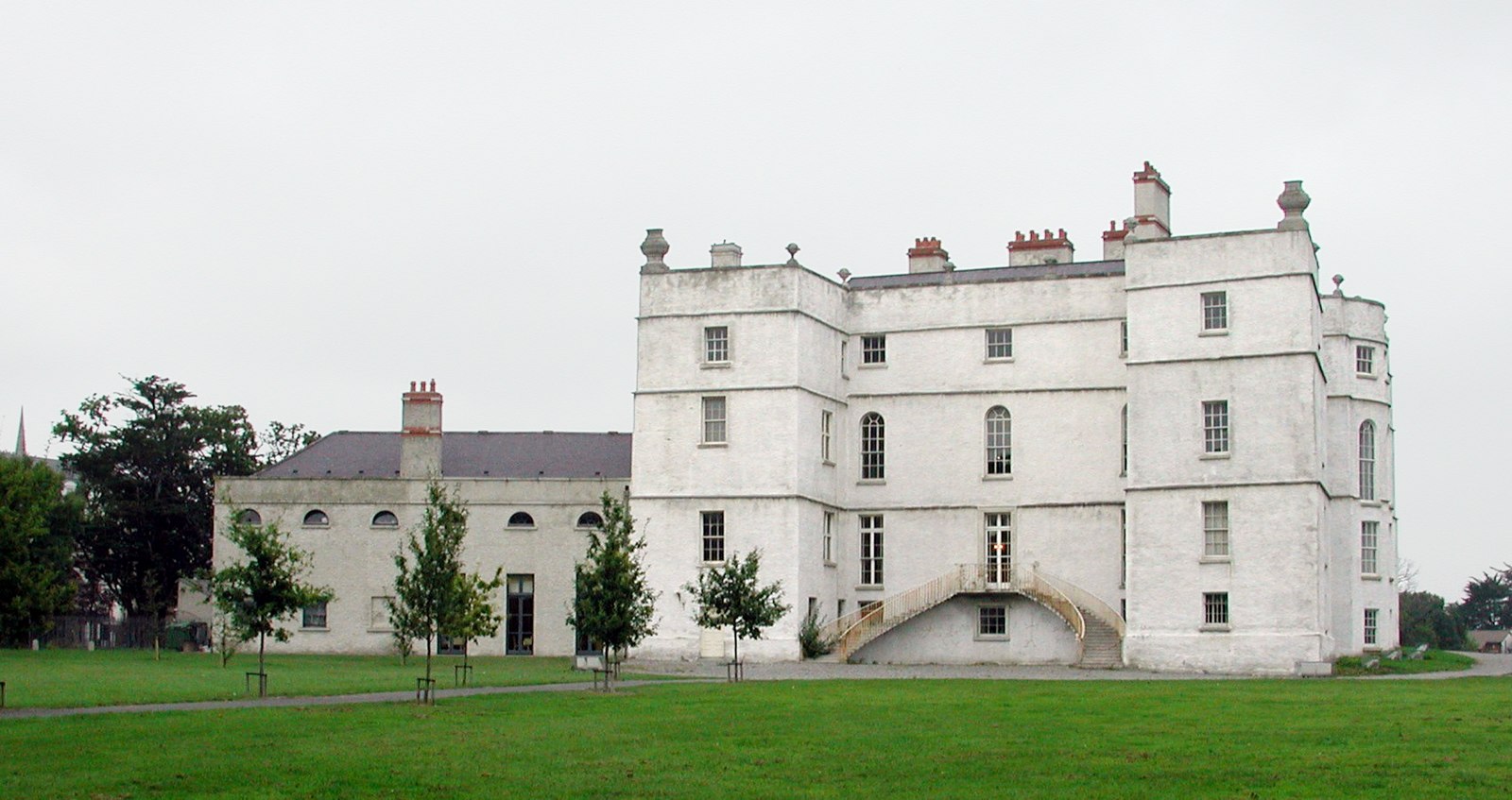
Rathfarnham Castle
Europe,
Ireland,
citta,
Rathfarnham
Rathfarnham Castle, located in County Dublin, is an extraordinary example of Irish historical architecture that has undergone centuries of transformations and changes. Originally built in 1583 by Adam Loftus, Archbishop of Dublin and Lord Chancellor of Ireland, the castle is a testament to the complex social and political history of the country.
Adam Loftus, an English-born ecclesiastic and statesman, obtained the land on which Rathfarnham Castle stands after the confiscation of the lands of Viscount Baltinglass, following a rebellion against the English Crown. Loftus, eager to build a residence that reflected his status, commissioned the construction of a semi-fortified building, characterized by a rectangular central block with corner towers designed for defense. The walls, over one and a half meters thick, with musket loopholes, testified to the political instability of the Elizabethan period.
During the 18th century, the castle underwent significant transformations thanks to Henry Loftus, the first Earl of Ely. Henry, who had inherited the property from a nephew, undertook extensive renovations to transform the austere Elizabethan residence into a luxurious Georgian villa. To realize this ambitious project, he enlisted the services of two of the most renowned architects of the time: Sir William Chambers and James ‘Athenian’ Stuart. Stuart, famous for his neoclassical style, designed the castle’s drawing room, adorned with a geometric ceiling and motifs inspired by ancient Greece and Rome. Chambers, on the other hand, took care of the gallery with semicircular ends, decorated with wooden columns painted to simulate stone.
During the 18th century, the castle was also home to a remarkable art collection, including works by artists such as Angelica Kauffman and Sir Joshua Reynolds. These paintings, along with the elegant furnishings, transformed Rathfarnham into a residence symbolizing refinement and culture.
In the 19th century, the castle passed through various hands and fell into a state of semi-abandonment. The Loftus family, who had moved their main residence to Loftus Hall in County Wexford, rented the property to several tenants. Among them, William Conolly, known as “Speaker” Conolly, one of the richest men in Ireland, bought the castle but never resided there, preferring his residence at Castletown.
In 1913, the castle was sold to the Jesuits, who used it as a seminary and place of spiritual retreat. During their management, the Jesuits made further modifications, adding two wings to house a chapel and a refectory. This period of religious use ended in 1985, when the castle was sold due to the declining number of novices. The decision to sell the castle caused great concern among the local population, who feared the building’s demolition.
Fortunately, the castle was declared a National Monument in 1986 and purchased by the State the following year. The complex underwent an intense restoration program by the Office of Public Works (OPW), which brought to light many of the original historical elements. Today, Rathfarnham Castle is open to the public and offers a fascinating journey through Ireland’s history. The castle also hosts a series of exhibitions and cultural events, which help maintain interest in this historical heritage. Among the most fascinating elements are the remains of the ancient loopholes and original chimneys, offering a unique glimpse into life in the 16th century. Visitors can explore the various rooms of the castle, admiring the artworks and furnishings that tell the story of centuries of changes and adaptations.
Read More