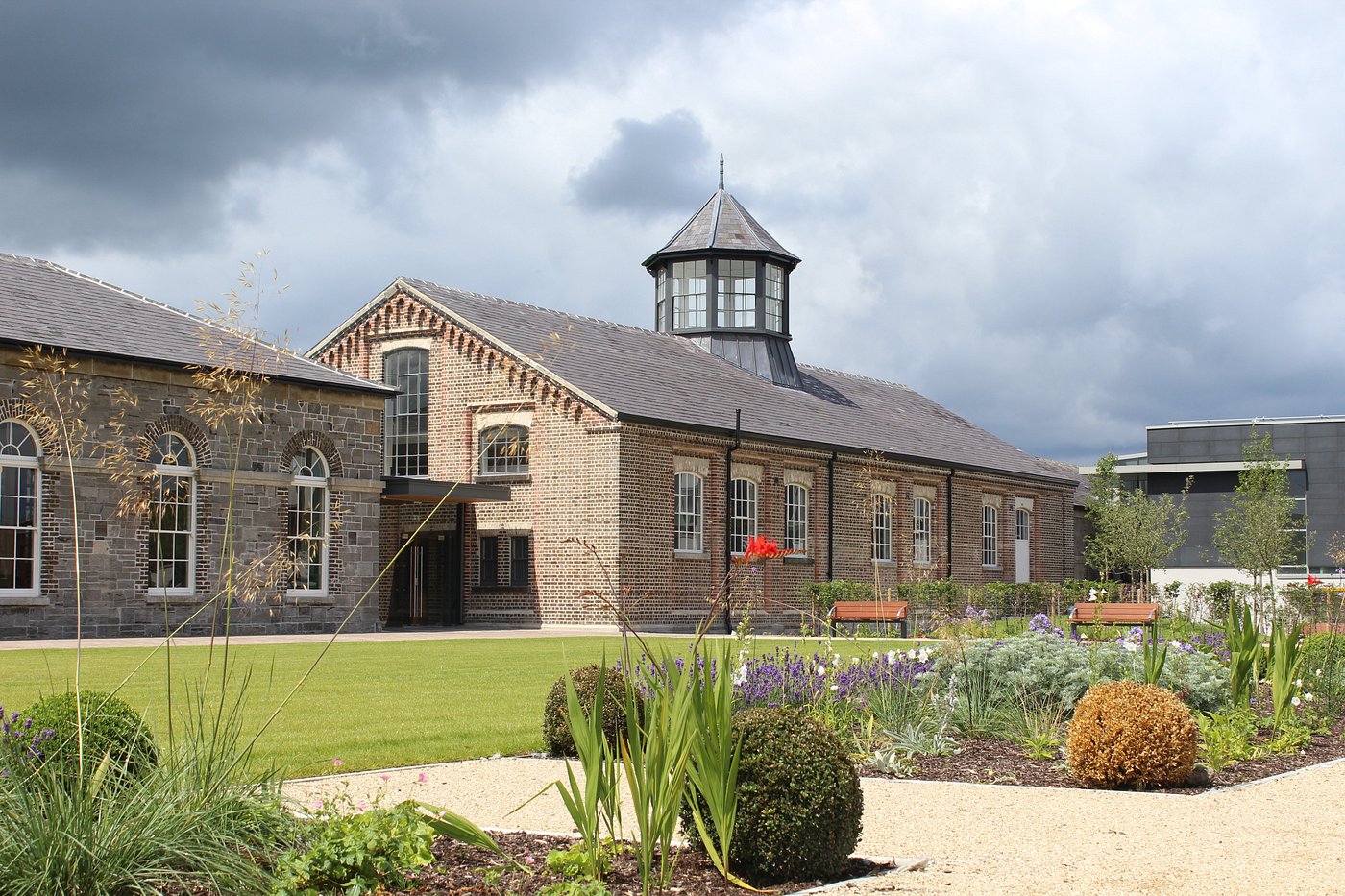
Richmond Barracks
Europe,
Ireland,
citta,
Inchicore
Richmond Barracks, located in Inchicore, Dublin, represents a site of great historical and cultural importance for Ireland. Built in 1810 and inaugurated in 1814, it was initially conceived as a British military barracks to counter the threat of a Napoleonic invasion. The complex was dedicated to Charles Lennox, 4th Duke of Richmond, and over the years, it has witnessed key events that have marked Irish history.
During the 19th century, Richmond Barracks played a crucial role as a recruitment and training point for British soldiers, many of whom were sent to fight in the Crimean, Boer, and First World Wars. However, its historical significance is most recognized in relation to the Easter Rising of 1916. Following the rebels’ surrender, over 3,000 people were detained at the barracks before being transferred to various prison camps or put on trial. Among these detainees were many of the leaders of the uprising, who were later executed in the nearby Kilmainham Gaol.
The year 1922 marked a significant turning point for Richmond Barracks when the facility came under the control of the Irish Free State and was renamed Keogh Barracks. Two years later, the Dublin Corporation converted it into social housing, known as Keogh Square, an area sadly notorious for its poor living conditions. This complex was demolished in 1969 to make way for a new housing scheme, St. Michael’s Estate, but three original buildings survived, being used for various community and educational purposes.
Today, Richmond Barracks is a museum and cultural center that offers visitors an immersion into Irish history through interactive exhibitions and educational programs. In 2016, the barracks underwent significant restoration work, funded by the Dublin City Council and other organizations, to commemorate the centenary of the Easter Rising. This project returned a vital part of Ireland’s historical heritage to the public, transforming the barracks into a place of memory and reflection.
The museum hosts a series of permanent and temporary exhibitions that explore various aspects of Ireland’s social, political, and military history. Among the most significant exhibitions is the one dedicated to the women involved in the 1916 Rising, which tells the stories of 77 women detained at Richmond Barracks through personal items, photographs, and testimonies. This exhibition offers a unique perspective on women’s participation in the struggle for independence, often overlooked in traditional historical narratives.
Another point of interest is the reconstruction of a classroom from St. Michael’s Christian Brothers School, which allows visitors to get an idea of what education was like in the 1950s. This educational space includes vintage class photos and school records, making it a particularly interesting attraction for those passionate about family history and genealogy. Next to the museum is the Goldenbridge Cemetery, the first Catholic garden cemetery in Ireland, founded by Daniel O’Connell in 1829. The cemetery, an integral part of the visit to Richmond Barracks, offers a glimpse into the social and religious history of the 19th century and includes graves of significant figures in Irish history, such as William T. Cosgrave, the first President of the Executive Council of the Irish Free State, and victims of the 1916 Rising.
Read More