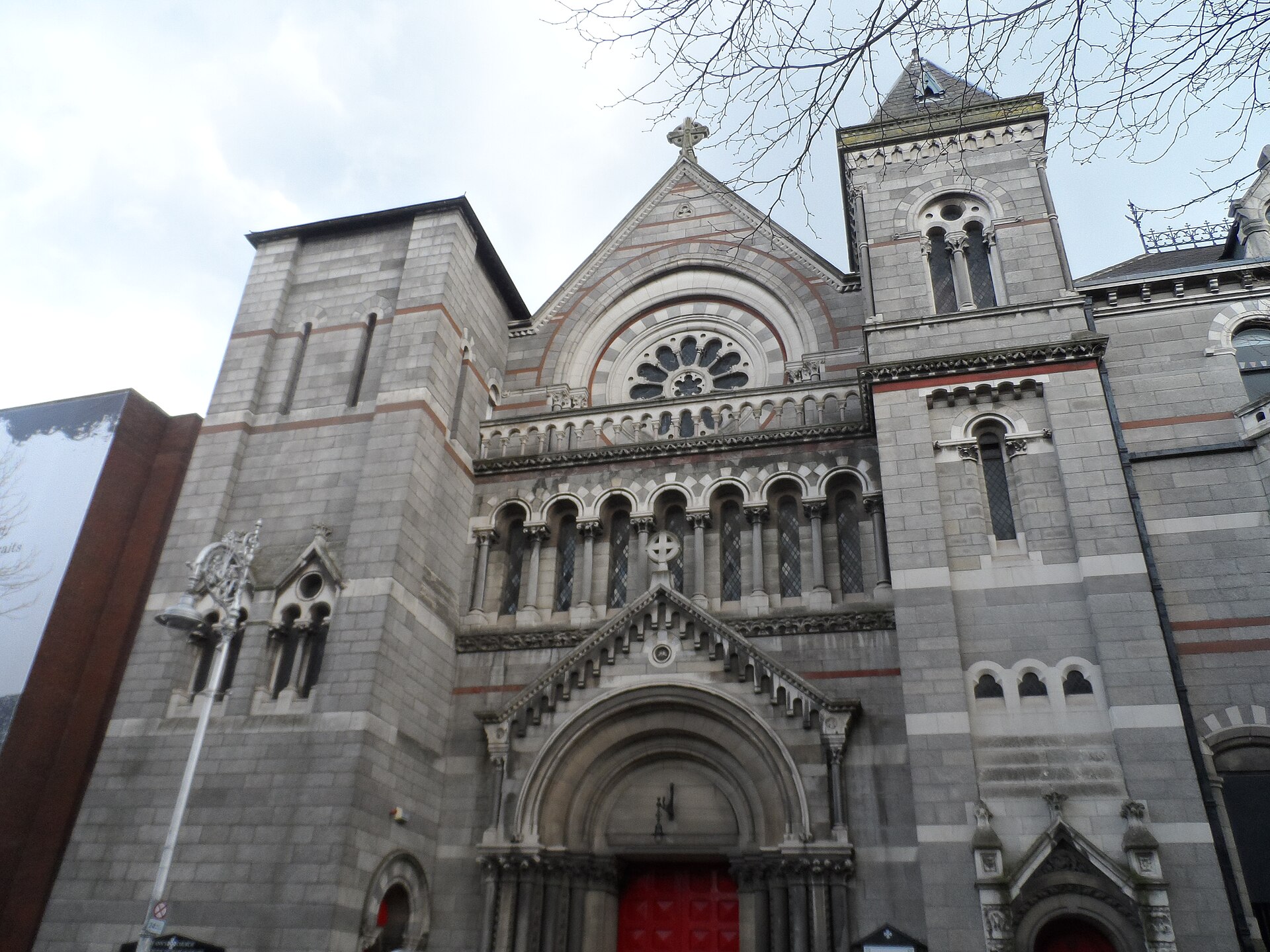
St. Ann's Church
Europe,
Ireland,
citta,
Dawson Street
St. Ann’s Church, located on Dawson Street in the heart of Dublin, is a fascinating example of ecclesiastical architecture and a historical landmark rich in stories and anecdotes. The church, belonging to the Church of Ireland, was founded in 1707 during a period of urban expansion that transformed Dublin’s landscape. The area on which it stands was donated by Sir Joshua Dawson, from whom the street takes its name.
The original architecture of the church was designed by Isaac Wills in 1720, but the building was never completed according to the initial plan. In 1868, a competition was held to redesign the facade, won by Sir Thomas Newenham Deane, who proposed a neo-Romanesque style design. However, this project was also never fully completed, leaving the north tower without the intended ornamental belfry, which created a certain dissonance in the overall structure of the church.
The interior of the church reflects a combination of Georgian influences and unique features of Irish architecture. Isaac Wills’ design is inspired by the churches built by Christopher Wren, but with variations that make St. Ann’s distinctive. The interior is known for its carved wood details, particularly the reredos with elaborate decorations, including Corinthian capitals, acanthus friezes, and winged angels.
A peculiar feature of St. Ann’s is the “Bread Shelf,” introduced in 1723 thanks to a bequest from Lord Newton of Butler. This tradition, which involves the daily distribution of bread to Dublin’s poor, continues to this day, representing a tangible symbol of the church’s charitable mission.
St. Ann’s also houses a vast collection of stained glass windows, considered among the most significant in Dublin. The Victorian stained glass, which replaced the original 18th-century windows, includes works by Wilhelmina Geddes, one of the most renowned artists of the An Túr Gloine (The Tower of Glass) studio. These windows commemorate various figures associated with the church and add a touch of color and light to the interior environment.
The church is also a place of historical memory, with numerous monuments dedicated to the fallen of the two world wars. Among the notable figures associated with St. Ann’s are Bram Stoker, author of “Dracula,” who married there in 1878, and Theobald Wolfe Tone, one of the founders of the United Irishmen, who married there in 1785. Douglas Hyde, the first president of Ireland, also regularly attended the church and found inspiration there for his work in reviving the Irish language.
Music has always played a central role in the life of St. Ann’s. The organ, purchased through a subscription in 1742, has been renovated several times and continues to be used in services and concerts. The current organ, built by William Telford in 1834, was adapted with a pneumatic system in 1925 and retains the original 18th-century case.
Read More