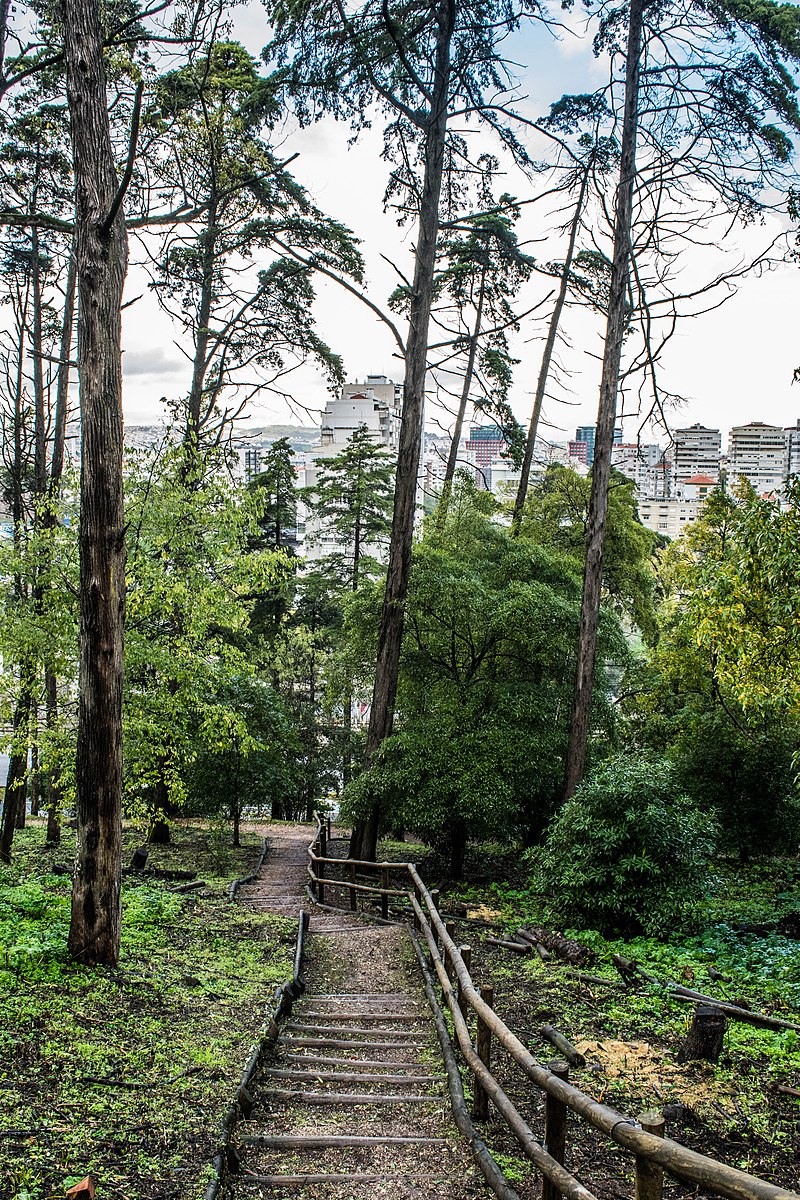
Monsanto Forest Park
Europe,
Portugal,
citta,
Monsanto
The Parque Florestal de Monsanto, also known as the green lung of Lisbon, is the largest green space in the city, covering approximately 1000 hectares. Located to the west of the city center, this park offers a natural refuge away from the urban hustle and bustle, with a wide range of recreational and sports activities.
The history of Parque Florestal de Monsanto is fascinating and complex. Originally, the area was treeless and mainly used for agriculture and limestone extraction, activities that left the land heavily degraded. In 1934, under the guidance of the Secretary for Public Works Duarte Pacheco, an ambitious reforestation project began. This project involved both prisoners from Forte de Monsanto and local farmers, transforming the area into the urban forest we know today. Architect Keil do Amaral designed the park, creating a mix of wild areas and spaces for sports activities.
The park is characterized by a wide variety of flora, including eucalyptus, oaks, and pines, creating a lush and diverse environment. This green space is crisscrossed by numerous trails that offer hiking, jogging, and cycling routes, making it an ideal place for nature lovers and outdoor sports enthusiasts. Among the main attractions are the Panorâmico de Monsanto, a former restaurant with breathtaking views of Lisbon and the Tagus River, now a popular viewpoint despite its abandoned state.
Another point of interest is the Parque Recreativo do Alto da Serafina, also known as Parque dos Índios, which offers numerous activities for children, including playgrounds, picnic areas, and an interactive zoo. This park is a popular gathering place for families on weekends.
Monsanto also hosts a series of cultural and sports events throughout the year, making it a lively center of activity. Among the most well-known events are mountain bike races and orienteering competitions, which attract participants from around the world.
The park is easily accessible by car or public transportation, with several entrances located in the neighborhoods of Benfica, São Domingos de Benfica, Campolide, Campo de Ourique, Belém, Ajuda, and Alcântara. The network of bike and pedestrian paths, such as the Corredor Verde de Monsanto, connects the park to other green areas of Lisbon, facilitating access and promoting an active and sustainable lifestyle.
From a historical perspective, the park is home to Forte de Monsanto, a fortification built between 1863 and 1878 as part of the city’s defensive system. The fort was later transformed into a prison and is now a high-security prison. This element adds a unique historical and architectural dimension to the park, recalling its military origins and its role in Lisbon’s history.
Read More