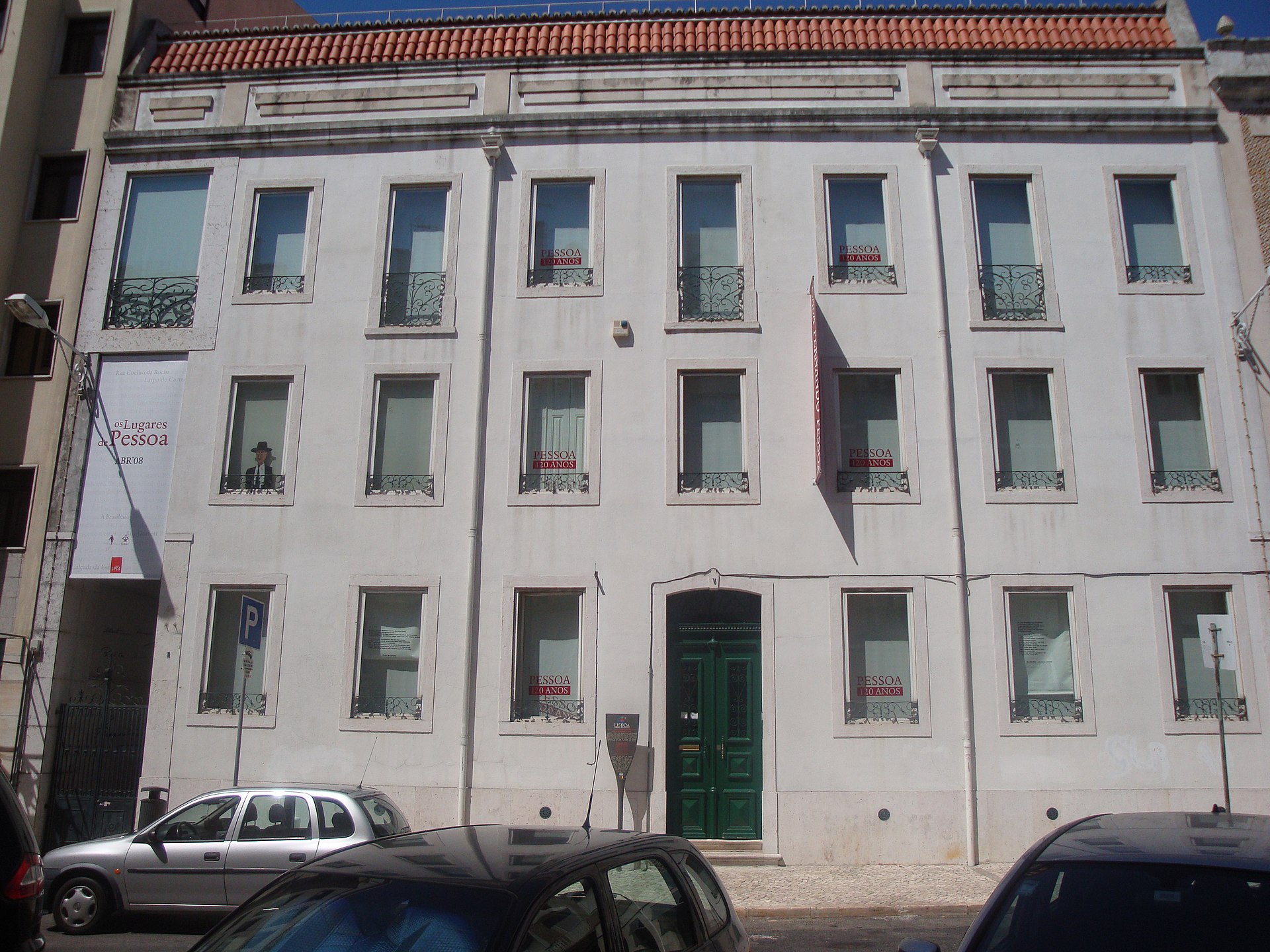
House of Fernando Pessoa
Europe,
Portugal,
citta,
Campo de Ourique
The Casa Fernando Pessoa, located in the Campo de Ourique district of Lisbon, is a museum and cultural center dedicated to the life and work of one of the greatest poets of the 20th century, Fernando Pessoa. The museum is housed in the house where the poet lived from 1920 until his death in 1935. This place not only preserves the memory of the poet, but also serves as a meeting point for literature and poetry lovers.
Fernando Pessoa is a central figure in Portuguese and world literature, known for his complexity and the creation of heteronyms, distinct literary identities with their own biographies, styles, and worldviews. Among the most famous are Alberto Caeiro, Ricardo Reis, and Álvaro de Campos, each with a unique approach to poetry and philosophy. The creation of these heteronyms reflects the fragmentation of modern identity and the exploration of the different facets of the human being.
The house, purchased by the Lisbon City Council in the 1980s, was in a state of abandonment and at risk of demolition. After careful restoration, which preserved the original facade, Casa Fernando Pessoa was inaugurated as a museum on November 30, 1993, on the poet’s birthday. The structure spans three floors, hosting permanent and temporary exhibitions that explore various aspects of Pessoa’s life and work. The museum offers an immersive journey through the rooms where the poet lived and worked, with an accurate reconstruction of his study and daily habits.
At the heart of the museum experience is Fernando Pessoa’s personal library, consisting of approximately 1300 volumes, many of which are in English, a language the poet mastered thanks to his education in South Africa. This collection offers a unique insight into the poet’s interests and literary influences, allowing visitors to better understand the intellectual context in which he operated. In addition to the personal library, Casa Fernando Pessoa houses a public library specializing in world poetry, with over 5000 volumes.
The museum’s permanent exhibition includes documents, manuscripts, letters, and personal objects of Pessoa, offering an intimate view of his creative process and daily life. Among the most fascinating pieces is the poet’s typewriter, the tool with which he composed many of his most important works. Furthermore, the museum hosts a series of cultural events, including poetry readings, seminars, and concerts, which keep Pessoa’s literary and poetic tradition alive.
Casa Fernando Pessoa is also a center for research and promotion of literature, with educational programs and international collaborations. In 2021, the museum was awarded as the best Portuguese museum by the Portuguese Association of Museology, a recognition that testifies to the importance of the work done to preserve and disseminate the poet’s legacy.
The historical and social context in which Fernando Pessoa lived is fundamental to understanding his work. Born in 1888, Pessoa lived in a period of great changes for Portugal, marked by the end of the monarchy and the establishment of the Republic. His writing reflects the tensions and hopes of a transitional era, exploring universal themes such as identity, loneliness, and the search for meaning.
Read More