Het Schip
Europe,
Netherlands,
Amsterdam, citta,
Spaarndammerbuurt
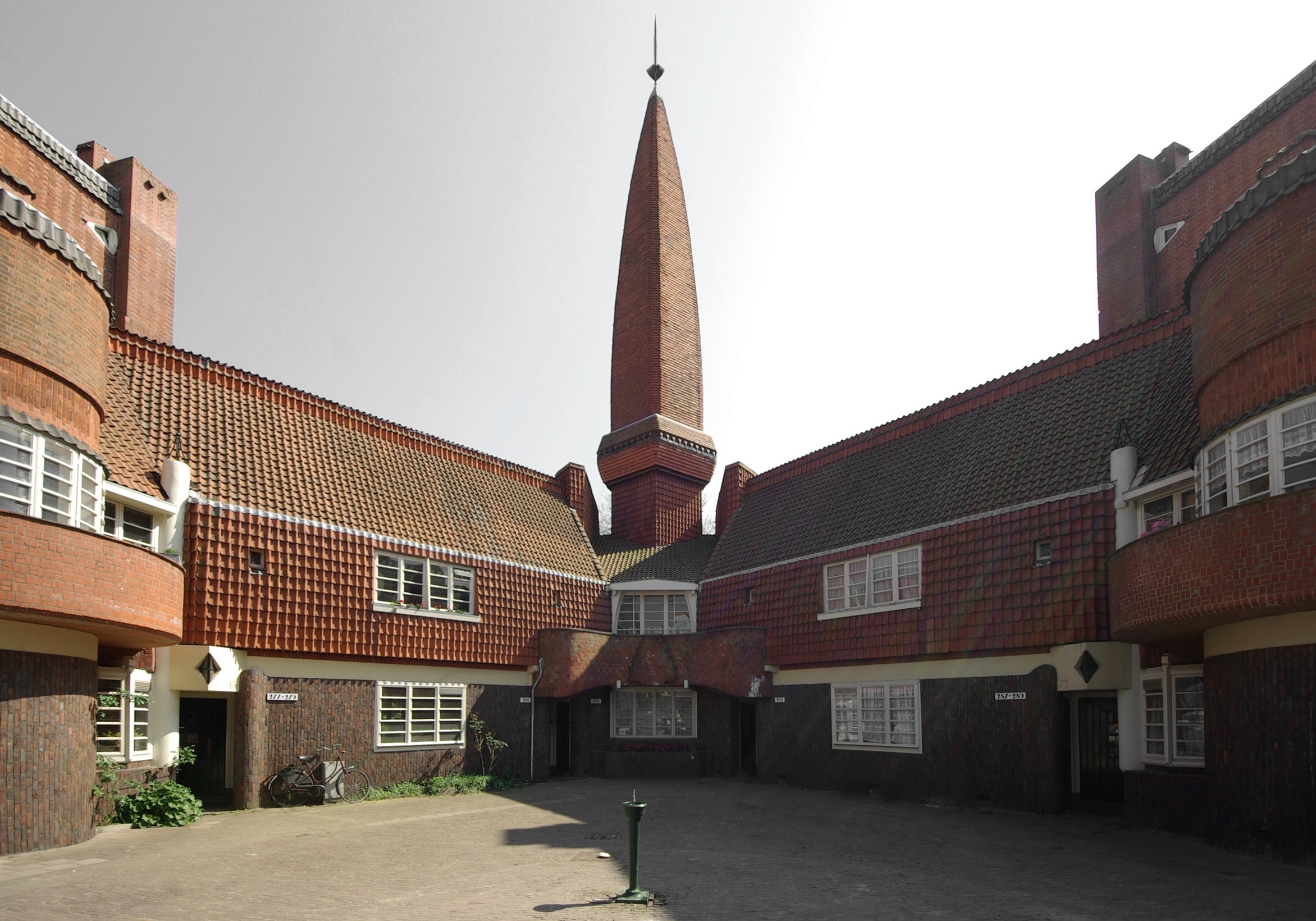
Het Schip, also known as “The Ship,” is one of the most famous examples of architecture from the Amsterdam School movement. Located in the Spaarndammerbuurt district of Amsterdam, this residential complex is a masterpiece by architect Michel de Klerk, completed in 1921. The Amsterdam School is an architectural movement that flourished in the Netherlands between 1910 and 1930, characterized by an expressive and decorative style that combines elements of Gothic, Art Nouveau, and Neo-Gothic.
The creation of Het Schip is linked to a period of strong industrial and urban growth in the Netherlands, during which there was a growing demand for housing for the working class. The complex was commissioned by the housing association Eigen Haard with the aim of providing quality homes at affordable prices for workers. This project reflected the social and political aspirations of the time, aimed at improving the living conditions of workers through architecture and urban design.
The building itself is an architectural work of art. Michel de Klerk designed Het Schip with great attention to detail, using red bricks and elaborate decorations to create fluid and dynamic forms that evoke the movement of a ship. The facade is adorned with sculptural elements, unusually shaped windows, and sloping roofs, giving the building a fairy-tale and surreal appearance. One of the most distinctive elements of Het Schip is the corner tower, which resembles a ship’s prow, from which the complex derives its name. The interior of the apartments was designed to be functional and comfortable, with well-lit and ventilated rooms, meeting the daily needs of the residents. Every detail, from door handles to bathroom tiles, was carefully crafted to ensure both aesthetics and practicality.
De Klerk’s approach to architecture was revolutionary for the time. He believed that architecture should be not only functional but also expressive and artistic. This is reflected in the decorative richness and complexity of the forms of Het Schip, which challenge the conventions of traditional residential design. De Klerk used innovative techniques and high-quality materials to create a building that was both beautiful and durable.
The realization of Het Schip also represents an important testimony to the social policies of the early decades of the 20th century in the Netherlands. During this period, the government and housing cooperatives invested massively in the construction of social housing, recognizing the importance of providing dignified and affordable homes to improve the general well-being of the population. Het Schip is an emblematic example of how architecture can be used as a tool for social reform.
Today, Het Schip is recognized as a national monument and houses a museum dedicated to the Amsterdam School and the history of social housing. The Museum Het Schip offers guided tours inside the complex, allowing visitors to explore the historic apartments, the original post office, and a permanent exhibition that illustrates the daily life of residents during the 1920s. The museum also organizes temporary exhibitions, events, and educational activities that delve into various aspects of architecture and social history.
An interesting anecdote concerns the sculpture placed above the main entrance of the building, representing a raven with a message in its beak. This sculpture symbolizes the courier bringing good news, a symbolic reference to the idea of progress and social improvement that Het Schip represented for its residents.
Read More