Southern Church (Zuiderkerk)
Europe,
Netherlands,
Amsterdam, citta,
De Wallen
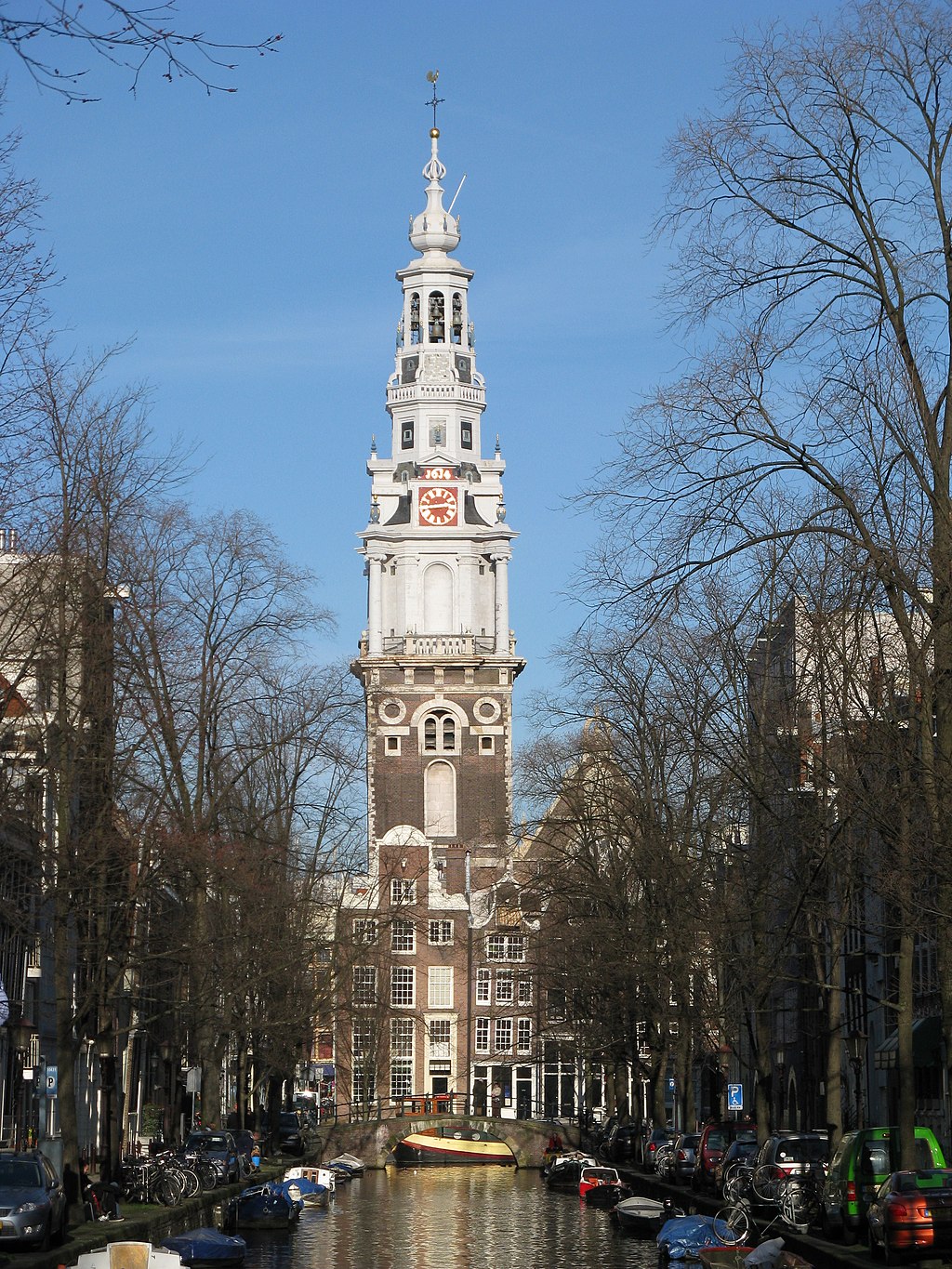
The Zuiderkerk, also known as the Southern Church, is one of the most iconic structures in Amsterdam and represents a symbol of the city’s religious and architectural history. Built between 1603 and 1611 by architect Hendrick de Keyser, this church was the first religious building specifically designed for Protestant worship after the Reformation. Located in the Nieuwmarkt district, the Zuiderkerk stands out for its Baroque style and its imposing bell tower, which rises to 68 meters, offering a panoramic view of the city.
The history of the Zuiderkerk begins at the dawn of the 17th century, during a period of great expansion and prosperity for Amsterdam. The decision to build a new Protestant church was made by the Reformed Church Council in 1601. De Keyser, one of the most renowned architects of the time, was commissioned for the project, and the first stone was laid in August 1603. However, construction faced delays due to a lack of funds and was only completed eight years later, with the consecration taking place on May 22, 1611, Pentecost day.
The structure of the church is an excellent example of Dutch Baroque architecture, with a basilica design featuring three naves and a rectangular plan. The central nave is flanked by two narrower and lower side naves, with barrel vaults and large rectangular windows that allow light to filter in, creating a bright and solemn environment. The Tuscan order colonnade and the coffered ceiling arches give the church’s interior a sober elegance typical of the Renaissance.
The bell tower of the Zuiderkerk, completed in 1614, is one of the tallest in Amsterdam and a remarkable example of the engineering of the time. Built of bricks, with a square base that rises into an octagonal sandstone section, the bell tower is topped by a wooden spire covered with lead sheets. In 1651, the famous bell maker François Hemony installed a carillon with clocks, adding an additional element of prestige to the church.
Beyond its architectural importance, the Zuiderkerk also has profound historical and cultural significance. During the last winter of World War II, the church was used as a temporary storage for the bodies of famine victims, reflecting the tragic reality of those difficult times. Additionally, the church is linked to the life of Rembrandt, the great Dutch painter, who buried three of his children there. Among others buried in the church is Ferdinand Bol, one of Rembrandt’s most famous pupils.
After the cessation of religious services in 1929, the Zuiderkerk fell into disuse and was purchased by the city of Amsterdam in 1968. In the 1970s, the church underwent significant restoration to preserve its structure, and since the 1990s, it has become the seat of the Municipal Information Center. This center offers visitors an overview of the city’s urban planning projects and hosts cultural events, exhibitions, and conferences, keeping the community and cultural function of the building alive.
One of the most interesting anecdotes related to the Zuiderkerk concerns the Impressionist painter Claude Monet, who during a trip to the Netherlands in 1874, was so struck by the beauty of the church that he included it in one of his paintings. This reflects not only the architectural importance of the church but also its influence on European art and culture.
Read More