Vltava
Europe,
Czech Republic,
Prague,
The Vltava, the longest river in the Czech Republic, is an extraordinary natural artery that crosses the heart of Bohemia for over 430 kilometers, shaping the history, culture, and landscape of the country. Also known as the Moldau in German, the Vltava plays a fundamental role in the geography and daily life of the Czech nation, connecting important cities such as Český Krumlov, České Budějovice, and Prague, before flowing into the Elbe at Mělník.
The history of the Vltava is ancient and rich in meaning. Its name comes from the Germanic term “wilt ahwa,” which means “wild water.” The river originates from the Šumava Mountains, where the cold and warm waters of the Studená and Teplá Vltava merge, giving rise to the main course. The Vltava traverses a varied landscape, passing through forests, historic cities, and fertile plains, and receiving numerous tributaries along its path, including the Berounka, Sázava, and Lužnice.
In the Middle Ages, the Vltava became an essential communication route for the transport of goods, especially timber and salt, which were crucial to the region’s economy. Timber was transported from the forests of southern Bohemia to Prague, where it was needed for construction and heating. During the 16th century, the river was also used for the transport of salt, which was loaded onto rafts and transported to Prague, a complicated and lengthy process that demonstrates the economic importance of the river.
The Vltava has deeply influenced the culture and art of the Czech Republic. One of the most famous tributes to the river is the symphonic poem “Vltava” (also known as “The Moldau”) composed by Bedřich Smetana. Part of the cycle “Má vlast” (My Country), this composition captures the beauty and grandeur of the river, following its course from the source to Prague, and reflecting the composer’s love for his homeland.
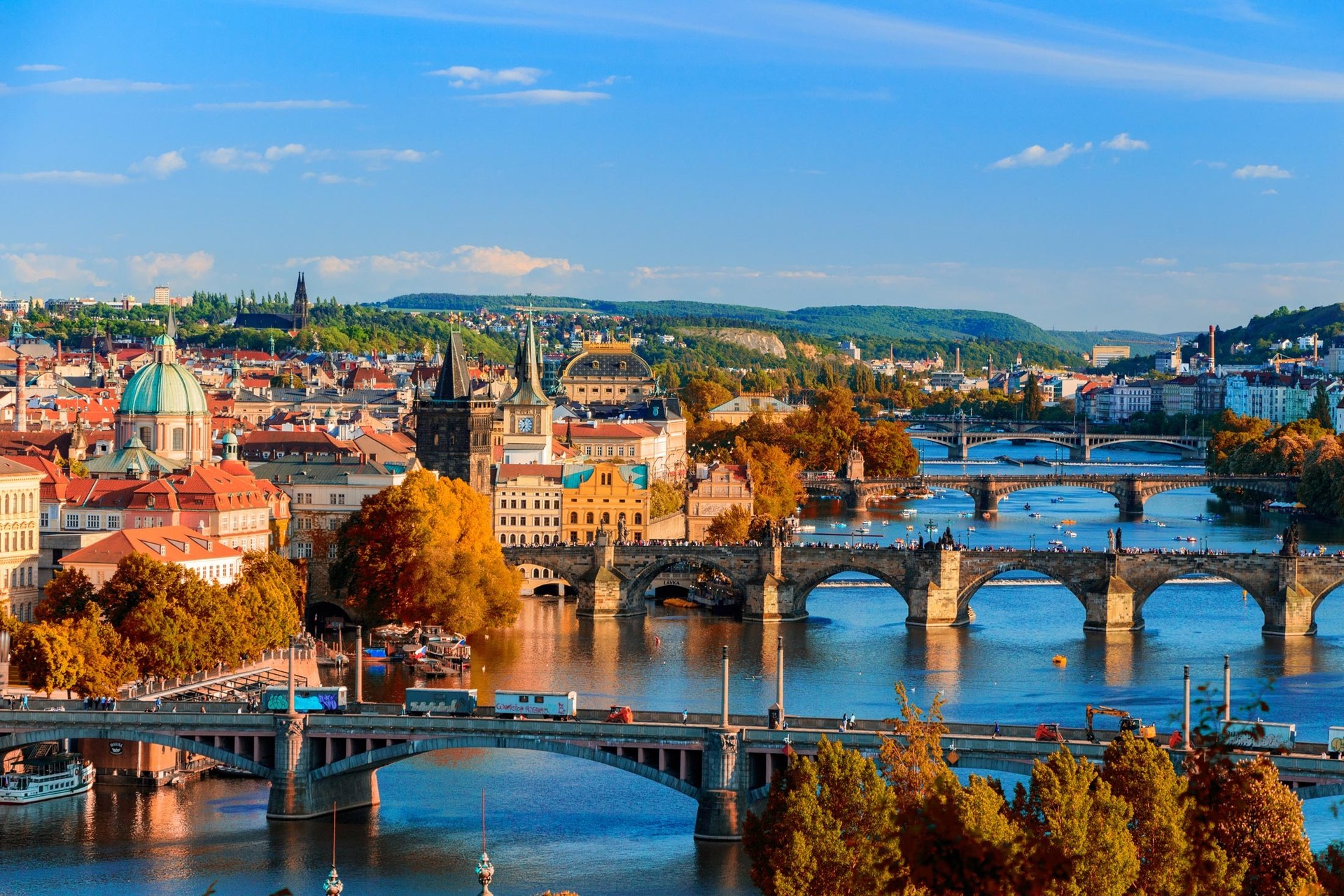
Prague, the capital of the Czech Republic, owes much of its charm to the Vltava. The river flows through the city, creating a series of picturesque views and defining its urban structure. One of the highlights is the Charles Bridge (Karlův most), a Gothic bridge that connects the Old Town with Malá Strana. Built in the 14th century under the reign of Charles IV, the bridge is adorned with 30 Baroque statues, adding an additional historical and artistic dimension to the cityscape. One of the most fascinating aspects of the river is its ability to adapt and transform over the centuries. From an important medieval trade route to a source of modern hydroelectric power, the Vltava continues to play a vital role in the economy and daily life of the Czech Republic. Along its course, numerous dams have been built, including the Orlík and Slapy dams, which not only provide energy but also regulate the flow of the river, preventing floods and ensuring sustainable water resource management.
Read More