Vinohrady
Europe,
Czech Republic,
Prague,
Vinohrady
Vinohrady, an elegant and residential neighborhood in Prague, is renowned for its charming architecture, tree-lined streets, and vibrant atmosphere. Located between the districts of Prague 2, 3, and 10, Vinohrady extends approximately from Riegrovy sady park in the north to Havlíčkovy sady park in the south, with its main arteries including Vinohradská, Korunní, and Francouzská.
The name “Vinohrady” means “vineyards,” a reference to the neighborhood’s history dating back to the 14th century, when King Charles IV ordered the planting of vineyards in this area. These vineyards thrived for about four hundred years before being replaced by rose gardens, orchards, and eventually residential buildings during the second half of the 19th century and the early 20th century.
Vinohrady’s independence as a community began in 1849, and in 1879 it received city status. It was incorporated into Greater Prague in 1922, and its name was officially shortened to Vinohrady in 1968. This period marked significant urban expansion, with the construction of numerous buildings in Neo-Renaissance, Art Nouveau, Pseudo-Baroque, and Neo-Gothic styles.
One of Vinohrady’s most iconic buildings is the National House (Národní dům na Vinohradech), designed by architect Antonín Turek and built between 1893 and 1894. This vast Neo-Renaissance building hosts various cultural and social functions, including concert halls, theaters, and restaurants. Its facade is adorned with allegorical sculptures by Antonín Popp, and the interior features frescoes by Adolf Liebscher and busts by Josef Strachovský. The National House is a place of great historical and cultural importance, hosting concerts, political meetings, and other social events.
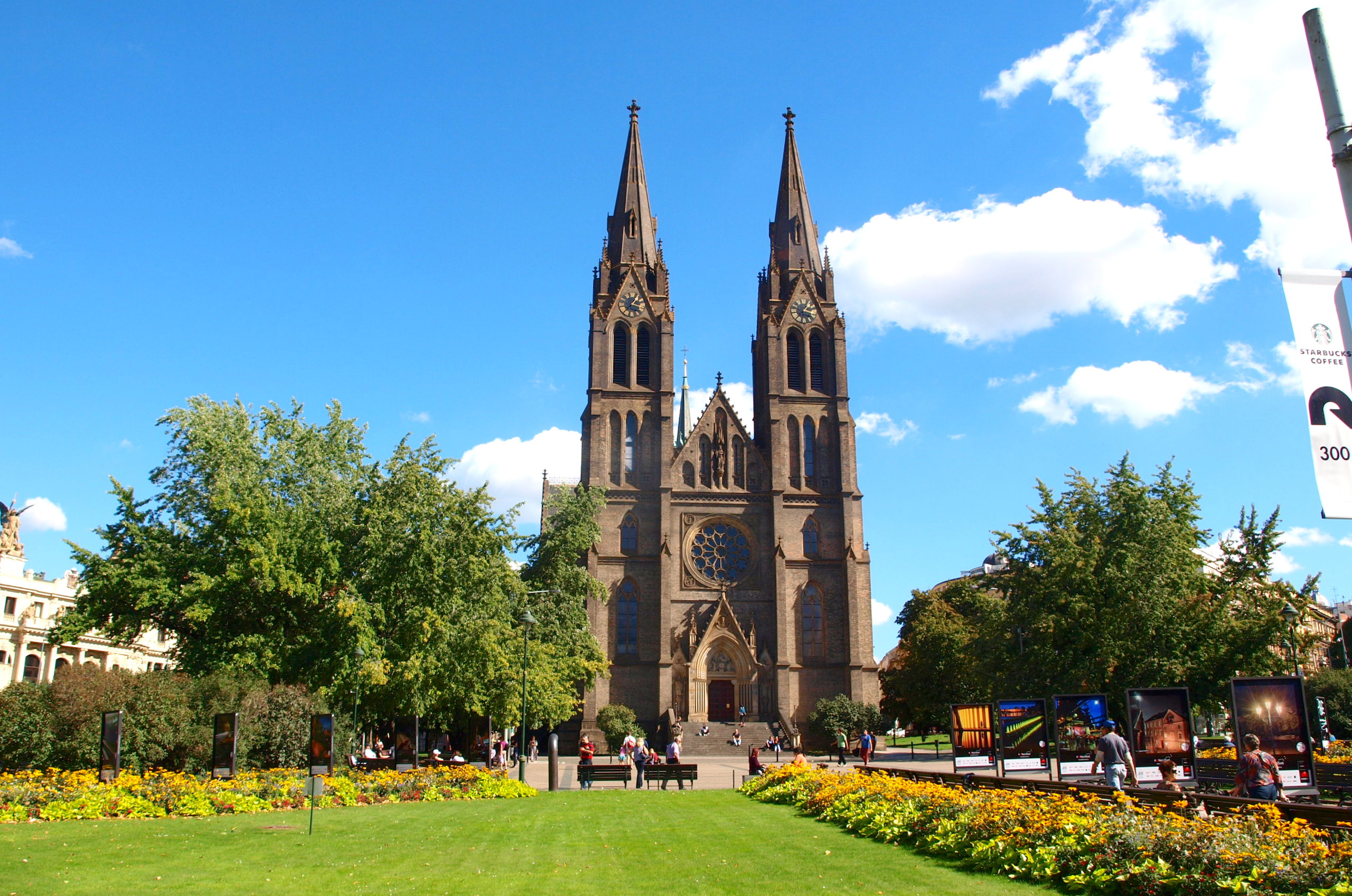
Vinohrady’s main square, Náměstí Míru, is dominated by the Church of St. Ludmila, an imposing Neo-Gothic basilica with twin towers. Built between 1888 and 1892 according to Josef Mocker’s design, the church is one of the most beautiful examples of sacred architecture in Prague. The square itself is a lively hub of activity, with seasonal markets and a vibrant atmosphere that attracts both locals and visitors.
Vinohrady is also known for its splendid parks, such as Riegrovy sady and Havlíčkovy sady. Riegrovy sady, with its breathtaking view of Prague’s center, is a popular spot for walks, picnics, and outdoor activities. Havlíčkovy sady, also known as Grébovka, is a historic park with a pavilion, vineyards, and an artificial cave. These green spaces offer an oasis of tranquility and beauty in the heart of the city.
Vinohrady’s cultural and social life is enriched by a wide range of cafes, restaurants, and bars. Cafes like La Bohème Café and Monolok Cafe are renowned for their cozy atmosphere and high-quality coffee. Restaurants like Grosseto, famous for its wood-fired pizza, and Kofein, a tapas bar with a robust wine list, reflect the neighborhood’s culinary diversity. Additionally, places like Vinohradsky Pivovar, a local brewery with traditional Czech food, offer a taste of authentic Czech cuisine.
Vinohrady is also home to numerous markets and shops. The Tylovo Náměstí farmers’ market is open during the week and offers a variety of local products and flowers. During Christmas and Easter, Náměstí Míru hosts seasonal markets where one can find gifts and seasonal items, as well as the city’s best svařák (spiced hot wine).
Vinohrady’s nightlife is lively but not frantic, with pubs and wine bars where locals gather to drink and socialize. For those looking for something more energetic, Retro Music Hall offers electronic music and live DJs, while Radost FX combines a famous brunch with a vibrant nightlife.
Read More