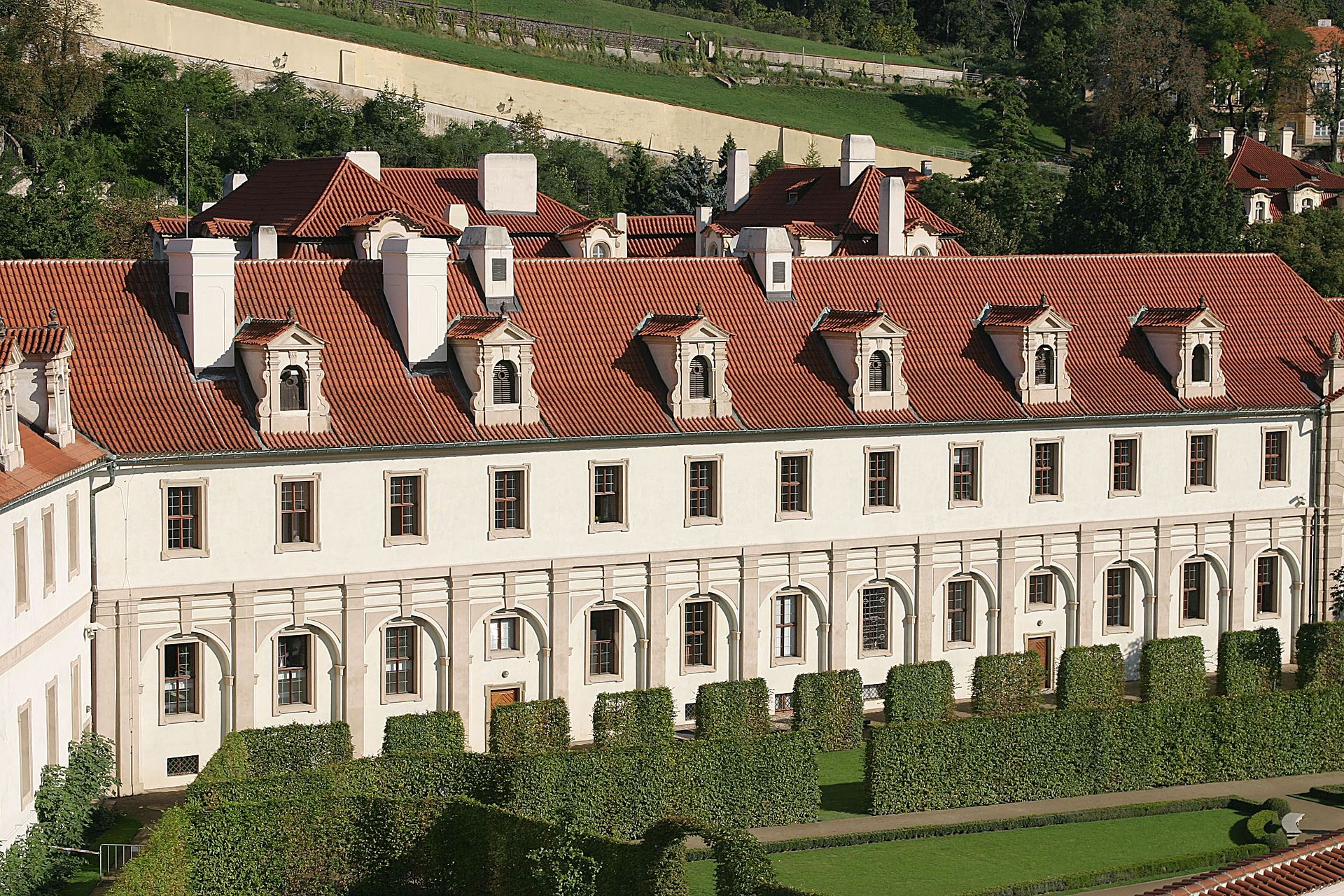
Wallenstein Palace
Europe,
Czech Republic,
Prague,
Malá Strana
The Wallenstein Palace (Valdštejnský palác), located in the Malá Strana district of Prague, is a majestic example of 17th-century Baroque architecture and one of the most important and historically significant complexes in the city. Commissioned by General Albrecht von Wallenstein, one of the most influential military commanders during the Thirty Years’ War, the palace was built between 1623 and 1630. Wallenstein, known for his ambition and desire for power, wanted to create a residence that reflected his status and wealth, rivaling even Prague Castle itself.
The architecture of the Wallenstein Palace is the result of collaboration among some of the most famous architects and artists of the time, including Andrea Spezza, Giovanni Pieroni, and Niccolò Sebregondi. The complex includes the main palace, a vast garden, the ground floor hall, and several other minor structures. The grandeur of the project is reflected in the attention to architectural details and the richness of the decorations.
At the entrance of the palace, visitors are greeted by an imposing facade characterized by classical Baroque elements such as columns, elaborate cornices, and statues. The ground floor hall, one of the most spectacular spaces in the palace, is a large open hall with three large arches overlooking the gardens. The walls and ceiling of the hall are richly decorated with frescoes depicting mythological and allegorical scenes, the work of the Italian artist Baccio del Bianco.
The interior of the palace is as magnificent as the exterior. The rooms are adorned with stuccoes, frescoes, and antique furniture that testify to the taste and wealth of the Baroque period. Particularly noteworthy is the Mirror Hall, a sumptuous room used for state meetings and banquets. The walls of the hall are covered with Venetian mirrors, reflecting the light of candles and crystal chandeliers, creating an effect of luxury and splendor.
The gardens of the Wallenstein Palace, designed in Italian Baroque style, are an essential part of the complex. They include large flower beds, ornamental fountains, and mythological sculptures, including a series of bronze statues by Adrien de Vries. The gardens offer a place of tranquility and beauty, with shaded paths and picturesque views that complement the elegance of the palace.
An interesting anecdote concerns the statue of a horse located in the gardens. It is said that Wallenstein, obsessed with his security and the loyalty of his servants, ordered the horse to be positioned so that it always faced the castle, symbolizing constant vigilance against possible betrayals.
The history of the Wallenstein Palace is closely linked to that of its commissioner. Albrecht von Wallenstein was a complex character, famous not only for his military abilities but also for his ambitious and sometimes ruthless politics. After his fall from grace and his death in 1634, the palace passed through various hands, undergoing various changes and restorations over the centuries.
Today, the Wallenstein Palace is the seat of the Senate of the Czech Republic, but remains accessible to the public on certain days and for special events. This dual function, as a government seat and tourist attraction, reflects the historical and cultural importance of the place.
Read More