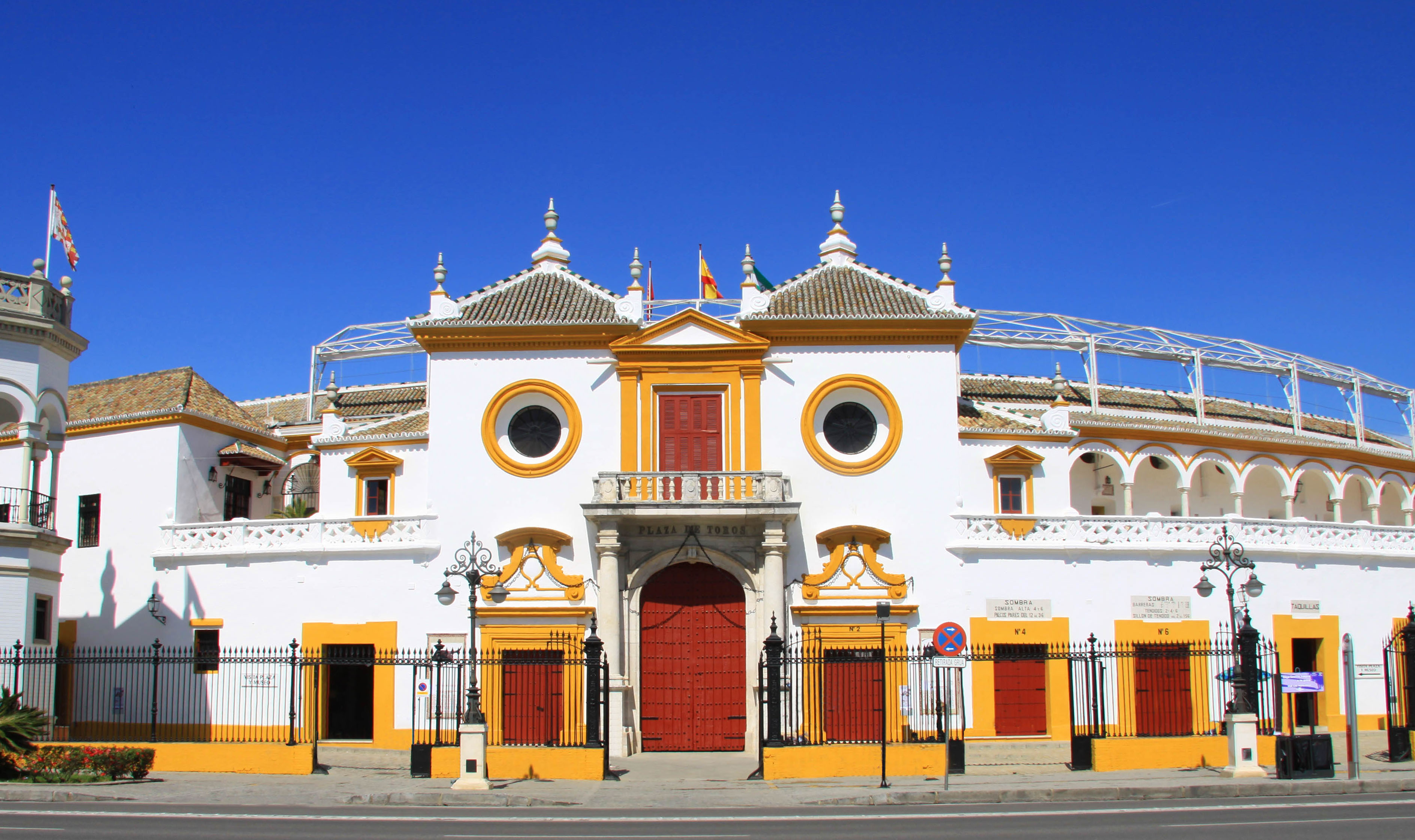
Bullring of La Maestranza
Europe,
Spain,
Seville,
El Arenal
The Plaza de Toros de la Maestranza, located in Seville, is one of the most iconic and significant buildings in the city. Built between 1761 and 1881, this arena is known not only for its baroque architecture but also for its central role in the tradition of Spanish bullfighting. The Maestranza project began in 1761 to replace the previous wooden amphitheaters with a more durable stone structure. However, the construction lasted for over a century due to funding issues and various bans on bullfighting issued over the years. The Maestranza also houses the Bullfighting Museum, which offers a rich collection of artworks, costumes, and historical artifacts related to the bullfighting tradition. Here, visitors can explore the history and evolution of bullfighting, admiring paintings and sculptures that celebrate the great matadors of the past. The Bullfighting Museum of Seville is one of the most important museums dedicated to bullfighting in Spain. This museum not only celebrates the art of bullfighting but also provides a window into the culture, history, and traditions of Seville and Spain as a whole. Founded in 1989, the museum has become a reference point for bullfighting enthusiasts and anyone who wants to better understand this controversial and fascinating spectacle.
The Bullfighting Museum offers a rich collection of objects and documents related to the history of bullfighting. Inside, visitors can admire bullfighters’ costumes, historical posters, photographs, paintings, and a wide range of tools used in bullfights. Each displayed object tells a part of the bullfighting history, offering a glimpse into its evolution over the centuries.
One of the highlights of the collection is undoubtedly the room dedicated to the great bullfighters of the past. Here, visitors can get up close to the sparkling costumes worn by the most famous bullfighters, such as Manolete, Joselito, and Curro Romero. These costumes, richly decorated with gold and silver threads, are true masterpieces of craftsmanship that reflect the greatness and courage of those who wore them. Each costume is accompanied by informative panels that tell the career and feats of these legendary matadors.
Another fascinating section of the museum is dedicated to the tools of bullfighting. Here, visitors can see the different types of swords, banderillas, and capes used by bullfighters during their performances. These tools, often decorated and personalized, are essential to understand the complexity and technique behind each bullfight.
Bullfighting, with its deep roots in Spanish culture, is much more than a spectacle. It is an ancient ritual that mixes elements of art, sport, and drama, evoking strong and conflicting emotions. The Bullfighting Museum offers visitors the opportunity to explore these aspects through a series of thematic exhibitions that cover the history of bullfighting, its rules, its protagonists, and its impact on Spanish society.
One of the most evocative rooms in the museum is dedicated to artworks inspired by bullfighting. Here, paintings, drawings, and sculptures by famous artists such as Francisco de Goya, Pablo Picasso, and Salvador Dalí can be found, who drew inspiration from bullfighting to create some of their most intense and dramatic works. These masterpieces not only testify to the importance of bullfighting in Spanish art but also offer a unique perspective on its aesthetics and symbolism.
A visit to the Bullfighting Museum of Seville is an enriching and thought-provoking experience. For many, bullfighting is an art form that celebrates the courage and skill of the bullfighter, while for others, it is a controversial practice that raises ethical questions. The museum addresses these themes with respect and attention, offering a space for reflection and dialogue.
The Maestranza, with a capacity of about 12,000 spectators, is considered one of the most prestigious venues for bullfights, hosting the famous Feria de Abril festival every year. During this festival, which takes place two weeks after Easter, the city of Seville comes alive with flamenco events, parties in the “casetas,” and, of course, evening bullfights. This festival represents the culmination of the bullfighting season, which runs from March to October.
One of the most fascinating aspects of the Maestranza is its baroque facade, completed between 1762 and 1881. The interior part of the arena, known as the Palco del Príncipe, was completed in 1765 and is reserved for the Spanish royal family. This structure is characterized by a half-orange vault, decorated with white and blue tiles, and a sculptural group created by the Portuguese sculptor Cayetano de Acosta.
The history of the Maestranza is closely linked to the evolution of bullfighting in Spain. Originally, bullfights were held on horseback, but during the 18th century, the practice of bullfighting on foot became established. This change was favored by the selection of more agile and aggressive bulls, specifically bred in the region of Seville. The Plaza de Toros then became a hub for bullfighting on foot, attracting the best matadors of the time.
In the 19th century, the arena underwent numerous modifications and expansions, including the construction of stone and brick stands and the reduction of the arena’s size to improve visibility and acoustics. Between 1914 and 1915, the architect Aníbal González oversaw a significant renovation that led to the creation of new seating and the construction of a row of armchairs in the upper part of the shaded area.
Read More