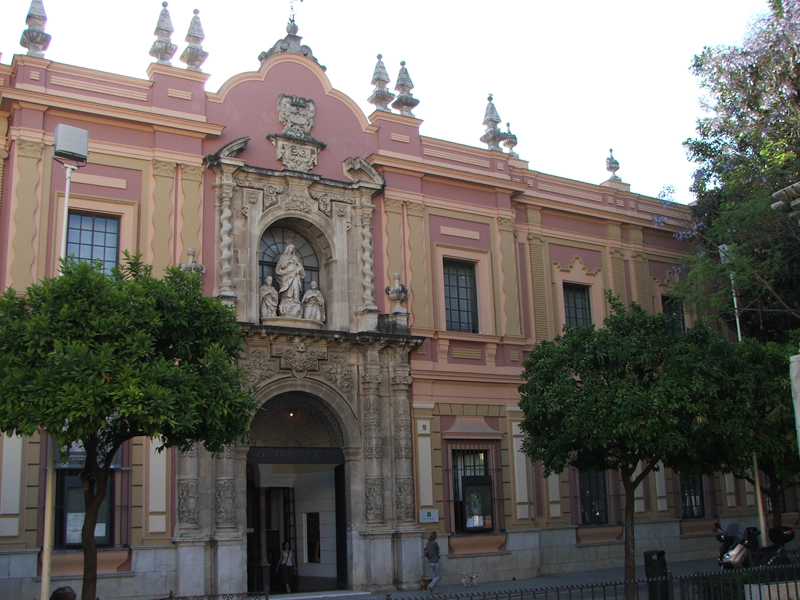
Seville Museum of Fine Arts
Europe,
Spain,
Seville,
El Arenal
The Museum of Fine Arts in Seville, locally known as Museo de Bellas Artes de Sevilla, is one of the main cultural institutions in the city and throughout Andalusia. Located in Plaza del Museo, the building that houses the museum is a former convent of Merced Calzada, dating back to the 17th century. This building is a magnificent example of Mudéjar architecture, with ornate inner courtyards and a structure that exudes a unique historical charm.
The museum was founded in 1839, following the confiscation of ecclesiastical property during the secularization that took place in the 19th century. The initial collections were made up of works from abandoned churches and convents, creating a solid foundation for what would become one of Spain’s most important art museums, second only to the Prado Museum in Madrid.
The collection of the Museum of Fine Arts in Seville covers a wide range of time periods, from the Middle Ages to the 20th century, with a strong emphasis on Andalusian Baroque art. Among the most represented artists are Bartolomé Esteban Murillo, Francisco de Zurbarán, and Juan de Valdés Leal, whose masterpieces are among the most appreciated in the museum. Murillo, in particular, has a special connection to the museum, so much so that a statue in his honor is located in the square in front of the building.
Murillo’s works in the museum include famous paintings such as “The Infant Christ of Nazareth” and “The Immaculate Conception,” which showcase his mastery in the use of light and color, and his ability to capture spirituality and emotion in the faces of his subjects. Zurbarán’s paintings, such as “Saint Hugo in the Carthusian Refectory,” are known for their realism and emotional intensity, while Valdés Leal’s works, like “Finis Gloriae Mundi,” stand out for their dramaticism and visual impact.
In addition to the permanent collection, the museum regularly hosts temporary exhibitions that explore various themes and artistic periods, offering visitors new perspectives and insights into Spanish and international art. These exhibitions help to keep alive the interest and relevance of the museum in the contemporary cultural scene.
The museum is also known for its commitment to accessibility and inclusivity. It is fully accessible to visitors with disabilities, with ramps, elevators, and appropriate restrooms. Additionally, the museum offers guided tours and educational programs specifically designed for people with disabilities, making art accessible to all.
Another distinctive feature of the museum is its well-stocked souvenir shop, offering a wide range of items inspired by the museum’s collection. Visitors can purchase reproductions of ancient sculptures, prints of famous paintings, and handmade ceramics, as well as a selection of art books and exhibition catalogs. After exploring the artistic treasures of the museum, visitors can enjoy a break in the numerous restaurants and cafes nearby. Places like La Antigua Taberna and Casa Morales offer a taste of traditional Andalusian cuisine, while more modern venues like Ovejas Negras offer creative tapas in a contemporary atmosphere.
Read More