Villa Buri Park
Europe,
Italy,
Verona,
Borgo Roma
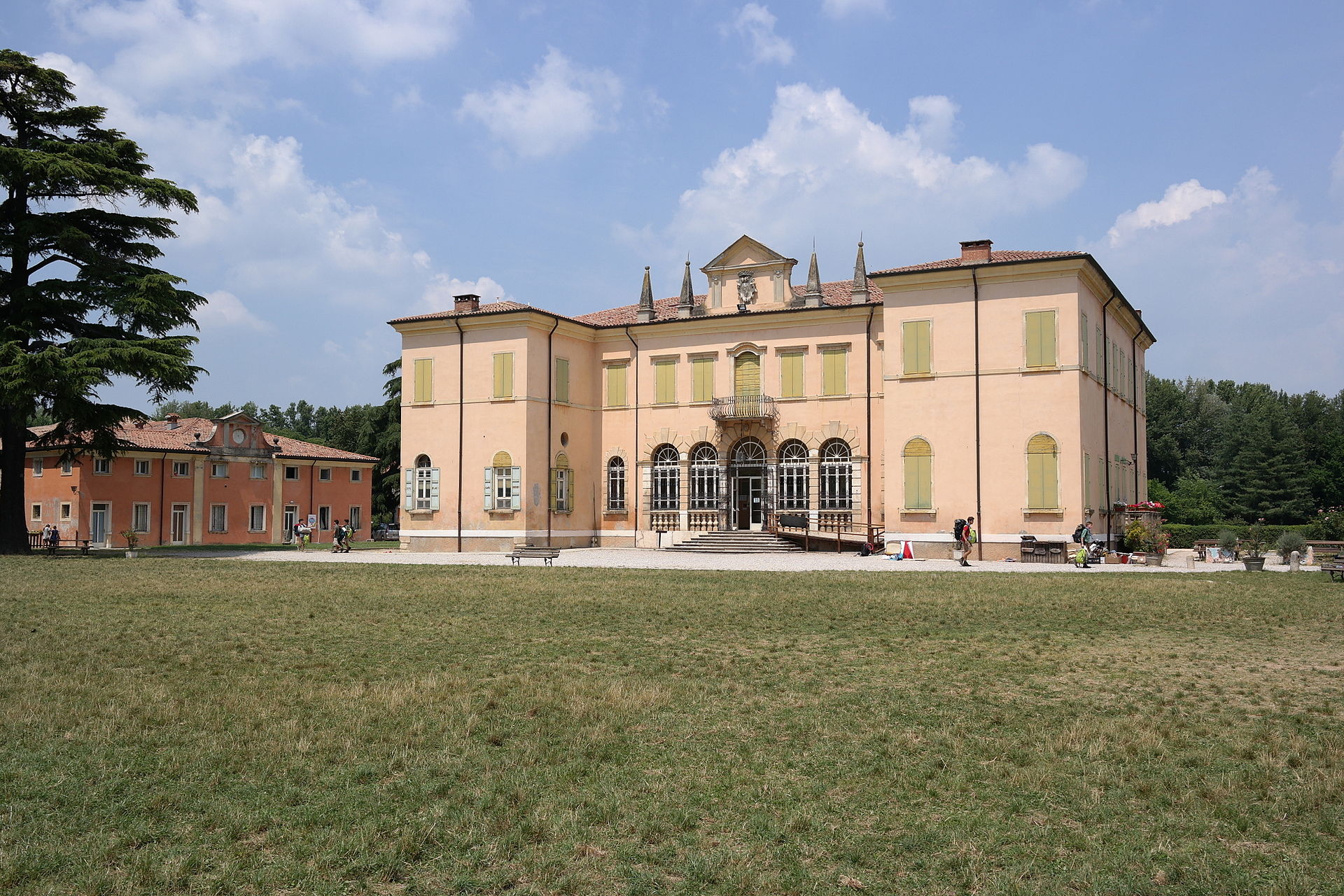
Villa Buri Park is one of Verona’s green gems, located near San Michele Extra. The villa itself, a significant example of Venetian architecture from the 17th century, was built by the Buri Counts on the banks of the Adige River. The monumental complex includes, in addition to the main house, a chapel, rustic buildings, stables, and a barn, all surrounded by a vast 13-hectare park.
The construction of the villa is attributed to Gian Antonio Spolverini, but the project is the work of Domenico Brugnoli, nephew of Michele Sanmicheli, one of the most illustrious architects of the Italian Renaissance. During the 18th century, the villa hosted prominent figures such as the Duke of Lorraine and Maria Theresa of Austria, a testament to the prestige this place had achieved.
Villa Buri Park is a combination of an English garden and the typical rural landscape of the Venetian countryside. Count Giovanni DaNese Buri, a botany enthusiast, gave the park its current appearance, with winding paths, groups of plants, and a botanical garden. This green space is not only a place of natural beauty, but also a habitat rich in biodiversity with around 1800 different plant species.
Over the centuries, Villa Buri has undergone various changes in ownership and use. During World War II, the villa was looted and abandoned. However, in the post-war period, the villa found a new life as a scout college thanks to Mario Mazza. In the 1970s, the Bernini-Buri family sold the property to the Brothers of the Holy Family. In 2002, the villa was purchased by two Veronese entrepreneurs and leased to the Villa Buri Onlus Association, which still manages the site.
The villa and the park are now an active center of culture and social aggregation. The Villa Buri Onlus Association organizes a variety of events and activities, including educational workshops, volunteer programs, and cultural events. The park also offers recreational facilities, such as soccer and volleyball fields, a sensory path in the woods, and picnic areas.
From an artistic point of view, Villa Buri preserves numerous valuable frescoes. The central hall features a large monochromatic fresco from the 18th century, by De Alessandri, depicting a woman supported by cherubs. Andrea Palladio and Titian Vecellio are portrayed in the side lunettes. In the dining room, the frescoes by the Veronese painter Marco Marcola illustrate scenes of aristocratic life in the 18th century, such as shuttlecock and thoroughbred horse sales.
The villa’s chapel, built by Alessandro Pompei, houses the tombstones of the Buri-Bernini, Spolverini, and Guarienti families. Despite the looting suffered in the post-war period, the chapel maintains a remarkable historical and artistic charm. Furthermore, the barn, a large adjacent structure originally used for stables and warehouses, is now managed as a scout base, continuing the tradition of hospitality and community service.
Read More