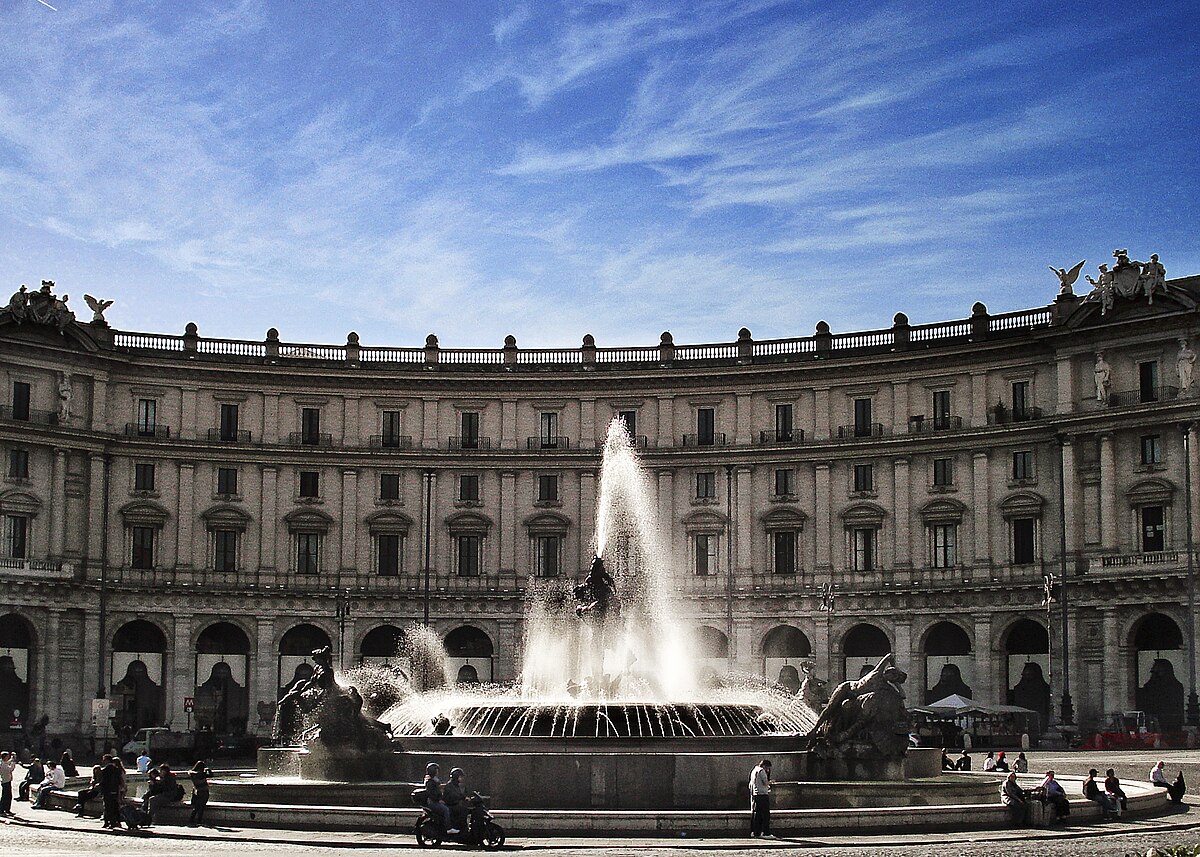
Fountain of the Naiads
Europe,
Italy,
citta,
Rione XVII - Sallustiano
The Fountain of the Naiads, located in the center of Piazza della Repubblica in Rome, is a splendid example of monumental architecture and decorative sculpture from the late 19th century. Inaugurated in 1901, the fountain was designed by architect Alessandro Guerrieri and embellished with sculptures by Mario Rutelli, a highly talented artist who captured the elegance and vitality of the mythological figures adorning the fountain.
The fountain has a fascinating history that reflects the urban and artistic changes in Rome during the unification of Italy. Originally, the square was known as Piazza dell’Esedra, a name derived from the ancient semicircular portico of the Baths of Diocletian, which still forms the scenic backdrop of the square today. The construction of the fountain was part of a larger project to modernize and beautify the city, celebrating the new national identity and transforming Rome into a capital worthy of the new Kingdom of Italy.
Guerrieri’s initial design envisioned a simple fountain with four stone lions spouting water into the central basin. However, the mayor of Rome at the time, Ernesto Nathan, wanted something more grandiose and symbolic. Thus, in 1900, a competition was held to replace the lions with more dynamic and allegorical figures, and Rutelli’s project was chosen, featuring the representation of the Naiads, the freshwater nymphs of Greek mythology.
Rutelli’s Naiads are fascinating female figures embodying the different forms of water: the Lake Nymph, recognizable by the swan she caresses, the River Nymph, reclining on a river monster, the Ocean Nymph, riding a seahorse, and the Underground Water Nymph, lying on a dragon. These skillfully sculpted figures are characterized by sensual and dynamic poses that caused a stir and debate among contemporaries for their boldness and realism.
At the center of the fountain stands a powerful sculpture of Glaucus, the sea god, wrestling with a dolphin. This figure symbolizes man’s triumph over the brute force of nature, a symbol of progress and domination. The choice of Glaucus as the central figure was not random but reflected the city’s aspiration to control and utilize natural resources for the well-being of the population. An interesting anecdote concerns the initial public reaction to the fountain. When the statues of the Naiads were installed, there was a great controversy over their nudity and sensuality. Many criticized the work as indecent and inappropriate for a public square. However, over time, Rutelli’s beauty and artistic skill were recognized, and the fountain became one of Rome’s symbols, loved and admired by all.
Read More