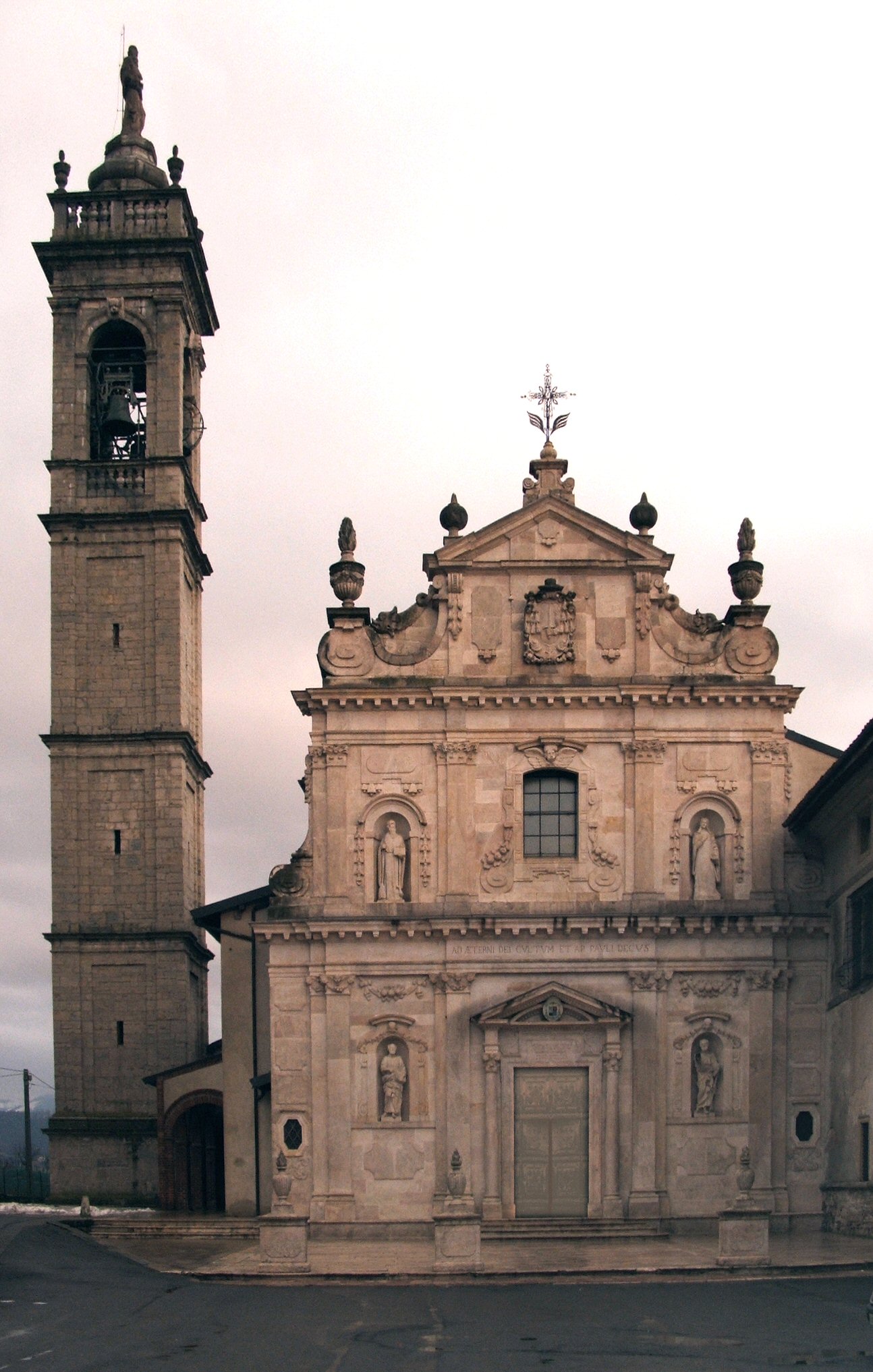
Church of St Paul the Apostle - Bergamo
Europe,
Italy,
Bergamo,
The Church of San Paolo Apostolo, located in the heart of Bergamo, is a significant example of 20th-century religious architecture. Inaugurated in 1966, this church is an important landmark for the local community and represents an added value to the identity of the city. Its construction was promoted by a desire for religious and social renewal, making it known for its modern style and innovative architectural choices. Alongside the historicity of Bergamo, San Paolo Apostolo fits into a context of transformation and growth, reflecting the evolution of religious needs in the post-war period.Origins and HistoryThe idea of building a new church in this neighborhood of Bergamo emerged in the post-war period, a time of great change for Italy. The increase in population, due to waves of migration and post-war reconstruction, made it necessary to provide the area with new facilities for worship. The church was designed by the architect Giovanni Michelucci, a key figure in Italian architecture, known for his innovative approach and attention to the needs of the community.The laying of the cornerstone took place in 1962, but the church was not completed until 1966, when the official inauguration occurred. In his design, Michelucci conveyed the principles of the Modern Movement, creating worship spaces that were not only functional but also capable of engaging with the spiritual needs of the users. The church features clean lines and geometric shapes that nod to tradition while maintaining a contemporary connotation.Over the years, San Paolo Apostolo has undergone various maintenance and restoration interventions to preserve its structural integrity and adapt it to modern uses. Special attention has been given to acoustics, essential for liturgical functions and the concerts held there. This church has gradually acquired an increasingly central role not only as a place of worship but also as a cultural and community space.What to ObserveTo your right, as you enter, you can admire the façade of the church, characterized by a large central opening that allows light to flow inside, creating an atmosphere of welcome and spirituality. This feature is not only aesthetic; it is designed to reflect the ideal of openness to the world and the community’s willingness to embrace all.Inside, the architecture is dominated by a large central volume, topped by an imposing sloped roof. This design not only provides a strong visual impact but is also functional, as it allows for excellent acoustics during liturgical celebrations. Pay attention to the decorative elements: there are no elaborate statues, but a series of artistic stained glass windows depicting biblical scenes. These works contribute to creating a contemplative atmosphere, thanks to the effect of filtered light.As you move toward the altar, you will notice the striking painting of the Crucifixion, representing a key moment in the Christian faith. This work, created with contemporary techniques, encapsulates the mission of Saint Paul, the apostle of the nations, in a powerful and direct visual language that speaks even to the faithful of the 21st century.On the left side of the church, you will find the baptistery, a particularly significant place. This is where the sacrament of baptism takes place, symbolizing a new beginning for the members of the community. The architect chose a simple design to facilitate meditation and the connection between the rite and everyday life.Don’t forget to take a moment to admire the bell tower, which stands proudly in front of the church. Its slender structure is a feature that recalls the past, while being an integral part of modern architecture.Every detail of the Church of San Paolo Apostolo is the result of profound reflection on contemporary spirituality and the role of the church in dialogue with society. These details contribute to creating a unique and recognizable environment where tradition and innovation intertwine harmoniously.Context and ConnectionsThe Church of San Paolo Apostolo is located in a neighborhood rich in history and culture. Just a short walk from here, you can visit the Parco della Trucca, a green space that offers an excellent opportunity for a walk and a moment of relaxation. This park is an example of how the city is evolving, including areas for socialization and recreation for citizens.Continuing your visit, do not miss the Lungobarrera, another important green area that runs alongside the Morla River. Here, natural beauty blends with urban beauty, providing an ideal context for reflection and walks.Finally, don’t forget to visit the Basilica of Santa Maria Maggiore, a symbol of Bergamo’s historical and artistic heritage. This place, located in the upper city, offers a completely different view of religious art and its evolution over the centuries, allowing you to appreciate the connections between various architectural styles and different eras.CuriositiesThe Church of San Paolo Apostolo was designed to host not only worshippers but also cultural events. Over the years, it has hosted concerts and events, becoming a landmark for Bergamo’s cultural life.Did you know that its architect, Giovanni Michelucci, was also the designer of the Santa Maria Novella railway station in Florence? His influence extends far beyond the walls of Bergamo, demonstrating a thought process that unites functionality and beauty.The church has also collaborated with local artists on community art projects, seeking to strengthen the bond between spirituality and social activity. These interventions have made the space more vibrant and interactive.
Read More