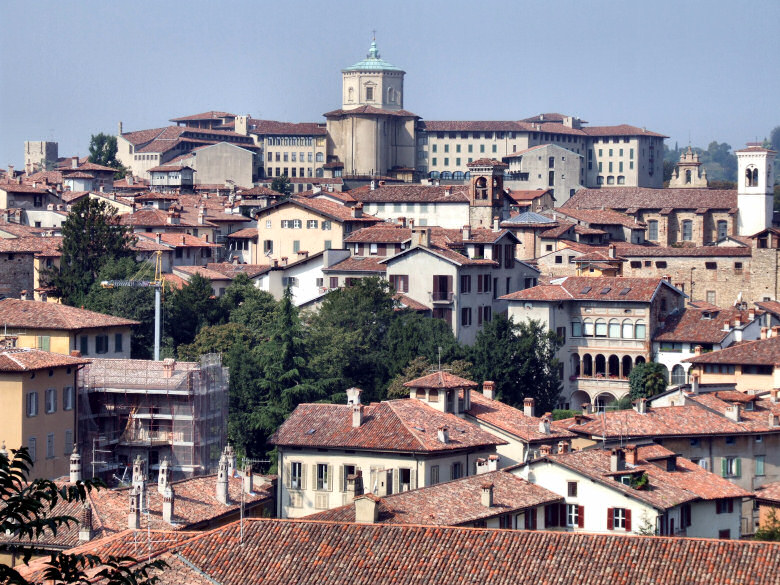
Trecchi House - Bergamo
Europe,
Italy,
Bergamo,
Casa Trecchi, a masterpiece of architecture located in the heart of Bergamo, a city with ancient roots and rich history. This extraordinary residence dates back to the 15th century and is emblematically representative of Lombard Renaissance architecture. Casa Trecchi is not only an architectural jewel but also a symbol of the significant role that Bergamo has played as a cultural and political center over the centuries. The building is known for its decorated facade and frescoed interiors that tell stories of great artistic value. Together, we will explore the origins, history, and details of this fascinating space, rich in beauty and meaning.Origins and HistoryCasa Trecchi was built in 1475 by Giovanni Trecchi, a nobleman from Bergamo who quickly established himself as a prominent figure in the political and civic life of the city. Its construction represents an important example of how Renaissance architecture spread throughout the Lombard provinces, contributing to the formation of a distinctive cultural identity.Between the late 15th century and the early 16th century, Bergamo experienced a period of great artistic and cultural vitality. The Trecchi family, bolstered by its social standing, commissioned various embellishment projects, not only for their own residence but also for public and religious spaces, profoundly influencing the city’s artistic identity.Over the centuries, Casa Trecchi has undergone several transformations and restorations. In the 18th century, the building underwent significant renovation work that modified some architectural elements while preserving many of the original features, ensuring its historical integrity remained intact. This ongoing dialogue between past and present offers today’s visitors a living narrative of its role in Bergamo’s history.Over the years, the house has hosted various significant events and illustrious personalities, becoming increasingly a landmark for local culture and art. Its history reflects the city’s events, which have seen alternating periods of prosperity and crisis, tackled thanks to the resilience of the community and noble families like the Trecchis.From the 20th century onwards, Casa Trecchi has been the subject of enhancement, transforming into a place of exhibition and cultural meeting. This choice has allowed for the revival of the extraordinary artistic works that decorate its interiors, making the house accessible to a broader audience and contributing to the preservation of cultural heritage.What to ObserveAs one approaches Casa Trecchi, one of the most immediately recognizable elements is its enchanting facade. Characterized by elegant Renaissance architecture, it is adorned with various terracotta and stucco elements that evoke local traditions and the architectural style of the era. One can notice the presence of wrought-iron balconies and floral details that have acquired a particular charm over time.Upon entering the atrium, one is immediately struck by an imposing coffered ceiling, enriched with decorations that tell stories from classical mythology and symbols related to the Trecchi family. This type of ceiling, typical of the Renaissance, gives a sense of grandeur and openness to the space, inviting visitors to explore further.Moving towards the main rooms, one can admire the wonderful frescoes that adorn the walls. Created by local artists, these frescoes depict scenes of daily and mythological life, highlighting the cultural richness of the time. Among the artists involved in these works, Giovanni Battista Moroni, an important painter from Bergamo, is particularly notable for his long association with the Renaissance tradition.In the main living room, one encounters a monumental stone fireplace, finely crafted, which reflects not only the skill of the artisans of the time but also served as the focal point around which the social life of the family and their guests revolved. This particular environment invites reflection on how art and conviviality intersected in the daily life of the past.Heading towards the internal garden, a serene and peaceful corner, one can lose oneself in the beauty of the play of light and shadow created by the vegetation, which offers a view of the city of Bergamo. Here, the harmony between architecture and nature is palpable, reflecting the Renaissance ideal of aesthetic balance among elements.Another point of interest is the monumental staircase leading to the upper floors. This staircase, decorated with frescoes and stuccos, is not only a functional element but also a magnificent example of the craftsmanship of the time and the desire to impress those who designed it, representing the importance of grandeur and beauty in every aspect of the building.Finally, a visit to the library is a must, an environment that testifies to the love for culture and knowledge of the Trecchi family. Here, the walls are adorned with rare volumes and works of art that reflect the rich literary and artistic tradition of Lombardy.Context and ConnectionsCasa Trecchi is situated in a very rich historical and cultural context. The neighborhood in which it is located is characterized by historic buildings that narrate Bergamo’s history over the centuries. The nearby Piazza Vecchia, for example, is a landmark for the city, where one can see the famous Civic Tower and the Palazzo della Ragione, places of gathering and celebration of public life in Bergamo.Not far away stands the Cathedral of Bergamo, with its extraordinary artistic treasure, representing another important connection to the city’s religious and civic history. The proximity of Casa Trecchi to these significant monuments offers the possibility of a cultural route that relates different historical eras and artistic styles.Moreover, the Adriano Bernareggi Museum, dedicated to sacred art and the religious history of the area, is located nearby and represents an interesting stop for those wishing to further deepen the cultural heritage of Bergamo.CuriositiesA lesser-known fact relates to the Trecchi family, which has been closely tied to Bergamo’s power and politics for centuries. It is said that many family members were involved in significant historical events, suggesting that Casa Trecchi was not only a private residence but also a center for meetings and political negotiations.Furthermore, during the restorations of the 20th century, several previously hidden frescoes were rediscovered, revealing an artistic richness thought to be lost. This has allowed for a more complete and detailed understanding of the artistic heritage of Casa Trecchi.Lastly, tradition holds that the building is inhabited by a benevolent presence, safeguarding the memories and history of the Trecchi family. While there is no historical evidence, many people who visit the place cannot help but feel the nostalgic charm that emanates from these walls.
Read More