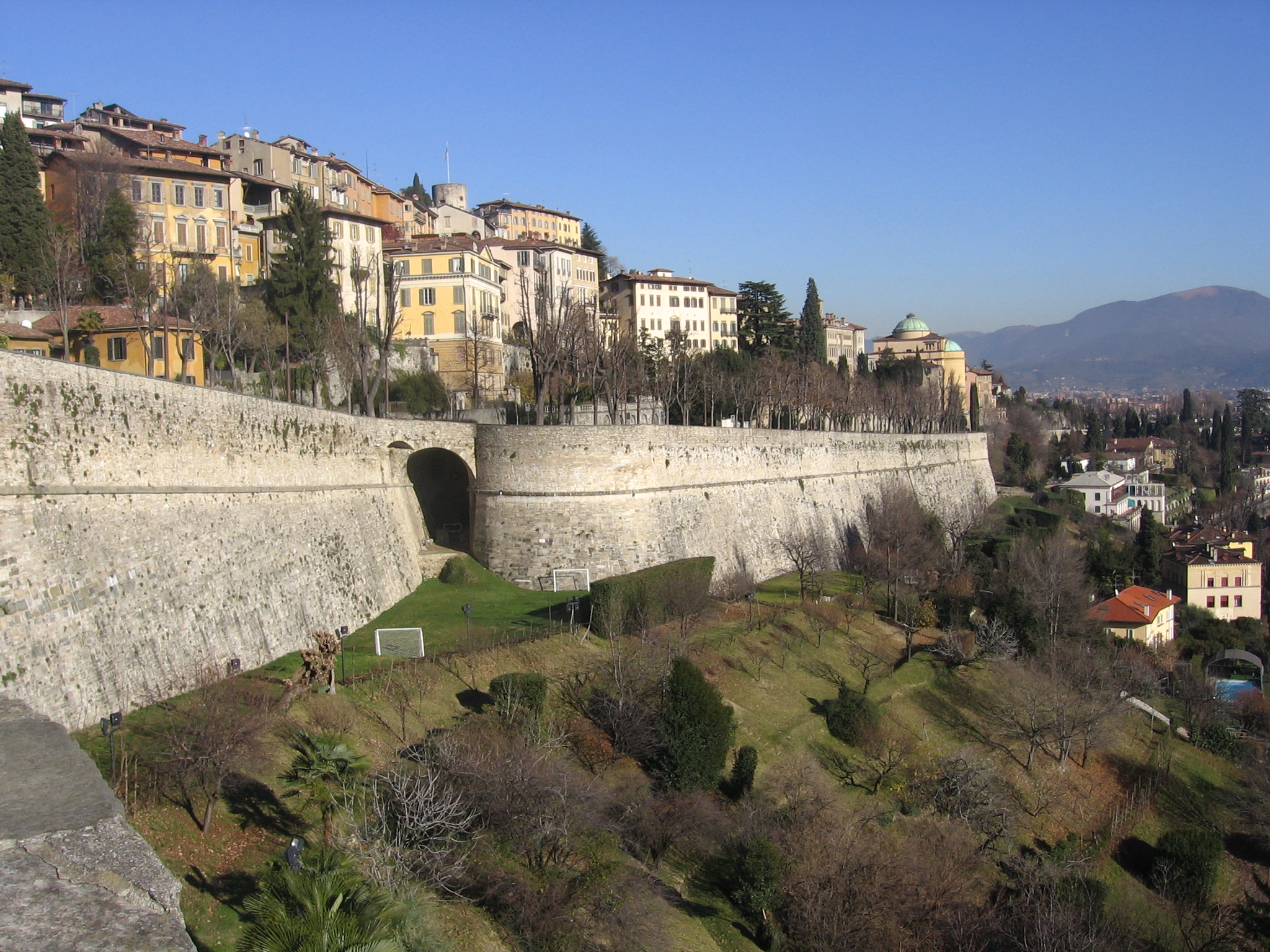
San Lorenzo Rampart - Bergamo
Europe,
Italy,
Bergamo,
The Rampart of San Lorenzo in Bergamo. This wonderful place represents an important landmark for the identity of the city. Located in the upper part of Bergamo, the rampart is one of the fortification works built in the sixteenth century, a period when the city was at the center of very complex political and military dynamics. It is known for its spectacular panoramic views, which embrace much of the city and the underlying plain, offering a unique sight that attracts visitors from all over the world.Origins and historyThe Rampart of San Lorenzo is an integral part of the Venetian Walls of Bergamo, a significant example of military architecture dating back to the period of the Republic of Venice. The Walls, built between 1561 and 1588, extend for about 5 kilometers and were designed to meet the defensive needs of the city, which was strategically positioned between Lombardy and Veneto. Inside, the rampart was constructed to protect the city from potential attacks, but also to give it a certain visual impressiveness.Over the centuries, the rampart has undergone various transformations. During the Napoleonic period, the fortifications were partially dismantled, as new military theories required a different organization of defensive systems. However, the remaining structures and the restoration work carried out later have contributed to preserving the historical essence of the place. In the twentieth century, the declaration of the Walls of Bergamo as a UNESCO World Heritage Site further highlighted the historical and cultural importance of this area.The delightful blend of history and architecture that permeates this place is an evident reminder of the atmospheres of a bygone era, a time when Bergamo was a bastion of power. Walking along these walls, one can immerse in not only the history of the city but also European history, given its strategic location.What to observeNow let’s discover the highlights of the Rampart of San Lorenzo.As you approach, the first thing that strikes you is the majestic facade of the Walls, characterized by large blocks of limestone that reveal remarkable craftsmanship. Continuing along the rampart, you will notice access arches, which served as entrance gates to defensive areas. Each arch has a story to tell, having also undergone adaptations over the centuries.On one side of the rampart, shortly after the entrance, you can observe a series of ancient cannons, which remind us of Bergamo’s role in past wars and its status as a military outpost. You will likely want to take a photo with these historical artifacts, which speak to us of a time when the power of fortifications and weapons predominated.As you continue your walk, pay attention to the wonderful views offered by the belvedere of the rampart. To the southeast, the view opens up to the Po Valley, with the river Serio winding gently, while to the north, you can admire the Orobie Alps, whose peaks tower against the sky. These landscapes not only enchant but are also steeped in local stories and traditions.Further along, you will find a viewpoint where you can see the remains of ancient bastions. These structures were not only functional but also symbolic, representing power and dominance. The fortifications also provide insights into the evolution of warfare over the centuries, making it clear how the historical context shaped the art of defense.Very interesting is the interior of the walls, where you will discover underground passages that served as escape routes in the event of enemy attack. These underground walkways evoke an atmosphere of mystery, allowing you to imagine what life was like for soldiers and for those who lived within the walls.Don’t forget to observe the architectural details of the fortifications, such as the battlements and the murder holes, used to defend access to the city. They represent the pinnacle of military technology of the time and are precious testimonies to the construction skills and strategic planning of the era.Context and connectionsThe Rampart of San Lorenzo is not only fascinating for its history and architecture but is also situated in a context rich with attractions. Just a short walk away is the Basilica of Santa Maria Maggiore, a sublime example of Romanesque and Baroque architecture, known for its richly decorated interiors and the adjacent Colleoni Chapel, a masterpiece of Renaissance architecture.As you continue your exploration, be sure not to miss the wonderful medieval houses in the Città Alta district, where the cobblestone streets and small squares conceal picturesque and captivating scenes. Here you can breathe an air rich in history and tradition, walking in places that tell the stories of centuries past.Another point of interest nearby is the Natural Science Museum, located not far from the citadel, which offers an incredible collection of natural history specimens from the Bergamo area.CuriositiesAlthough not always evident, the Rampart of San Lorenzo is a testament to a vibrant past. Throughout its long history, it has seen not only soldiers but also artists and thinkers pass through, leaving an indelible mark on Bergamo’s culture. Nearby, a historic meeting between Garibaldi and the citizens took place in 1859, marking another important chapter in Italian history.Moreover, the Walls of Bergamo, to which the rampart belongs, were included in the UNESCO World Heritage list in 2017, an international recognition of the historical and cultural value of the city. This gives Bergamo significance in a global context, making it a reference point for the preservation of architectural heritage.We hope this exploration of the Rampart of San Lorenzo has inspired you to discover the wonders that this place has to offer. We invite you to continue your visit and let yourself be carried away by the history and art that characterize not only our rampart, but the entire city of Bergamo.
Read More