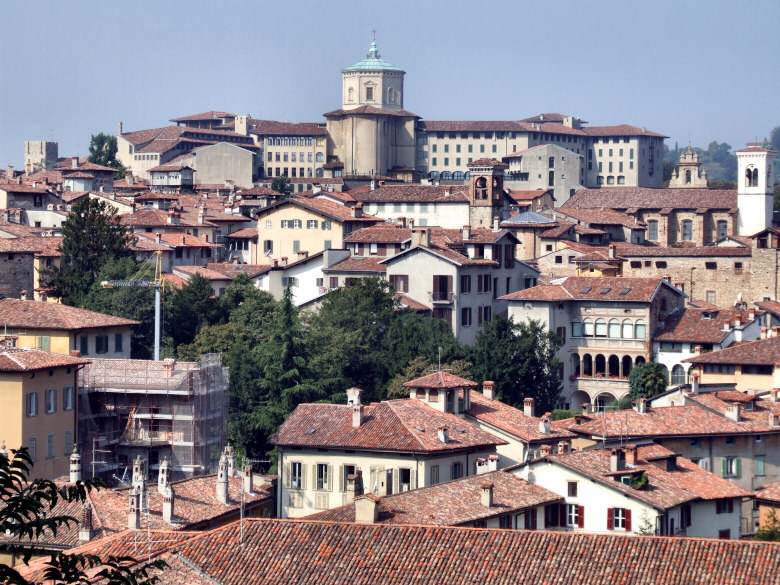
Birthplace of Gaetano Donizetti - Bergamo
Europe,
Italy,
Bergamo,
The Birthplace of Gaetano Donizetti, an authentic gem that celebrates one of the most important opera composers of the 19th century. Located in the heart of Bergamo, this home is a place of historical and cultural significance not only for the city but for all of Italy. Born in 1797, the house is now a museum dedicated to Donizetti, who brought to life masterpieces such as “L’elisir d’amore” and “Don Pasquale.” Visiting this place means immersing oneself in the atmosphere where the young Gaetano began his artistic journey, a journey that led him to become an icon of lyrical music.Origins and HistoryThe Birthplace of Gaetano Donizetti is located on Via Borgo Canale, in a historic area of Bergamo, just a few steps from the Venetian walls that surround the Città Alta (the upper city). Here, on November 29, 1797, Gaetano Donizetti was born, the son of a family of modest origins. The house, a typical Bergamo dwelling of the time, has preserved its original charm, giving visitors the opportunity to relive the daily life of the young composer.During his youth, Bergamo was a vibrant center of culture and music, influenced by the baroque musical tradition and the innovations of the classical period. Donizetti received musical training that led him to study with Giovanni Marco Rutini and, subsequently, at the Conservatory of Bergamo, inaugurated in 1800. At only twenty, he composed his first opera, “Il sognatore,” which was performed in 1818, a tangible sign of his early-developed talent.The house was purchased by the municipality of Bergamo in 1897, on the occasion of the centenary of the composer’s birth. It was restored and transformed into a museum, opening its doors to the public in 1905. Over the years, various restoration works have been carried out to preserve the integrity of the structure and the works contained within it, transforming it into a true celebration of Donizetti’s life and work.Today, the Birthplace of Donizetti is not just a museum; it is a place of memory and celebration, where cultural events, concerts, and musical performances are held, continuing the dialogue that the composer had with his hometown.What to Observe, in OrderLet us begin our tour outside the Birthplace of Gaetano Donizetti. Before you stands the facade of this historic building, characterized by a simple yet elegant architectural style. The windows are adorned with stone frames, and the entrance door is framed by an arch, typical of early 19th-century constructions. On the facade, you can also notice a commemorative plaque that marks the birth of the famous composer.Upon entering, we find ourselves in the foyer, where you will find some historical photographs and archival documents. These materials tell the story of Donizetti’s life and his connections with the city of Bergamo and Italian opera. A first glance at this space helps you understand the importance of culture in the social context of his time.As you move toward the main room, you will find a collection of Donizetti’s personal belongings. Among these, a piano and several autographed musical scores stand out. These scores offer a glimpse into the evolution of his musical language. From here, one can sense how Donizetti’s music was deeply influenced by the emotions and dramas of humanity, elements that will always be present in his works.On the left wall, you can observe paintings and portraits of Donizetti. These portraits, some of which were created by contemporary artists, depict the composer at various moments in his life. One of the most famous is the portrait of Donizetti by Francesco Hayez, which captures his intensity and passion for music.Moving on to the instruments room, you will find some musical instruments from the period. If you listen closely, you can almost hear the notes of his works resonating in these rooms. The instruments represent not only the time when Donizetti composed but also the importance of sound and melody in his art.Inside the museum, you will also find an area dedicated to the theatrical productions of Donizetti’s works. Here, you can view posters and promotional materials from various theaters around the world. These documents tell the story of a composer who conquered not only Italy but also international audiences, transforming opera into a global phenomenon.Finally, before concluding your journey inside the Birthplace, head to the garden. This outdoor space is a place of reflection and contemplation, where you can enjoy the view of the city and understand how important the natural context was for Donizetti’s inspiration.Context and ConnectionsThe Birthplace of Donizetti is located in one of the most enchanting neighborhoods of Bergamo, characterized by cobblestone streets and ancient stone houses. This area reflects the rich and complex history of the city, which has witnessed the passage of many cultures and traditions.Just a short walk from the house, you can visit the Donizetti Theatre, inaugurated in 1800 and dedicated to the composer. This theater is an important cultural institution that regularly hosts operas, concerts, and theatrical performances, continuing Donizetti’s musical tradition.Additionally, do not miss the opportunity to visit the Basilica of Santa Maria Maggiore, also in the historic center. This basilica, with its frescoes and baroque decorations, offers an extraordinary view of the art and religious culture that permeated Donizetti’s life.Finally, another important institution is the Giuseppe Verdi Conservatory, just a few minutes from the Birthplace. This conservatory has continued to train generations of musicians, keeping Donizetti’s legacy alive through music courses and public performances.CuriositiesDonizetti’s first opera, “Il sognatore,” was performed in 1818 and marked the beginning of his extraordinary career.Donizetti composed over seventy operas, many of which are still performed in theaters around the world today.The composer spent periods of his life in Bergamo but also lived in Naples, where he achieved great international success.His most famous opera, “Lucia di Lammermoor,” is considered a masterpiece of bel canto and is known for its technical difficulty and the emotions it conveys.Another famous work by Donizetti is “Don Pasquale,” a comedy that showcases his talent for brilliantly combining music and storytelling.
Read More