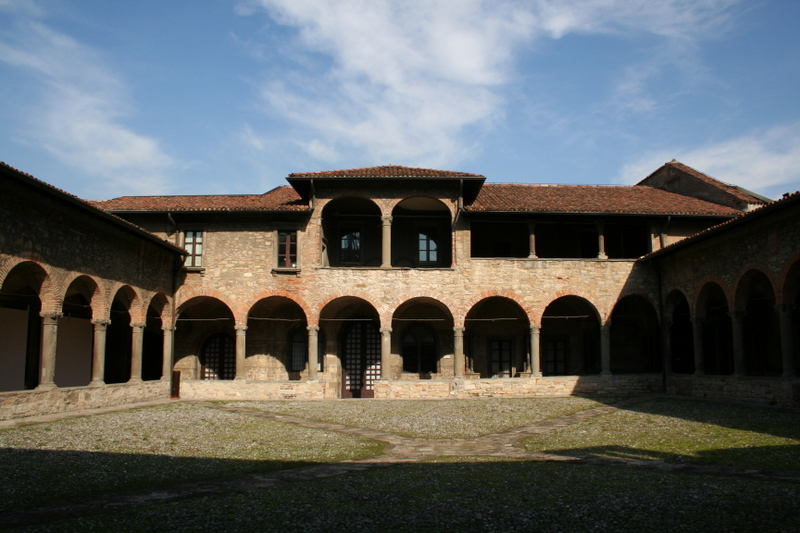
Convent of St Francis - Sestini Museum of Photography - Bergamo
Europe,
Italy,
Bergamo,
Immerged in the heart of Bergamo, the Convent of San Francesco represents an extraordinary testimony to the history and culture of the city. Founded in the 13th century, this convent is not only a place of worship but also a space dedicated to art and photography thanks to the Sestini Photography Museum, which houses an important collection of photographic works. Its history intertwines with significant events, such as the spread of Franciscanism and the evolution of contemporary art in Bergamo. Bearing the marks of centuries of transformations, the convent is now recognized not only for its architectural charm but also for its cultural and artistic value.Origins and HistoryThe Convent of San Francesco was founded in 1220, shortly after the birth of the Franciscan Order, by Brother Giovanni di Montecorvino. Initially, the convent housed a community of friars dedicated to preaching and caring for the sick. Over the centuries, it underwent numerous renovations and expansions due to various historical events that marked Bergamo.During the 14th century, the convent became an important center of culture and spirituality. In 1445, with the construction of the new church, the complex took on a more majestic appearance. This renovation represented a fusion of Gothic and Renaissance styles, making the structure even more fascinating.In 1797, with the suppression of religious orders by the Napoleonic authorities, the convent was closed and its properties were sold. However, in 1816, it reopened as a convent of lesser friars and maintained its religious role until the 20th century. After a long period of abandonment, in 1999 the convent was reopened to the public, becoming a cultural center and home to the Sestini Photography Museum, inaugurated in 2002.The Sestini Photography Museum is dedicated to the preservation and promotion of photography, with a particular focus on works by 20th-century artists. With a collection that includes historical and contemporary photographs, the museum offers visitors a comprehensive overview of the evolution of this artistic language.What to ObserveThe Facade of the Convent As one approaches the Convent of San Francesco, the eye is captured by the evocative facade made of sandstone, characterized by sober yet elegant architecture. The marble details and pointed arches highlight the features of Lombard Gothic. In particular, we observe the entrance portal, adorned with a large arch framed by intricate moldings that outline the main entrance.The Interior of the Church Upon entering the church of the convent, one is struck by the brightness of the interiors. The central nave is flanked by seven beautiful side chapels. Here, one can find interesting frescoes from the 16th century, particularly those attributed to Giovanni Battista Tiepolo, which depict scenes from the life of Saint Francis. The natural light filtering through the large windows creates a mystical atmosphere, enhancing the beauty of the frescoes.The Cloister Exiting the church and moving into the cloister, one is immersed in an environment of peace and tranquility. This space is characterized by marble columns and a terracotta floor dating back to the Renaissance period. The walls of the cloister are adorned with frescoes that narrate the life of Saint Francis, providing visitors a moment for reflection. The symmetry and harmony of this place evoke the essence of Franciscan thought.Museum of Photography Sestini Within the convent, the Sestini Photography Museum is a must-visit for art enthusiasts. The collection comprises over 5,000 works, with photographs ranging from the 19th century to the present day. The permanent exhibition provides a snapshot of the history of photography, with works that include black-and-white photographs by great masters. If you love photography, you will be captivated by the care with which both historical and contemporary works are displayed.The Works of Art During your visit, pay attention to some of the artworks present in the convent. A notable example is the “Annunciation” by Bartolomeo Suardi, known as “il Bergamasco,” a captivating piece that represents the crucial moment of the announcement of the archangel Gabriel to Mary. This canvas, located in the sacristy, is a perfect example of local artistic talent.Architectural Details Exploring the rooms of the convent, you can notice numerous architectural details that tell the story of its construction. From the decorated capitals to the wooden beams, each element reflects the skill of the craftsmen of the time. The window openings, overlooking the convent gardens, create unique light patterns within the spaces.The Library As you conclude your visit, don’t forget to take a look at the convent’s library. Its shelves house thousands of volumes, many of which date back centuries. This place, dedicated to study and meditation, represents an important resource for the community and a tribute to Franciscan intellectual tradition.Context and ConnectionsThe Convent of San Francesco is located in the Borgo Palazzo district, a historically rich and significant area of Bergamo. This neighborhood is famous for its streets lined with ancient buildings and artisan shops. Continuing our journey, we might visit the Accademia Carrara, located just a few steps from the convent. This art gallery hosts one of the most important collections in Italy, featuring works by masters such as Raphael, Botticelli, and Mantegna.Not far away, we also find the Teatro Donizetti, dedicated to the famous Bergamo composer Gaetano Donizetti. This historic theater offers numerous performances and concerts, contributing to the cultural life of the city.Another point of great interest could be the Cathedral of Bergamo, dedicated to Saint Alexander, which represents the focal point of the city’s religious life. Here, one can admire exceptional works of art and the unique charm of this building, which constitutes an important landmark in the history of Bergamo.CuriositiesDid you know that the Convent of San Francesco was home to a famous sculptor? The wooden statue of Saint Francis, created by a local artist in the 15th century, is an example of the religious art that once enriched places of worship. Today it is preserved within the convent and represents one of the most precious elements of its collection.Moreover, the museum bears the name of Giovanni Sestini, an illustrious Bergamo photographer whose work significantly contributed to documenting life in Lombardy throughout the 20th century. His work is particularly notable for its representation of local traditions and the beauty of the Lombard landscape.Finally, an intriguing aspect of the convent is its use during World War II as a refuge for civilians seeking shelter from bombings. The resilience of the convent and its community allowed this important site to be preserved even in the most difficult moments in history.
Read More