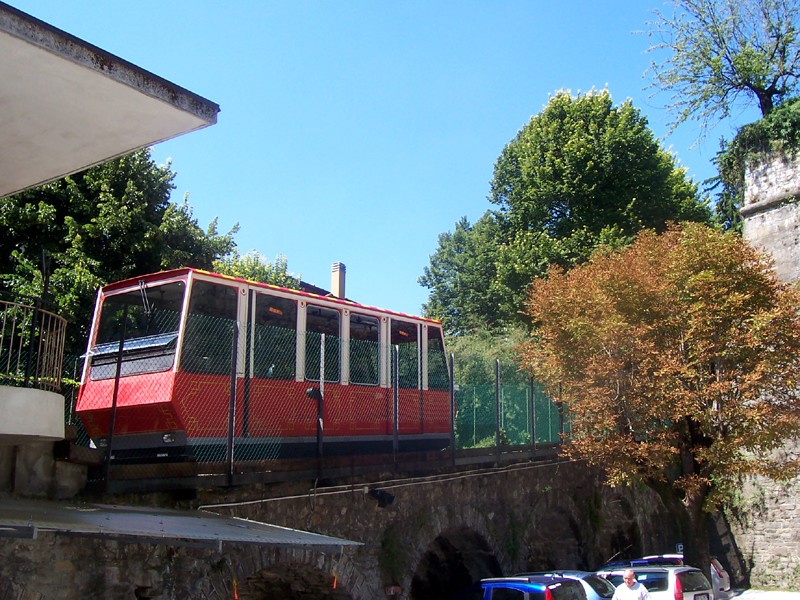
San Vigilio Funicular - Lower Station - Bergamo
Europe,
Italy,
Bergamo,
The San Vigilio Funicular is one of the most iconic symbols of Bergamo, a mode of transport that not only connects the lower city with the upper city but also represents a unique and suggestive experience. Built between 1887 and 1889, the Funicular plays a central role in Bergamo’s identity, facilitating access to one of the city’s most panoramic areas. Known for its ancient charm and breathtaking views, this funicular has become, over the years, an unmissable stop for those visiting the city. During the journey, passengers can admire the beauty of the surrounding landscapes and discover a significant piece of Bergamo’s history.Origins and HistoryThe origins of the San Vigilio Funicular date back to the second half of the 19th century, a period marked by significant transformations in transport infrastructure across Europe. Its construction was strongly desired in order to facilitate access to the San Vigilio hill, an area of significant historical importance.The project was commissioned by the management company of the funicular, which wanted to improve the connections between the historically rich Upper City and the rapidly expanding Lower City. Construction began in 1887 and was completed in 1889 thanks to the efforts of engineer Francesco Ghidini, who designed an elegant and functional structure, in perfect harmony with the local landscape.The original installation, made of wood and equipped with a cable system suitable for the terrain, has undergone various transformations and restorations over the years. In 1970, the funicular was modernized while preserving its historical charm. Subsequent interventions aimed to improve service efficiency and passenger safety, allowing the funicular to remain a key element in Bergamo’s public transport system.The San Vigilio Funicular is also a starting point for various excursions and nature walks, allowing visitors to explore the wealth of the hill and its millenary history.What to ObserveAs you approach the Lower Station of the San Vigilio Funicular, it is impossible not to notice its distinctive architecture. The façade is a perfect example of Art Nouveau style, with decorative details that reflect the aesthetic of the period in which it was built. Right next to the entrance, you will find a small informational totem that tells the story of this funicular.As soon as you enter the station, the charm of the place envelops you. The station, while maintaining its historic appearance, is equipped with modern amenities for the public, thanks to renovation work. The ticket booth windows offer a view of the surrounding landscape, revealing the beauty of the journey in advance.Board the funicular and prepare for an unforgettable experience. During the ascent, which lasts about ten minutes, the landscape changes rapidly. On one side, you can see the homes of the Lower City, and as you advance, the view opens up towards the hills and, in the distance, the Alps. This change in scenery is one of the most fascinating aspects of the funicular.To your left, if you pay attention, you can see olive groves dotted throughout the landscape, a nod to the agricultural tradition of this region. The panoramic view that opens up to the south is truly breathtaking, especially on clear days when you can also glimpse part of Lake Iseo.One of the so-called “gems” you might notice during the journey are the architectural details of the houses overlooking the funicular road. Pay attention to the balconies adorned with flower boxes and the decorations on the façades, which tell stories of lives lived and an architecture with deep roots.Upon arriving at the San Vigilio station, as you exit the cabin, you will immediately find a large panoramic area. Here, with a single glance, you can observe the Upper City and, to your right, the San Vigilio Castle, which dates back to the 13th century and serves as an unparalleled landmark in the Bergamo landscape.Context and ConnectionsThe San Vigilio Funicular is located in the San Vigilio neighborhood, an area rich in history and culture. This zone is famous not only for the funicular but also for its castle and the remains of ancient walls. Here, visitors can breathe in a tranquil and suggestive atmosphere, far from the chaos of the city.Numerous trails start from this area, allowing for the exploration of the surrounding nature and historical monuments. Near the upper station, don’t miss the Church of San Vigilio, a building dating back to the 15th century, known for its interior rich in works of art and for the panoramic view it offers from its sagrado.Additionally, a short distance away is the Donizetti Theater, a place where culture and music come together, making Bergamo a vibrant center of artistic activity. This connection between the funicular, the church, and the theater highlights the cultural and historical importance of this corner of Bergamo.CuriositiesThe San Vigilio Funicular is not just a means of transport, but also a symbol of innovation. It was one of the first funiculars in Italy to be electrified and to use a modern transport system, allowing it to keep the tradition of cable transport alive.Furthermore, in 2003, the funicular underwent another significant restoration, with the installation of modern safety and passenger flow management systems, allowing it to attract tourists and visitors from abroad.It’s also worth noting that the Funicular has been the protagonist of numerous cultural events and initiatives involving the local community, such as photography exhibitions and artistic manifestations related to the landscape and history of Bergamo.In conclusion, the San Vigilio Funicular is not just a simple tourist attraction but a true journey through the history and beauty of Bergamo. We invite you to also discover the nearby Natural History Museum, which provides an excellent overview of local flora and fauna, and Piazza Vecchia, the beating heart of the Upper City, where you can immerse yourself in the medieval atmosphere of Bergamo. Happy exploring!
Read More