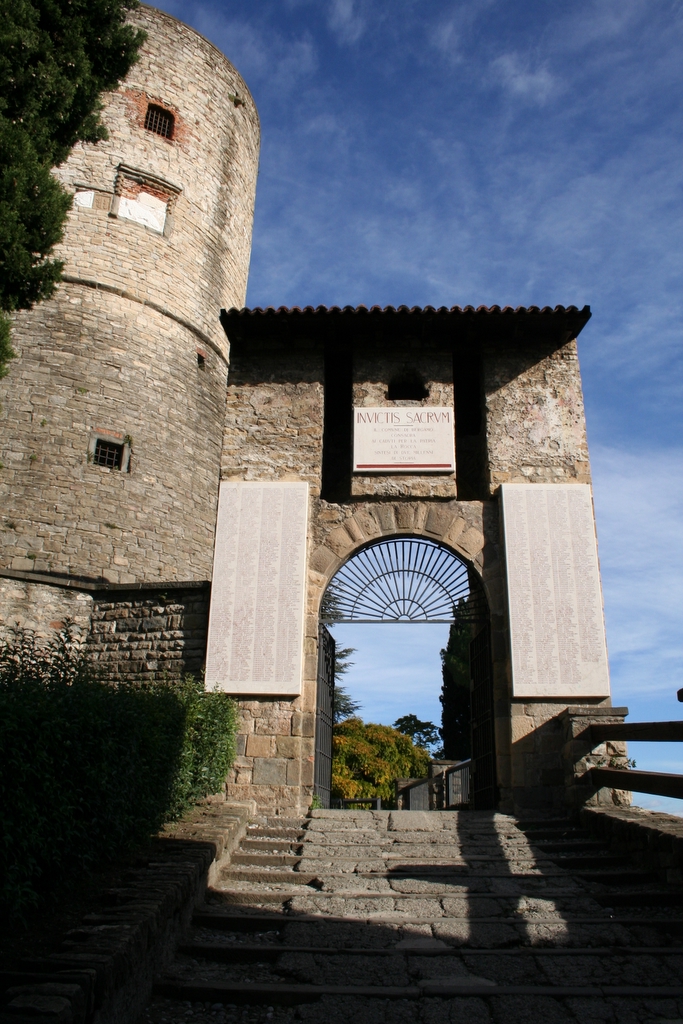
19th-Century Gallery - Bergamo
Europe,
Italy,
Bergamo,
The Galleria dell’Ottocento in Bergamo is an important cultural landmark that reflects the artistic identity of the city. Inaugurated in 2008, this gallery offers an in-depth look into Italian art of the 19th century, a period characterized by profound social and political changes. Here, we find a wide collection of works that embrace various artistic movements, making the gallery a guardian of the historical and artistic memory of our country. The Galleria dell’Ottocento is not just a place to admire art, but a genuine journey through time that allows us to understand the evolution of artistic thought and culture in an era of extraordinary transformations.Origins and HistoryThe Galleria dell’Ottocento was born from an ambitious project aimed at enhancing the artistic heritage of Bergamo, particularly the works from the 19th century. This period was marked by fundamental events such as the Risorgimento, a movement that led to the Italian unification and profoundly influenced the art world as well. The collection has grown over time thanks to donations and acquisitions of works by artists who marked the history of our country, such as Giovanni Fattori, one of the main representatives of the Florence School, and Giuseppe De Nittis, a figure of the Impressionist movement.The restoration and modernizing of the exhibition spaces were essential for the creation of the gallery. The project was designed to be housed within the Palazzo della Ragione, a historical building dating back to the 13th century, whose architecture ready to welcome contemporary art perfectly complements the historical heritage of the place. The Palazzo della Ragione is already a significant monument in itself, and its transformation into a gallery demonstrates a continuous dialogue between past and present.In 2008, the gallery was finally opened to the public and has since attracted visitors from around the world. After ten years of work, not only has the collection of works been cared for, but events, conferences, and educational activities have also taken place, bringing the local community and tourists closer to the artistic beauty of the 19th century. This initiative has contributed to the rediscovery of the Bergamasque identity through art and has made the Galleria dell’Ottocento a prominent cultural hub.What to ObserveNow let’s move inside the gallery to discover together the works and spaces that characterize it. As soon as you enter, it will be impossible not to be struck by the beauty of the building and the exhibited works.Let’s start with the façade of the Palazzo della Ragione, which is a magnificent example of medieval architecture. Its pointed windows and the underlying portico tell centuries of history and architectural evolution. Even from here, the synergy between the old and the new that characterize the Galleria dell’Ottocento can be perceived.Once inside, you will encounter the collection of portraits, which occupies one of the main rooms. Here, you will have the opportunity to admire works by artists like Giovanni Boldini, known for his elegant and vibrant portraits. These paintings are not just visual representations, they also tell stories of illustrious figures of the time. Each portrait conveys a unique personality, capable of speaking even after many years.Let’s now move towards the section dedicated to landscapes, which is another important part of the collection. Here we find works that reflect the beauty of Italian nature, representations of bright atmospheres and bucolic landscapes that seem to come straight out of a dream. Artists like Giacomo Balla and Amedeo Modigliani interpreted nature in innovative ways, breaking the stylistic conventions of their time.Another interesting aspect to note is the architectural details of the gallery itself. The rooms are designed to enhance the works without distracting the visitor. The spaces are bright, and the white walls promote a perfect dialogue between the artwork and the spectator.Later, do not miss the opportunity to observe the symbolism room, a movement that developed in Europe at the turn of the 19th and 20th centuries. Here, artists like Gustav Klimt significantly influence the future developments of art. Symbolist works are rich in meanings and emotions, inviting the visitor to a personal interpretation, making the experience even more intense.While always paying attention to the exhibited works, I suggest you pay particular attention to “L’ombrellino” by Giovanni Fattori. This painting emblematically represents daily life and seaside scenes, evoking a sense of lightness and serenity that well represents the art of the 19th century.Finally, before concluding our visit, we cannot forget to dedicate a moment to the external garden of the Gallery, where temporary installations often further beautify the environment. Surrounded by greenery, it is an ideal place to reflect on the emotions evoked by the admired works, an invitation to a moment of pause and contemplation.Context and ConnectionsThe Galleria dell’Ottocento in Bergamo fits into a rich and stimulating artistic and cultural context. We are in the heart of Bergamo’s historic center, a city that boasts many other points of interest. Right nearby, you will find the Teatro Donizetti, dedicated to the famous Bergamasque composer Gaetano Donizetti. Visiting it after the gallery is an unmissable opportunity to appreciate art in all its forms.Moreover, just a few steps away is the Cappella Colleoni, a masterpiece of the Renaissance that expresses the greatness of art and architecture of the time. This chapel is an important example of how art can influence and stimulate each other over the centuries. Even before entering the gallery, the visitor is immersed in a vibrant cultural context.Finally, another institution worth visiting is the Natural History Museum. Located not far from the Galleria dell’Ottocento, it offers a different perspective on the cultural heritage of Bergamo, enriching our overall experience of the city’s history.CuriositiesAn interesting tidbit is that before becoming home to the Galleria dell’Ottocento, the Palazzo della Ragione was the center of political and social life in Bergamo for centuries. Its spaces were used for markets and assemblies, contributing to shaping its history.Additionally, it is fascinating to note how the Macchiaioli movement, of which Giovanni Fattori was one of the protagonists, significantly influenced Italian art, emphasizing the use of light and color in completely new ways.Another aspect to consider is the restorations: many of the paintings on display have undergone professional and meticulous recoveries to preserve their beauty and integrity. This process is essential to ensure that the works can continue to speak to future generations.
Read More