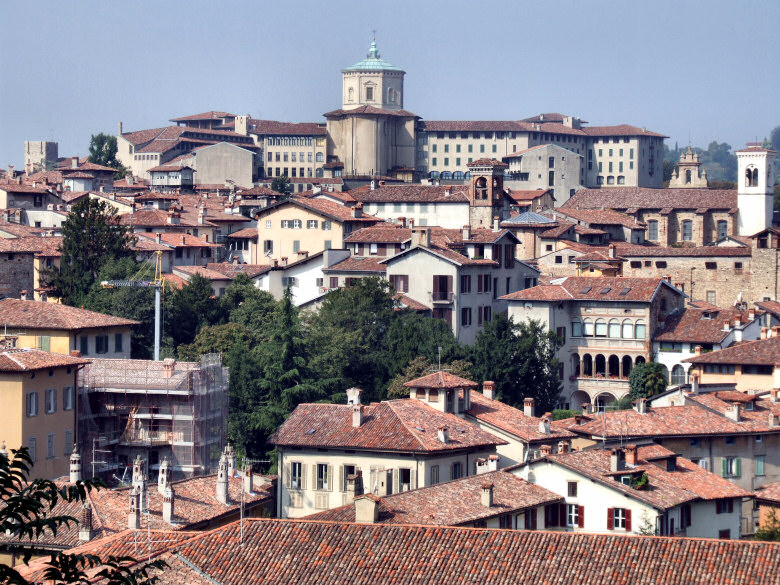
Monument to Francesco Nullo - Bergamo
Europe,
Italy,
Bergamo,
In the heart of Bergamo, in one of the most emblematic and lively squares, stands the Monument to Francesco Nullo, a commemoration that not only celebrates the heroism of a brave patriot but also reflects the historical and cultural identity of the city. Francesco Nullo, born in 1820, is known for his crucial role in the First Italian War of Independence, but his figure has taken on an even broader significance in the context of the Risorgimento, an era when Italy was struggling for its unity and independence. The monument was erected in 1894 and has since become a symbol of the struggle for freedom and the historical memory of Bergamo.Origins and historyThe history of the Monument to Francesco Nullo has deep roots in the political and social context of the mid-19th century. Nullo, a soldier and patriot, actively participated in the battles for the liberation of Italy from Austria, risking his life for the cause of freedom. After Nullo’s death, which occurred in 1866 during a mission in Bezzecca, his figure quickly became a symbol for the patriotic activists of the city and beyond.The idea of erecting a monument in his memory materialized in the 1890s, a period characterized by strong patriotic fervor. The project was entrusted to the sculptor Giovanni Battista Ghioldi, who conceived an imposing work capable of conveying the value of sacrifice and heroism. The monument, inaugurated in 1894, is made of Carrara marble and depicts Nullo in a distinctive pose, with his face turned towards the horizon, a symbol of determination and challenge.Over the years, the monument has undergone some transformations, largely due to weather events and the wear of time. However, careful restorations have allowed the beauty and significance of the work to remain intact, contributing to the preservation of the memory of a man who dedicated his life to freedom. Today, the monument is situated within a broader context, in a lively and frequented square, a meeting point between history and modernity.What to observeThe structure of the monumentAs you approach the Monument to Francesco Nullo, you will immediately notice its height and imposing presence. The structure is characterized by a square base on which a column rises with a statue of the patriot. The material, white Carrara marble, was chosen not only for its durability but also for its beauty and brightness, making it visible even from a distance. The figure of Nullo, dressed as a soldier, is sculpted with great attention to detail, enhancing the virtues of courage and determination.The statue of Francesco NulloExamining the statue more closely, you can notice the well-defined facial features, which communicate a sense of nobility and strength. Nullo holds a drape in his right hand, a symbolic gesture representing his dedication to the patriotic cause. The body’s position, slightly inclined, suggests dynamism, almost as if he is about to advance towards battle, a detail that cannot go unnoticed.Iconographic detailsShifting your gaze, you can discover various reliefs and decorations that adorn the base of the monument. These decorative elements narrate significant historical scenes related to the life of Francesco Nullo, with figures of soldiers and symbols of freedom. It is interesting to note how these reliefs are not merely ornamental but tell the story of an entire era through their images.The surrounding environmentSurrounded by the vitality of the square, the monument is not isolated. Observe the people who stop, the tourists who take photographs, and the Bergamasques who gather to celebrate the memory of the patriot. Not far away, you can see cafes and restaurants, spaces where history intertwines with daily life. The contrast between the monument’s static nature and the square’s dynamism offers a reflection on how history and modernity coexist in this place.The historical and cultural significanceThe Monument to Francesco Nullo also has a strong educational value. Many visitors come closer to learn more about the history of the Risorgimento and the importance of patriots in the struggle for Italy’s unity. The monument thus serves as a catalyst for dialogue on important themes such as freedom, identity, and historical memory.Architectural influenceThe design of the monument fits into a broader architectural tradition typical of the period and memorials commemorating patriots. The use of marble and classical forms recalls styles that are reflected in other monumental works in Italy, suggesting a common symbolic language in the celebration of heroic figures.Context and connectionsThe Monument to Francesco Nullo is located in a square rich in history and significance for the city of Bergamo. Immersed in the atmosphere of this place, you can feel the importance of collective memory in a vibrant urban context. The connection with other cultural institutions is immediate; just a short distance away is the Donizetti Theatre, another focal point of Bergamasque culture that hosts high-profile events.Not far from the monument is the Angelo Mai Civic Library, a place dedicated to the preservation and promotion of culture, situated in a historic building. These places are closely connected to the identity of the city and offer visitors the opportunity to explore Bergamo not only through its monuments but also through its cultural life.CuriositiesDid you know that the monument was created following a fundraising campaign promoted by the people of Bergamo? This initiative demonstrated how alive the memory of Francesco Nullo was, a true local hero. Additionally, the monument was conceived not only as a commemoration but also as a space for reflection, hosting commemorative events and manifestations related to the history of united Italy over the years.It is interesting to note how the monument has also become a reference point for contemporary events, highlighting the ability of history to engage with the present. Thus, the Monument to Francesco Nullo confirms itself as a symbol not only of a past era but also of current values, such as those of freedom and unity.Finally, the monument is an integral part of a cultural path that winds through Bergamo, a city that looks to its past with respect while continuing to enhance the memory of those who contributed to its identity.We invite you to discover other significant places nearby, such as the Palazzo della Ragione and the Cathedral of Bergamo, works that further enrich the understanding of the historical and cultural fabric of this beautiful city.
Read More