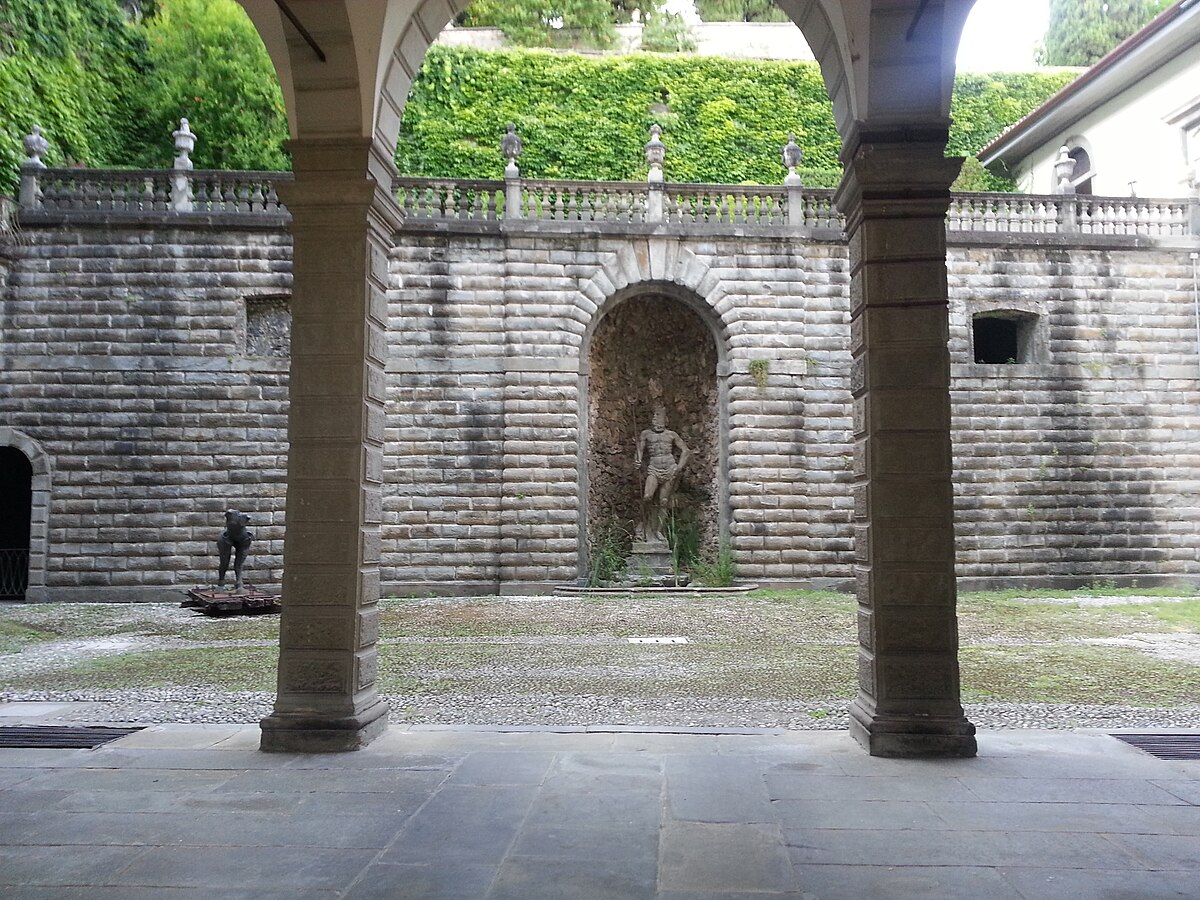
Palazzo Moroni - Kitchen Garden and Lemon House - Bergamo
Europe,
Italy,
Bergamo,
Palazzo Moroni, a gem located in the heart of Bergamo, testifies to the history and identity of the city. Built in the 17th century for the noble Moroni family, this palace is now famous not only for its elegant architecture but also for its wonderful garden and lemon house, which represent a significant example of an Italian garden. During its peak, Palazzo Moroni was a cultural and artistic center of great importance, attracting artists and intellectuals of the time. Today, the palace is open to the public, offering a privileged look at the beauty of the past and the evolution of Bergamo’s culture.Origins and HistoryThe origins of Palazzo Moroni date back to 1640, when the noble Francesco Moroni decided to build a residence that represented the prestige and power of his family. The project was entrusted to the architect Giovanni Battista Caniana, known for his ability to combine elements of classical architecture with Baroque details. Over the years, Palazzo Moroni underwent several internal and external transformations due to changes in ownership and historical eras.In the years following its construction, the palace was enriched with valuable artworks and furniture, transforming it into a symbol of social status. During the 18th century, the Moroni family invested in the creation of the garden and lemon house, following the trends then common among noble Italian families who desired sophisticated and productive gardens. The garden of Palazzo Moroni was not only a place for agricultural production but also a meeting and recreational space for family members and their guests.In the 19th century, the palace underwent a significant restoration aimed at preserving its artistic and architectural heritage. During this work, the surrounding green spaces, including the lemon house, which houses a variety of citrus fruits and is a testament to a practical yet aesthetic use of nature, were also restored. Today, Palazzo Moroni and its gardens are an example of how art and nature can coexist in harmony.What to ObserveLet’s start our visit with what immediately catches the eye: the façade of the palace. Characterized by elegant architectural elements, it features an engraving with the coat of arms of the Moroni family, attesting to its historical importance. The use of local stone gives the palace a solid and enduring appearance, while the Baroque ornaments highlight the refined taste of its patrons.Moving inside, one cannot help but notice the main hall, famous for its decorations. Here, the frescoes adorning the ceiling depict mythological scenes, a clear nod to the allure of Renaissance humanism. These works of art not only decorate the space but also tell stories of gods and heroes, bringing the environment to life.Now let’s move towards the lemon house. This structure, erected in the 18th century, is a perfect example of functional architecture. Here you can admire various species of lemons and citrus fruits, which in the warmer months are exposed to the sun, while in winter they are sheltered inside. The citrus fruits were not only ornamental; in the past, they constituted a valuable source of food and profit for the Moroni family.Another element not to be missed is the garden. Here, aromatic plants and vegetables are arranged according to the principles of Italian horticulture, with paths that intertwine harmoniously between the flower beds. Don’t forget to observe the pruning of the plants, an art typical of this area, which in the past was essential for ensuring production.Finally, we cannot overlook the Italian garden. This outdoor space, with its perfect geometries and well-tended flower beds, reflects the aesthetic thought of the Baroque period. Walking along the avenues, you can appreciate the simplicity and beauty of nature, framed by neat hedges and ornamental plants. It is a place of serenity, where beauty perfectly combines with functionality, paying homage to the genius of the architects of the time.Context and ConnectionsPalazzo Moroni is situated in a rich and varied cultural context. Located in the center of Bergamo, it is surrounded by other important historical and artistic institutions. Just a short walk away is the Pinacoteca dell’Accademia Carrara, which houses works by great masters such as Raphael and Botticelli, constituting an important center for art. A few meters away, you will also find the Basilica of Santa Maria Maggiore, a masterpiece of Romanesque architecture that attracts thousands of visitors each year.These places not only enrich the cultural panorama of the city but also create a network of connections that allows for a better understanding of the historical period in which Palazzo Moroni was built. You will thus visit an area where history, art, and nature intertwine, making each step a new discovery.CuriositiesAn interesting curiosity concerns the citrus fruits cultivated in the lemon house, particularly rare for their variety, some of which date back to the period of its construction. This cultivation tradition is a valuable way to keep local biodiversity alive.Moreover, the palace has been the subject of significant restorations over the decades; one of these took place in the early 2000s when a recovery campaign allowed for the restoration of the original decorations of the internal rooms, bringing forgotten stuccos and frescos back to light.Finally, it is said that in the 18th century, the noble families of Bergamo used Palazzo Moroni as a venue for organizing social and cultural gatherings, turning it into a vibrant center of intellectual and artistic exchange.We invite you to continue your exploration of the city by visiting other nearby wonders, such as the Toblino Fountain, a symbol of Bergamo, and the Donizetti Theatre, an important institution celebrating the city’s musical tradition. Happy exploring!
Read More